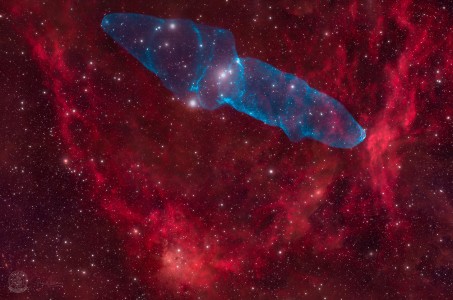
Image of the day

Captured by
Bruce Karbal

Bat and Squid

My Account

New to Astromart?

Register an account...

Need Help?

Posts Made By: Inge Skauvik

October 30, 2008 06:45 AM Forum: Equipment Talk

Whar does it take to get started with imaging?

Posted By Inge Skauvik

I'm a die-hard visual observer. However, I'm greatly impressed by the achievements of amateurs with modern imaging equipment. I don't know if I'm going to attempt imaging myself, but it would be very interesting for me to know what equipment is needed to start making decent images.

My personal telescope is a Portaball without an equatorial platform, and not suited for making photos.

Assume that I want to purchase a system for imaging - say something in the 100mm aperture class - including telescope with mounting and drive, camera, guiding system, necessary software etc. Which items would you recommend, and what is the likely cost for such a system?

I'm aware that there may be hundreds of different answers to this question. Therefore a couple of good examples will do for me.

Inge S

November 5, 2008 09:29 AM Forum: Deep Sky Observing

A few less frequently observed objects

Posted By Inge Skauvik

Last night I was out observing with members of our local astronomy club. Many of the people present had never looked through a telescope before, and therefore much of the time was spent with show objects. Telescopes available were two Portaballs (My old 8-inch sold to one of the club members and my present 12.5-inch).

The demo objects included M57, M15, Perseus double cluster, M13, M27, M71, Veil nebula, M31, M37, M81/82, Albireo and others. The Veil nebula with the O-III filter turned out to be the object that impressed these people the most.

The other people left after about two hours, and then I decided to spend some time with fuzzyball observing on my own. I started with M74 which actually is not a fuzzyball in the 12.5-inch, but reveals a faint spiral pattern and even a hint of condensations in the spiral arms.

Afterwards I observed NGC6946 in Cepheus, where it also was possible to make out the spiral arms. To get most detail in the galaxies I used my 9mm Nagler giving a power of 167x. At low magnification, both M74 and NGC6946 looked rather featureless.

After this I had a look at NGC1023. This galaxy is very bright, but for some reason I often forget to observe it (probably because there are so many other goodies in the region. At 167x I could make out a faint star a small distance west of the core, and something looking like a star or condensation at the eastern end of the halo. I still think I haven't seen a good photo of NGC1023, so if anyone can provide me a link I'll be very grateful.

After observing these galaxies (in addition to some other fuzzies in the region) I observed some interesting planetaries. NGC1514 on the Taurus/Perseus border is a very nice planetary which deserves more attention than it gets. Without a filter it is a bit difficult to detect. It appears as a star with a hint of nebulosity around. This is one of the objects where the O-III filter almost works like magics. With the filter and 167x magnification it lookes like a star surrounded by a delicate glass sphere containing some elusive condensations. A very beautiful sight.

Further north, in Camelopardalis is another planetary with a similar appearance. NGC1501 is, however, a brighter nebula, while the central star is less prominent. I prefer to observe NGC1501 without a filter.

Going back to Perseus I finally succeeded in locating IC2003. This planetary is probably among the more seldomly observed objects. It isn't actually a challenge to detect, and can probably be seen in a small refractor. But it isn't a show object either, since it is very small, and looks like a star at low magnification. I used the blinking technique with the O-III filter to locate it. I have tried this several times before without finding it, so this was my first sighting of IC2003. At 167x it appeared as a small greyish disc.

After observing this planetary I decided to go home. Orion was still to low in the sky, but I look forward to meeting the winter constellations again.

Inge S

November 6, 2008 07:21 AM Forum: Deep Sky Observing

A small addition to the list of fuzzyballs

Posted By Inge Skauvik

Yesterday evening the sky was still clear, and I decided to have a small observing session on my own. The observation site I use the most is a 15km drive from home. There is no direct artificial light, but the light dome above city Stavanger in the south-east is a bit disturbing.

After collimating the telescope I put in my 24mm Panoptic and just looked through the telescope to have an impression of seeing conditions. There was one 7th or 8th magnitude star in the field, and I thought that I had been breething on the eyepiece lens, because it was surrounded by a milky glow. When I pushed the telescope slightly aside, however, other equally bright stars came into view, and they were not surrounded by this glow. Therefore I realised that this was a diffuse nebula. Checking through the telrad the direction of the telescope I found that I was pointing towards a position not very far from Alpha Cephei, and when I came home I could identify the nebula. It is NGC7023. The moon was well above the horizon at this time, and still the nebula was quite obvious. Probably not difficult, even with smaller aperture, but ill-defined and featureless. A reflection nebula which was killed by the O-III filter.

Waiting for the moon to get below the horizon I observed a few double stars. Seeing was quite good, but arcsecond doubles like 36 Andromedae were a bit blurry. Still a good night for deep-sky observation.

As it got darker I reviewed NGC40. This is another example of what I call "glass-sphere planetaries", a very delicate nebula with hints of condensations. Its central star is easy, and it behaves much the same way as the blinking planetary in Cygnus when switching between direct and averted vision.

After observing NGC40 I spent some time with M76. This is a very good object in the 12.5-inch. At 167x it resembles M27 as seen through a small telescope, only just a bit more bipolar.

At this time the moon had dropped below the horizon, and I turned the scope towards IC342 in Camelopardalis. This face-on galaxy is often said to be very difficult to see even with large aperture. Truly the average surface brightness is low, but its core is bright, and the total light from the galaxy makes it fairly easy to locate in the rich star field, even for the low-tech, no-GOTO society to which I belong. I found that the 13mm Nagler was an excellent choice for studying this galaxy. With averted vision even hints of spiral pattern could be made out, at least one of the arms being quite obvious.

I started getting cold on my feet and decided to make just one more observation before quitting. I selected a galaxy pair in Triangulum, NGC672 and IC1727. To locate them I first found a small C-shaped asterism (with a Collinder number I don't remember). The galaxies are located very near this group. NGC672 is faint, quite large and elongated. With 63x magnification the companion could hardly be seen, but going up to 115x helped a bit. Still IC1727 was very faint and ill-defined. It was very hard to see any sign of elongation, it appeared just like a brightening in the sky background.

Inge S

January 6, 2010 06:17 AM Forum: Deep Sky Observing

The Astromart observation forums

Posted By Inge Skauvik

The activity in the observation forums of Astromart is presently very low compared to what it was a few years ago. Is there anything that can be done to increase the activity again? Any good ideas?

Perhaps the "Deep Sky", "Variable and Double Star" and "Solar System" forums should be joined into one "Visual Observation" forum.

January 13, 2011 09:18 AM Forum: Deep Sky Observing

Today's object NGC1514

Posted By Inge Skauvik

Some years ago I was a very active poster on this forum, but the last couple of years I haven't contributed much. One of the reasons is that I found it difficult to come up with new stuff, and just wanted to avoid repeating myself too much.

Realising that this hardly is a great problem, I decided now to start posting again, and to begin with I'll write short posts about some of my favourite objects on a regular basis. I'll not be able to do this every day, but hopefully quite frequently. Some posts will be under the deep-sky forum and some under the double and variable star forum. I'll normally write about objects that are well placed for observation from the northern hemisphere at the time of posting. But if I run out of objects I may present objects I have observed from the Canary Islands, and then I'll not bother about time of the year.

I shall usually refer to own observations done with my 12.5-inch Portaball (or smaller telescopes). I consider my observing capabilities as average meaning that whatever I claim to be able to see, most other people will also be able to see with similar (or often smaller) aperture under good conditions.

Today's choice is a planetary nebula in Taurus, NGC1514. In my opinion this object is more neglected than it deserves. To get a really good view of it with an instrument with average aperture a filter (O-III, UHC or equivalent) is required, but it isn't very difficult to spot it without a filter since the central star is very bright. First time I aimed my scope at the direction of the object I noticed that one of the stars of the field was surrounded by a haze almost as if some dew was present on the eyepiece. I had to apply the O-III filter to be a 100% sure that this was the object I was looking for. Using the filter I saw a beautiful, round nebula with delicate condensations. I would describe it as a crystal ball floating in space.

Some photos of this nebula displays a double ring superimposed on the nebula. These rings can obviously not be observed visually, and I don't know which wavelength has to be enhanced in order to produce these photos. Anyhow this is a very nice object, recommended to anyone. I assume it can be seen with considerably smaller aperture than my 12.5 inches.


January 16, 2011 01:08 PM Forum: Deep Sky Observing

NGC7789

Posted By Inge Skauvik

In the line of favourite objects I decided to continue with NGC7789. Sometimes I get the feeling that this open cluster in Cassiopeia is everybody's favourite, but still I would like to give my own comments about it.
Not included in the Messier list it is still bright enough to be seen in small telescopes. Very few open clusters contain more stars than NGC7789. In my books the total number is said to be about 900. I find it quire large, roundish and I always get an impression that the stars are arranged in concentric circles. I don't believe, however, that this is a physical fact. At powers in the range 60 - 120x it is very beautiful in the 12.5-inch. But I was amazed even the first time I saw it in a 3-inch. For all old foxes I recommend reviewing this fine cluster, and it anyone never observed it I promise a nice experience.

January 18, 2011 09:12 AM Forum: Deep Sky Observing

Object of Jan 18th: M38

Posted By Inge Skauvik

For today I have chosen one of the Messier objects. M38 is one of the most prominent open clusters in Auriga. Since the cluster is pretty large and relatively loose it stands best out with low magnification, and it is, indeed, a very fine object for binoculars.

I think many experienced observers tend to overlook objects like M38. I admit that I have done this myself. Even with the lowest magnification I have on my 12.5-inch (63x) it covers almost the whole field of view and since it isn't much concentrated towards the centre, it appears more as a local enrichment of the background star field. Lately, however, I have found it quite rewarding to pay some attention to M38. While at first glance the cluster seems to be just a gathering of 8th magnitude stars, closer scrutiny shows the presence of many fainter stars. Some of them certainly are background stars, but I find many nice star patterns within the cluster. In addition M38 has a smaller and more compressed companion, NGC1907, near its edge. I find that viewing these two objects together is very nice.

January 19, 2011 12:16 PM Forum: Equipment Talk

Highly compact Dobsonians - what is available on t

Posted By Inge Skauvik

I have been using Portaballs (8-inch and 12.5-inch) for more than 10 years. These telescopes have served me well, being very compact, relatively lightweight and extremely convenient to use.
I'm, however, interested in getting a larger aperture scope, maybe 16 - 18 inches. Since local observing conditions are far from perfect I need an instrument I can take with me by plane.

There is one interesting option on the European market, the 16-inch Traveldob (www.traveldob.de). It is constructed specially in order to facilitate transport by air. The total weight is 17kg and can be collapsed to a very small package. I assume, though, that this means sacrificing some stability. The drawback is the price which is 5350 Euros and a delivery time of a year or so.

I have also noticed the Ultra Compact versions of the Obsession telescopes. I'm not sure about if these scopes can be taken along as air luggage. I assume they are more stable than the German Traveldob, but even these scopes cost quite a lot.

Are there other options available today? Is there anybody around building compact Dobsonians? Any new smart solutions?

January 25, 2011 07:31 AM Forum: Deep Sky Observing

Object of January 25th: NGC1893/IC410

Posted By Inge Skauvik

Auriga is rich in fine open clusters. There is also some nebulosity within the constellation, most of which is rather faint and lacking contrast.
I would like to draw you attention to a much neglected cluster/nebula combo. In modest sized telescopes the cluster, NGC1893, is not too difficult to spot, just a few degrees south of M38. This is not a very compressed cluster, but contains some 40 - 60 stars. What attracts my interest is the nebulosity involved. It requires a filter to be seen well, but may defined as a large, ill-defined glow around the cluster if the sky is very dark. With my O-III filter I see much more detail in the nebula. The general shape is much like the letter, "C". I'm not sure if this is the true shape of the nebula or if parts of it is blocked by absorbing clouds in the foreground.

January 26, 2011 07:37 AM Forum: Deep Sky Observing

Object of January 26th - M82

Posted By Inge Skauvik

I had my first view of M82 almost exactly 40 years ago. At that time I didn't have any good star atlas and interactive sky maps were not invented. I had to rely on maps I found in my small collection of astronomy books. Actually I didn't even search for M82, because I didn't know about its existence. I was trying to find M81 with my new 8,5-inch British made Fullerscope newtonian.
I was quite astonished when the bright, narrow streak floated into view. A very striking object. Having seen the old famous Palomar photo of M81 I realised that this had to be a different galaxy. I found M81 a minute later, but I had to spend some time to identify this "mystery" edge-on galaxy which I was able to bring within the same field as M81 with my excellent orthoscopic eyepiece.
Since then I have returned to M82 many times. I had the best views of it with my previous 8-inch and my present 12.5-inch Portaball at relatively high magnification. With low power it is easy to overlook the intricate structure of dark channels crisscrossing the nebula. They become far more obvious at magnifications giving an exit pupil of 2mm or less. Poor seeing may destroy the view, but from my location at 59 degrees north M82 is almost always high in the sky, and atmospheric disturbance, therefore, becomes minimal.