Image of the day

Captured by
Yue Ma

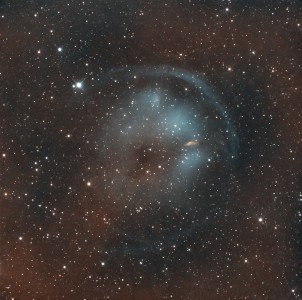
HFG-1

My Account

New to Astromart?

Register an account...

Need Help?

Posts Made By: Rod Mollise

May 2, 2008 10:05 PM Forum: Beginning Astronomy?

A Bad Experience Cleaning Equipment

Posted By Rod Mollise

Peter Glus said:

Was cleaning my SCT corrector with a mixture of 1/4 rubbing alchohol, 1/4 vinigar, and 1/2 di water. Vinigar was my wifes idea (maybe a real bad idea, but I did it anyway). Anyway, she put it in an unmarked seltzer bottle, and...yes...I came in from yard work, poured a tall glass of it, and "threw it down the hatch"....horrible horrible taste.

Confuse-us say: "Man who clean corrector with vinegar end up with SCT that smell like pickle."

8)

May 4, 2008 04:53 PM Forum: Equipment Talk

Will an 180mm Mak be and upgrade to 8" SCT in imag

Posted By Rod Mollise

John Kramer said:

Hi All,

Looking for an upgrade from my 8" Celestron Ultima 8 PEC. I have used this scope since 95, and its given many a nights of fine viewing. However, I have come to love the tight star images that I see from Newts and Refractors when I'm at star parties. I have collimated my scope over and over, but my images seem soft, blob stars, and no snap to focus. I have always found myself playing with focusing.

So any mak cass owners out there? It it a justified upgrade from say an 200mm SCT to a 180mm MCT like the Orion? Will stars snap to pinpoints in focus, with a black backround? Will I be able to push mags to over 250x?

Looking forward to hearing your inputs.

Thanks,

John

It might be SLIGHTLY better (you mean the U.S. Orion, correct?) for planetary imaging/observing, but the images in this and the other Orion (Synta) MCTs I've tried are quite comparable to the usual Celestron/Meade SCT. For deep sky work it will be a DOWNGRADE. This is a slow, narrow field scope.

The tight stars you see in those refractors are largely due to two things:

Small aperture, low magnification.

I've got a U8 of the same vintage as yours (now mounted on a GEM). Take my advice: do NOT part with it. instead, supplement it with a small refractor! If you cannot push your U8 to over 250x, you need to look to your collimation and your seeing. I've regularly used mine at 500x + on Saturn. We'll not see its like again.

8)

May 4, 2008 11:21 PM Forum: ASTRONOMY

Astronomy Magazine's lastest slip up

Posted By Rod Mollise

Terry Haimann said:

On page 21, article "Binocular Telescope snaps first image"

First sentence:

And the lucky galaxy is ... NGC 2770, a spiral star city some 102 light years away ... 8O

102 light years away would put it in our galaxy wouldn't it? I checked and found a reference on the Internet that places it 81 million light years away. It would help if the editors of Astronomy Magazine actually knew a little astronomy.

Which means they are only human. Like you and me. They make mistakes, though the folks there know a considerable amount about astronomy.

May 7, 2008 12:39 PM Forum: Refractors

Parks 60mm Alt-Az refractor

Posted By Rod Mollise

Darian Rachal said:

Worth it at twice the price. shocked http://www.parksoptical.com/product_info.php?cPath=21_116&products_id=465&pname=PRT1+60mm+AZ+System

Then a nice, vintage Tasco 7TE oughta go for twice that on the 'Bay.

8)

May 8, 2008 01:00 AM Forum: Equipment Talk

low cost binoviewers for high power viewing?

Posted By Rod Mollise

Andrew Amundrud said:

Recently there has been a lot of interest and information on using binoviewers. Can you actually see more with two eyes? Some premium BV users have said that when using larger aperture scopes they can see MORE than when using a single eyepiece. Some have said they can see as much at 200X with a BV as they can at 300X with a single eyepiece? What about the current selection of low cost BVs, are they useful for detailed observing? University Optics, for example, offers their BV with Tak colimation and matched orthoscopics. Is there a place for these BVs other than for a low power 3D effect?

I've tested some el cheapos, and they do fairly well.

HOWSOMEEVER...most of 'em offer some aggravations. Unless the eyepiece holders are self centering, forget it. Setscrews DON'T MAKE IT. With short barreled eyepieces, especially, setscrews tend to tilt an eyepiece, meaning you'll have trouble merging images.

Also, while the cheapos can do a pretty good job with planets, they fall down on the deep sky. The small clear aperture most of 'em posess means you will get severe vignetting with longer focal length eyepieces.

They CAN give you a TASTE of binoviewing at a low price, but you will soon want More Better Gooder, and will have to buy again. The Basic Denkmeier binoviewer is $499.00, and IMHO that is the way to go.

As for what a binoviewer can do, there is far more to the game than the pseudo 3-D effect. Yes, I can see more with the Denk than I can "Cyclops style" on the planets AND the deep sky.

Matched Orthoscopics? What I like is a pair of 19mm Pans.

wink


May 8, 2008 01:12 AM Forum: Reflectors

The best scope?

Posted By Rod Mollise

aaron vaillant said:

I can't seem to make up my mind about which scope should be my first(technically its my 2nd but its been a long time). I want the best scope I can get for my money. I am looking at a budget of 1500 dollars. I know that can get me a really nice 80-102mm ED refractor. On the other hand I can get a lot more aperture in a newtonian type scope. I once owned an orion ed 80 and greatly enjoyed the planetary views but deep sky observing was never really up to par. I'm not sure if it's because I live in the suburbs or if 80mm is just too small to have nice views of deep sky objects. I know Meade has a 16 inch lightbridge truss dob that seems like it would be great for the money but my concern there is optical quality and if the views would be sharp and crisp. Please give me some advice or suggestion if any of you who have had experience with both types scopes. Thanks. wink


Take the middle path, grasshopper.
wink

A 3 - 4-inch scope might not keep you satisfied too long for visual use, even if it is well made. A 16-inch Dob, will, believe you me, likely be too much. You might use it often at first, but you'll soon find reasons to stay inside and watch American Idol even if the skies are clear rather than wrestling with this big dog.

Think "8 - 10 - 12-inch"...of any design...with the emphasis probably on 8 - 10 rather than 12. If you are considering a Dob, you could do worse the the Orion XT10.

8)

May 8, 2008 12:37 PM Forum: Beginning Astronomy?

Go To setup time

Posted By Rod Mollise

Greg Kroetch said:

Hi all.

Well, I'm looking for a new setup....something in between my Stellarvue 80/9D and Discovery 12.5" DOB, and have a question about setup time for a fancy mount.

I live under fairly clear skies most of the time (I can often see a hint of the Milky Way when there's no moon) and like to run outside and take a quick look around. The Stellarvue has been nice for planets, the moon and the Orion Nebula, but I want to see more. The DOB is too much to lug outside when I've only got 10-20 minutes. I was thinking of a used, medium sized (maybe 6"-8") Newtonian on an Alt/Az mount, but decent mounts for a 25lb. Newt seem pretty expensive.

So, the next possibility is buying the whole setup, which pretty much means a Go To mount like the Meade LXD75. I believe these are OK mounts, but I wonder if I'll spend my 20 minutes of free time just getting set up.

Does anyone have thoughts on how much time to budget to get up and running each night with one of these setups? And can you point them by hand, or must you use the controller?

Thanks, Greg

OK, for starters...if you want quick setup time, forget a GEM. To operate accurately, a GEM will need to be at least roughly polar aligned and will need to by aligned on from 3 - 6 stars. I would also steer you away from the LXD75, but that is another story.

Alternative? A go-to like a Meade or Celestron SCT that can operate in alt-az mode. This are quick to set up, don't require polar alignment, and only require you to "sync" on 2 - 3 stars. I can have an alt-az go-to going in maybe five minutes.

8)

May 9, 2008 08:57 PM Forum: Equipment Talk

Mak-casses or SCTs optimized for cooling down?

Posted By Rod Mollise

One of these (or one you homebrew) will do the trick:

http://www.lymax.com/

May 10, 2008 01:31 PM Forum: Beginning Astronomy?

Pricing discussion

Posted By Rod Mollise

robert black said:

I would like to purchase a high end used telescope but the prices seem so high.
Am I wrong or is the pricing that I'm seeing in line.
I have seen at least 3 ads in the refractors where they are asking a new price or very little under for a used scope.
Is there a reason that these used scopes would be worth what they cost new. One for sure is 25 years old.
I know everyone has the right to ask whatever they choose and I am OK with that. But am I missing something here? If a 20,000 dollar scope will be worth 21000 in ten years, then I might as well go out and buy one of them.(like I could!!!)ha ha
Thanks guys, bob

It's completely impossible to offer an opinion without knowing which high-end scope you are talking about. A used Celestron or Meade will depreciate. An A-P, the sky is the limit. It's simply a matter of supply and demand.

8)

May 11, 2008 03:21 PM Forum: TeleVue

William Optics vs. TeleVue

Posted By Rod Mollise

Michael McNeely said:

Hi, I wanted to ask if anyone had directly compared the TeleVue 60 to the William Optics ZenithStar 66 SD? Is there a significant difference between these two scopes (other than cost)? Thanks.


I'd say so. At about twice the price of the 66 for the base TV model there oughta be.

That said, you have to axe yourself if the price jump is worth the performance increase. These are both small aperture scopes, afterall.

Me? I find the WO 66 just the thing. Visually, it's great...it's not like I'm gonna push a 66mm scope to 300x. I've also had very good luck with it for imaging with the ST2000.

IMHO, the 66 and the similar scopes from Astronomics are the worthy successors to the vaunted Short Tube 80. Capable (far more so than that old warhorse) yet still cheap.

And yet...if you're engaged in pursuits like demanding imaging with a large chip camera, I wouldn't fault you for choosing the TV. Can't go wrong there if you are willing to pay the fare.