Image of the day

Captured by
Ralph Ford

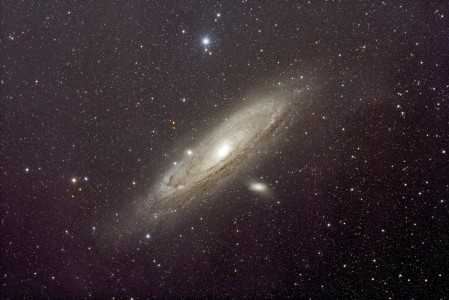
M31 with Redcat 51

My Account

New to Astromart?

Register an account...

Need Help?

Posts Made By: Larry Durst

May 30, 2007 01:08 PM Forum: CCD Imaging and Processing/Deep Sky

Rho Ophiuchi

Posted By Larry Durst

Great one! Beaufiful colors.
Larry

May 30, 2007 01:09 PM Forum: CCD Imaging and Processing/Deep Sky

M27 with orion 80 ED

Posted By Larry Durst

Nico,
That's terrific. You really handled that FL well...and have a big detailed nebula to show for it.
Larry

June 3, 2007 11:54 PM Forum: CCD Imaging and Processing/Deep Sky

NGC 6820/23 in Ha

Posted By Larry Durst

Every minute of that time shows. What a great job!
Larry

June 9, 2007 11:49 AM Forum: CCD Imaging and Processing/Deep Sky

M16(Ha)

Posted By Larry Durst

Louie,
Welcome to the wonderful (and forgiving) world of Ha. That's a great first! You will find that there is never more truth to the more data the better. You will also certainly have fun with that set-up on those big nebs out there.
Larry

June 12, 2007 12:13 AM Forum: CCD Imaging and Processing/Deep Sky

M8

Posted By Larry Durst

Great one--gotta' love that Ha!
Larry

June 12, 2007 01:39 AM Forum: CCD Imaging and Processing/Deep Sky

ngc6888

Posted By Larry Durst

Nico,
That's a great image, looks like you've got a winner with that setup. When I click to "zoom" is that the full resolution image?
Thanks,
Larry

June 12, 2007 07:54 PM Forum: CCD Imaging and Processing/Deep Sky

One Dumb Question

Posted By Larry Durst

Jess,
Let me be first to say--there are no dumb questions. If there were, I would have topped the list when I started. If I understand your question correctly, you want to know if software can compensate for your mount's tracking errors. The answer is yes...and yes.

Even less reliable mounts can track well enough (particularly at shorter focal lengths) to get an image of some duration, let's say 30 seconds to even a minute. By shooting lots of these then stacking them you can attain lots of data. There are many, many software programs--from free ones to some costing a few hundred dollars--that let you choose one or more stars that the software can align on, then add or average all the many images. (I'm not sure, but I believe the Meade software will do this while you shoot. Most imagers save all the separate images for combining later.)

The other "yes" is that you can also use a second "guide" camera or other methods (Starlight Xpress cameras can guide and image with one chip, SBIG cameras have two seperate chips in the camera--both methods eliminate the need for a second guide scope) that will detect when your mount moves away from a selected guide star, then corrects the mount's movement. You will still be gathering multiple images to combine later, but because your mount is more on track, you can shoot longer "sub images" meaning there are far less images to stack.

I hope this is more helpful than confusing, and answers your question. If not, please ask away.

If you are just starting out, best to try the short sub image method and stack away in the processing stage.

Have fun,
Larry

June 12, 2007 07:57 PM Forum: CCD Imaging and Processing/Deep Sky

M81 First Light Image

Posted By Larry Durst

Let me echo all that Ivan and Dietmar said: what a great shot! I'll also second Dietmar's endorsement of PixInsight for background noise reduction. Gives you great control and can be implemented on the background only through masking, so you don't even touch the galaxy.
Can't wait for more from that new camera,
Larry

June 14, 2007 08:25 PM Forum: CCD Imaging and Processing/Deep Sky

My Second Image M51

Posted By Larry Durst

Let me add another "great shot" to the chorus. Absolutely terrific.
Larry

June 15, 2007 02:56 PM Forum: CCD Imaging and Processing/Deep Sky

M8 and M20 - Trifid and Lagoon

Posted By Larry Durst

Wow. What a view!
Larry
