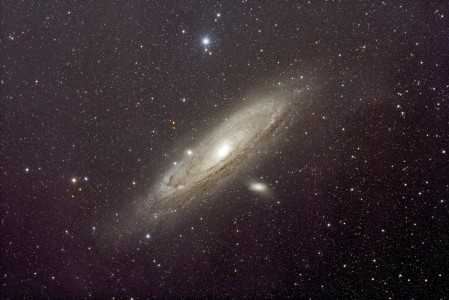
Image of the day

Captured by
Ralph Ford

M31 with Redcat 51

My Account

New to Astromart?

Register an account...

Need Help?

Posts Made By: Larry Durst

November 12, 2007 08:23 PM Forum: CCD Imaging and Processing/Deep Sky

Latest Image - Double Cluster in Perseus

Posted By Larry Durst

Tyler,
I have rarely seen clusters captured with such clarity and beauty. That rig of yours is truly a "stellar" performer (I'll give the operator some credit, too, of course wink ).
What were your subs BTW?
Larry

November 13, 2007 05:35 PM Forum: CCD Imaging and Processing/Deep Sky

The Dancing Dolphin Nebula -- LDN1622

Posted By Larry Durst

Well deserved Image of the Day, Tom!

November 16, 2007 02:04 PM Forum: CCD Imaging and Processing/Deep Sky

4 nights, one image...arrghhh.....

Posted By Larry Durst

Vince,
If I could come up with that one in every four nights I'd be thrilled. What a great image.
Larry

November 20, 2007 02:03 PM Forum: CCD Imaging and Processing/Deep Sky

IC1805--Image Processing Questions and Suggestions

Posted By Larry Durst

Taylor,
I know I'm late to this discussion, but I'll third the suggestion of reading Robert Gendler's article. I also brought up the question of combining Ha with RGB on the PixInsight forum for feedback by the program developers. The concensus was that Ha does not make for a good luminance based on both star size and color effects. Definitely adding Ha to the R seems the way to go. A split of opinions on adding Ha to the L as well. I did a bit of a test with an old image of mine on NGC281. I had to use a combined RGB as my L. I can tell you the difference in color was profound--much better red when I combined the Ha and R than when I used the Ha as the luminance. I didn't really see much difference between that and when also adding Ha to the L for the luminance. But it has convinced me to really treat my Ha and color shots differently. I'll have to post the results on my website soon.
Hope this makes some kind of sense...although I think you already have a wonderful shot!
Larry

December 1, 2007 03:54 PM Forum: CCD Imaging and Processing/Deep Sky

M1

Posted By Larry Durst

John,
Wonderful widefield shot of the crab.
Larry

December 6, 2007 06:36 PM Forum: CCD Imaging and Processing/Deep Sky

Using a $6 lamp timer as a camera mount/drive

Posted By Larry Durst

Jason,
That is brilliant!
Larry

December 12, 2007 09:31 PM Forum: CCD Imaging and Processing/Deep Sky

It's here!!!!

Posted By Larry Durst

Well, you sure have lots of us anxiously awaiting first light! Congrats.
Larry

December 12, 2007 09:57 PM Forum: CCD Imaging and Processing/Deep Sky

NEW to Astrophotography...What would I need?

Posted By Larry Durst

Mike,
Get ready for a host of opinions! Here's mine--start as simply and as cheaply as you possibly can. I have not used either of those cameras (I do use a DSI Pro for guiding, not imaging) but either one is probably a very good start, and will also serve as a guider if you advance to that stage. You might also consider a digital camera if you have one (you'll need adapters) or even start with a webcam. Look around on AstroMart--there's always something available. The latter will limit you to the moon and planets but that's not a bad place to start. Overall you'll want to see if you enjoy the effort of not just imaging but also time at your computer processing over visual observing before investing much more.
You will have some limitations when you start( but, again, just see how you like the whole idea):
Your 8" scope is a tough focal length so you might want to get a .63 focal reducer. This will 'speed up the scope' to help you get a few more photons that are pretty precious when you shoot unguided. It will also increase your field of view.
Speaking of unguided, I am not familiar with that mount but if it's at all like my LX90 you're unguided exposures for DSOs will be limited to well under a minute. Be prepared to take lots of them and then stack them in software (lots too choose from including freeware to expensive packages--you will need something but the Meade and Orion cameras will come with their own). If you stay with the brighter Messier objects at first (M42, M13, M57, M27 etc) you will be very amazed at what you can do with an inexpensive camera.
(You mentioned DSO's but if you're more focused on the moon and planets at first, lack of guiding isn't an issue at all. Then you'll be taking lots of short exposures as video and stacking hundreds of the frames, again through software.)
In either case, you will be needing a laptop to take outside to the scope--be prepared to use up memory!
Where you shoot from isn't that big an issue--a dark site is great but I'm shooting a stone's throw from New York City and get results good enough for me.
Finally, plenty of patience--there is quite a learning curve but the results improve quickly and the satisfaction is overwhelming!
Have fun and do ask away with any more questions. I hope this long-winded answer was of some help.
Larry

December 13, 2007 03:29 PM Forum: CCD Imaging and Processing/Deep Sky

IC443, mediterranean jellyfish

Posted By Larry Durst

Gilles,
You have brought the jellyfish to life! That is a wonderful image beautifully composed. I can see that I really do need lots more time on my Ha images.
Larry

December 15, 2007 03:47 AM Forum: CCD Imaging and Processing/Deep Sky

No camera so I made something! :^)

Posted By Larry Durst

Floyd,
Looks like you're $40 richer toward the purchase of your next camera upgrade!
Larry
