Posts Made By: Michael Connelley

April 1, 2007 03:42 AM Forum: Equipment Talk

Undercorrection due to eyepiece?

Posted By Michael Connelley

Hello:
I was recently star testing a pair of 20" f/4 mirrors. I used ronchi grating (with barlow) and a 9mm MA eyepiece from Meade, simply because it's the shortest focal length decent eyepiece I have. For both mirrors, the secondary mirror shadow seemed larger and darker inside of focus, and smaller and harder to see outside of focus. This difference was only apparent very close to focus, when I could see perhaps 3 or 4 of the rings on either side of focus. As such, the two mirrors seem a bit under-corrected. The "mirror cells" (a simple plank of wood) may be a contributing factor, as I also saw astigmatism and trefoil that changed between targets.

However, a friend of mine told me that he heard that certain eyepiece designs can show what looks like under-correction in a star test. Given that I used a simple/cheap eyepiece on an f/4 mirror, I wouldn't be surprised if this was the case. My questions are:

1) Can an eyepiece make an otherwise good mirror look a bit under-corrected? Can adding a barlow (thus delivering an f/8 beam to the eyepiece rather than f/4) change things?

2) If so, what eyepiece designs are best for star testing fast mirrors?

Cheers
Mike Connelley

April 6, 2007 01:09 AM Forum: CCD Imaging and Processing/Deep Sky

M101, with a little coma

Posted By Michael Connelley

Hello:
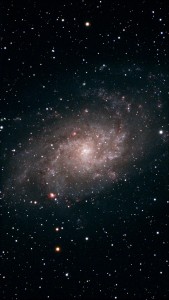
Here's an image of the central part of M101, recently taken with a 1k x 1k CCD at f/2.3. The image is a stack of 5 one minute exposures. Since we don't have a coma corrector for this camera, you can see a bit of coma near the edges of the field. Who am I kidding, there's enough coma to frighten small children! Anyway, since we see so many images here with pin point stars corner to corner, I though y'all might get a kick out of something a bit different.

Cheers
Mike Connelley

April 15, 2007 09:39 AM Forum: Pictures of Me and My Telescope and........

40 year old Celestron

Posted By Michael Connelley

Hello:

I took this 10" Celestron out for a spin last night, and it's arguably the best SCT I've used. It was made in 1967, and is an f/13 rather than the newer f/10s. In the picture, you can see that the central baffle tube is quite small and short, allowing for some stray light to get to the eyepiece. The size of the central baffle limits the scope to 1.25" eyepieces, so the field of view is pretty tight. On the other hand, its optics are very good. I could see a nice Airy disk for both components of Xi UMa. Naturally, Saturn was spectacular. I can't wait until I really get her cleaned up.

Cheers
Mike Connelley

April 24, 2007 11:56 AM Forum: Telescope Making

Collimation with truss poles

Posted By Michael Connelley

Hello:

I had an idea regarding collimation. The problem I'm trying to solve is to build a ball scope (like a portaball) with the mirror as far back as possible to minimize the need for counterweights (this is for a 20" mirror, so the scope will already be heavy). One way to do this is to incorporate the mirror cell into the ball itself. However, then you can't tilt the mirror in the ball. The solution I came up with is to tilt the whole ball relative to the truss. I imagine putting a set of push-pull screws at each of the three points where the truss meets the ball. Some care would be required to make sure that the truss attachments remain strong during the adjustment, and can't twist or tilt. One way to ensure this is to have three push screws for each attachment in a little triange pattern, with the pull screw in the middle of them.

So, what do y'all think? Have I missed something? As far as I can tell, it should work. However, a little flexture or instability would be at least frustrating, and at worst disaterous. It would be a lot simpler to put in a regular mirror cell, but I figure that would cost about 100 inch-pounds of torque (which, coincidentally, is about the torque generated by the 31mm Nagler up top).

Cheers
Mike Connelley

May 12, 2007 10:11 AM Forum: Reflectors

Focault test image

Posted By Michael Connelley

Hello:

Here's a focault test image of a mirror while the scope was pointed at a star. Thus, you don't see the usual donut profile of a paraboloid, and you should see a nice "flat" surface. I'm posting this picture mostly for the amusement of the forum. How much do you figure a mirror like this would be worth?

Cheers
Mike Connelley

February 21, 2008 08:43 AM Forum: CCD Imaging and Processing/Solar System

Lunar Eclipse from CA

Posted By Michael Connelley

Hello:

Here's a picture I took from San Jose with a Sky90, field flattener, and a Canon Rebel XTi. There were quite a lot of clouds tonight, which added a little drama to the images.

Cheers
Mike Connelley

October 20, 2008 08:02 AM Forum: Pictures of Me and My Telescope and........

Yard cannon

Posted By Michael Connelley

Hello:

Here's the first refractor that I've made. It's a 144 mm f/14.5 achromatic doublet. The tube is aluminum from Hastings, and the scope is strapped to a G-11 mount. Without a pier extension, the eyepiece is still about 6" off the ground when the scope is pointed at zenith. I use it most often for star parties at local schools, where the low eyepiece height helps make the scope a bit more kid friendly.

Cheers
Mike Connelley

November 17, 2004 04:57 AM Forum: Eyepieces

newbie eypiece ?

Posted By Michael Connelley

Hello:
While I'm not going to recommend any particular eyepieces, it's very good that you're going to join a club and go to star parties. While there, learn everything you can from the old hands. Pick thier brains, and most of all try out their stuff! Most folks are more than happy to let you use an eyepiece to try it out on your scope. Being able to try out an eyepiece on YOUR scope is very important, since some eyepieces work better than others on certain scopes in different situations. Also, you'll be able to explore what you find to be the practical magnification limit for your equipment. There's nothing worse than forking out big $ for an eyepiece that gives a magnification that's too high, or where you can only use it once a year when the seeing is good enough. Also, as magnification increases, any instability in the mount and the motion of the object through the field of view get magnified. With Dobsonians there's a happy medium between getting a high enough power to see neat stuff vs. having to move the telescope so often you hardly have time to look. So go to as many star parties as you can, try out as much stuff as you can, and find out what works best for your scope and for you.

Cheers
Mike

P.S. You can't go wrong with a good Plossl or Orthoscopic for planetary observing...they're cheap and hard to beat.

November 28, 2004 10:13 AM Forum: Deep Sky Observing

Apparent Size

Posted By Michael Connelley

Hello:
We're all familar with the inverse square law for the apparent brightness of stars. One thing that some are not familar with is that the surface brightness of an object (star, galaxy, etc) is constant and does not change with distance! Although stars are so far away that we cannot resolve the disk of the star (except for large, nearby stars like Betelgeuse, or by using interferometry), they do have a small but finite apparent size. The apparent brightness of the star depends on the surface brightness times the apparent surface area. The apparent size of a star is inversely proportional to the distance, and since area goes as the square of the size, the apparent surface area goes like the invserse square of the distance, which is one way to understand the inverse square law.
So, for example, we know the Sun has a magnitude of something like -26 and has a surface area of 2,544,690 square arcseconds. A G2 star with an apparent magnitude of, say, 5, should have an apparent surface area of 0.000001 square arcseconds and an apparent diameter of 0.0006 arcseconds. I hope this clears things up.

Cheers
Mike

December 7, 2004 05:38 AM Forum: Telescope Making

Mersenne-Gregorian?

Posted By Michael Connelley

Hello:
I have a friend who's been working on this for some time, and apparently it's as good as a regular mersenne (i.e. no coma or astigmatism if I recall correctly). The problem with both types is the field of view, which is very small. If you're using a refractor to focus the light coming off of the secondary, then you'd like the refractor objective at the pupil to get a wide field of view. For a regular mersenne, there is only an imaginary pupil behind the secondary so the field of view is very small. For a gregorian mersenne, there is a real pupil near the focus of the primary/secondary. I've thought about having a perforated lens so that the light from the primary can pass through, then focusing the collimated beam coming off the secondary. I suppose it'd work, but I've never done a ray trace. My friend's idea is to make an off-axis gregorian mersenne so that he can put a lens at the pupil, but making two off axis paraboloids ain't easy.

Cheers
Mike Connelley