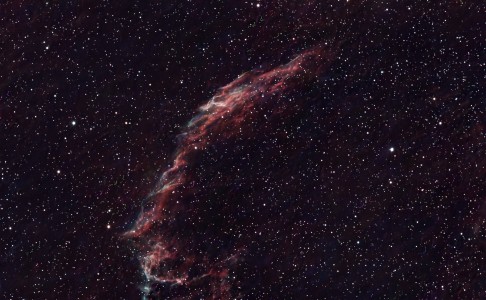
Image of the day

Captured by
GERALD KREITZBURG

Eastern Veil Nebula

My Account

New to Astromart?

Register an account...

Need Help?

Posts Made By: Rod Kaufman

July 30, 2014 03:47 AM Forum: Eyepieces

I Had No Idea...

Posted By Rod Kaufman

This site existed until I happened upon it after searching for filter reviews:
http://freescruz.com/~4cygni/horsehead/NebulaFilters.htm#STACKING
Copyright © S. Waldee 2014 - All Rights Reserved
Using Eyepiece Nebular Filters for Deep Sky Viewing

By Stephen R. Waldee © 1997-2014 - All Rights Reserved

Nebular filters for visual use, in conjunction with an appropriate eyepiece, make handy accessories for the observer's toolkit. In this article, we discuss the advantages, and drawbacks, of each major type, and comment on various ways that amateurs recommend using them, for good or ill. To quote California amateur astronomer Rod Kaufman, "the number one mistake amateurs make in using filters is that they tend to try them on only one or two objects or with only one or two focal length eyepieces and conclude they do or (as is more often the case) don't work. Big mistake!" This article advocates proper personal testing as the way to learn how a given filter will work beneficially for you.
I see some of my other posts on filters are included as well. It's interesting to see another individual has similar experiences along the lines of my own...

August 30, 2014 04:14 PM Forum: Eyepieces

ES 14mm 82 degree or Meade 14mm 82 degree

Posted By Rod Kaufman

Some review to consider:
http://stargazerslounge.com/topic/183154-explore-scientifc-82-degree-eyepiece-range-first-light-report/
and:
http://stargazerslounge.com/topic/218575-again-trouble-14mm-es-82-vs-meade-uwa-5000/
If the meade 14mm is in stock and costs ten bucks less, go for it. Problem is both the meade and the ES may be back ordered.
I have the 20 meade 82 2" eyepiece and I like it, It's huge and immersive in its views but you may encounter a balance issue with your dob. I've read the ES 18 may be a bit heavy as well so that concern may be similar with either eyepiece. Gosh darn it, I just like the meade!

April 19, 2015 10:07 PM Forum: Eyepieces

Celestron(Baader) 0111 Filter Revisited

Posted By Rod Kaufman

In choosing to replace a broken 2" Celestron 0111 filter purchased years ago, I decided to get another from Adorama for around $77.00 while its Baader sirname sells for about $100.00 more from the same vendor. As many amateurs have commented that the Celestron 0111 is a rebadged Baader 0111 model, lest there be no mistake that it is as my Celestron delivered from Adorama has the Celestron name on a paper glued on its plastic case while the Baader name and logo are etched on the back of the same case!
At any rate, I decided to put the newer Celestron Baader filter up against my Lumicon 0111 at the LAAS site in Lockwood Valley on April 18, 2015. After an hour or so past sunset the seeing settled down and the transparency was excellent so I pitted the two 0111 filters up against one another on Thor's Helmut. Suffice it to say that the Lumicon does what it does best and it was obviously better at bringing the image NGC 2359 to life. The image appeared brighter than the Celestron/Baader model in my 16" F4.5 dob and more intricate details could be discerned. While the latter filter does improve the view, it's decidedly much less effective than the Lumicon filter. My past impressions of the Celestron/Baader model is that its sharp cut-off spectral lines darken the view a bit more so it may be somewhat more optimized in an application in a light polluted environment. The Lumicon is still better either way but I believe the Celestron/Baader model performs as best it can in a more light polluted situation where its effectiveness seems more evident at the eyepiece.
I have to say observing last night during new moon at the LAAS site was a real treat. Springtime truly marks the season for the realm of the galaxies. My sky quality meter varied from its best reading at the zenith from 21.63 to several at 21.50 and 21.53 with the lowest read at 21.46. All readings are quite respectable for this dark sky site and better than what I usually see during the summer months. I attribute good readings to the seeing/transparency at the time. Visual detail in the ringtail galaxy in Corvus was excellent considering its relatively low position in the horizon. All I can say is I had some of the best views of the usual suspects in Leo, CV, CB, ursa major and, of course, in virgo that I have ever had in the past. It got cold at 2:00am and early in the morning but the views were definitely worth it...

May 9, 2015 02:05 AM Forum: Eyepieces

"18mm Eyepiece" Comparo. Is It Just Me?

Posted By Rod Kaufman

While I generally peruse that other amateur website and settle in for a good laugh, which it's usually for, I came across a 18mm eyepiece(s) title that appeared to imply there was review of their performance.
Now, being that it's an amateur astronomy website, one might just think that it would actually be a comparison under the night time sky, or, perhaps on a solar observation with a solar scope of some sort, or perhaps a test of resolution with lines on a chart. BUT NO, it's someone's idea of looking at something, not defined, during the daytime. Hmm, is it just me?...

June 18, 2015 04:54 AM Forum: Eyepieces

Solomark Filters Review

Posted By Rod Kaufman

Summer observing sessions in June can offer some impressive benefits and some significant drawbacks. I can drive up to Mt Pinos on Tuesday evening after work during new moon and set up and still have time to relax until nightfall. OTH, nightfall takes another three hours till around 10:00pm until it's really dark enough to start some serious observations. Although I've recently renewed my membership with the LAAS, I haven't heard anything from them as yet so I decided to take a chance at nearby Mt Pinos instead. Basically, it's still zooland up there, even on a weekday. The poor guy next to me trying to take dsrl images was so upset with incoming that I thought he might call in an airstrike but that's the risk you take when dealing with what you find up there once you arrive and setup. Nevertheless, I was able to run some checks on my newly acquired Solomark filters:
http://www.amazon.com/Solomark-Telescope-Moon-Skyglow-Filter/dp/B00OXKG1XS/ref=sr_1_9?ie=UTF8&qid=1434600882&sr=8-9&keywords=solomark+filters
and:
http://www.amazon.com/Solomark-Telescope-H-beta-Hydrogen-Filter/dp/B00OXKGHUA/ref=sr_1_16?ie=UTF8&qid=1434600882&sr=8-16&keywords=solomark+filters
First, with my 16" f4.5 dob and a 9mm ES 100AFOV eyepiece in place, I found the moon and skyglow filter to actually perform as one might expect it to do. That might be a obvious expectation but the one that I got with my Zhumell filter kit was worthless. I tested it on M81/82/ 57/ 104 and the ringtail in Corvus. Here's what to expect: in deepening twilight, the filter actually works. In other words, while the sky is still not dark but enough to begin early observing, or perhaps if the moon is present, the filter will enhance the contrast to the degree that the details evident are better with the filter than without it. However, as darkness falls and the reason you've driven to a dark sky site becomes evident, the views without the filter in place become clearly superior. The resolution of detail in the galaxies are discernible with and without the filter in place but under dark sky conditions, the views without the filter are better. Still, I feel the filter has its place in my observing kit, and at its current price point, it's a good deal.
Next up, the solomark beta filter. First, I have a bias against beta filters. I don't like 'em. Why? Because they're useful on only a limited number of objects and they really darken the field of view to the point that it can be a bit frustrating using them. I tried the filter on the cocoon nebula in Cygnus. About all I can say is that it appears to work and I'll keep it for future use on the horsehead which is about the only time I'll probably use it again. Still, at it's current price point noted above, it's a reasonable addition to the observing kit and you'll have it when you need it when you hunt horses...

April 9, 2020 02:40 AM Forum: Eyepieces

BRANDON

Posted By Rod Kaufman

https://www.cloudynights.com/documents/planetaryeyepieces.pdf

December 10, 2017 08:49 PM Forum: Eyepieces

17mm Baader Hyperion: The Good, The Bad & Ugly

Posted By Rod Kaufman

In reviewing the reviews of the Baader Hyperion line of eyepieces, the 17mm model appears to be a standout so I purchased one recently to test in my 16" F4.5 dob.
First, the good aspects of this eyepiece. I'd certainly agree with Dan Mounsey in his review of the line up that the Baader Hyperion has superb light transmission along with a cold, neutral appearance of the image along with excellent clarity:
https://www.cloudynights.com/articles/cat/user-reviews/eyepieces/eyepiece-sets/hyperion-roundup-r1834
I was impressed with the view of the witches broom of the veil nebula together with a Lumicon 0111 despite the moderate level of light pollution in front of my home. The Veil is an object you'd usually employ a lower power longer focal length eyepiece under dark sky conditions for viewing and optimally with a 31mm Nagler along with an 0111 filter and apertures of 12" and above. However, despite the lower elevation of Cygnus in the December sky, the detail ascertained with the 17mm eyepiece was sharply demarcated and intricate when paired with a paracorr in my dob. I subsequently viewed the fetus nebula, NGC 7008 along with a followup observation of the crescent nebula, NGC 6888 and enjoyed satisfying views of these objects. I paired the eyepiece up with a good broadband filter and observed the little dumb bell, M76 and a fairly bright galaxy, ngc 1023 in Perseus. I managed to pick out some dimmer nebulas around Cassiopeia with the same combination with good contrast despite the high ambient light pollution. I really do believe the phantom coating group in this eyepiece helped improve the light throughput and perhaps the contrast as well.
Now for the bad, (and the ugly), the edge correction WITH a paracorr in my 16 F4.5 dob is terrible and downright ugly without one unless you happen to like birds, particularly seagulls in your field of view. I'd say only about central 40% of the 60 degree plus field of view is useable expanding to about 50% with a paracorr. I'd say it's about the least corrected eyepiece I've seen in quite awhile in a fast scope. I think it's fine for an extended object like a nebula with a paracorr in a fast scope but I expected more from a modern eyepiece design with exceptional coatings like this one.
Finally, I'll comment a bit about the eye relief of this eyepiece. It's similar to my 10.5mm pentax at 20mm but that can be a blessing or a curse depending on your viewing needs. I don't wear eyeglasses so I prefer much shorter amounts of eye relief with less sensitivity to head placement and blackouts. It's also easier to shield your observing eye from extraneous lighting around an urban environment so you won't pick up as much reflection around the eye lens as you might from a long eye relief model.
I do like the views through this eyepiece but it does have significant shortcomings with a fast f-ratio scope.

December 20, 2017 04:40 AM Forum: Eyepieces

18mm Paradigm Reviewed

Posted By Rod Kaufman

I recently obtained an 18mm paradigm eyepiece branded as a starguider eyepiece from Agena Astro. I viewed several objects in front of my home with my 16" F4.5 dob and had some interesting findings.
First, I did brief review of the reviews on the web and found a good one from CN:
https://www.cloudynights.com/articles/cat/cn-reports/eyepiece-reports/first-look-astro-tech-paradigm-eyepieces-r1845
Since the author deemed the 18mm optically superior to the others in the series, I opted for this focal length. I used a paracorr with the eyepieces in my evaluation because I believe most serious observers would do so with a fast scope like mine. I noted some edge distortion but it was acceptable and didn't distract from the view. One reviewer felt the eyepiece was similar to the 17mm Hyperion but I disagree. The 18mm unit has a smaller field of view, approximately 60 degrees, and it looks like a 1.25" eyepiece while the 17mm Hyperion looks like a 2" eyepiece and performs like one with its wider 68 degree AFOV. There's a significant difference in the form and feel of these eyepieces while observing through them. Similarities include blackouts due to the relatively long eye relief so head placement can initially be a concern but you quickly adapt to it in either eyepiece.
Getting past the aforementioned aesthetics, I compared eyepieces with objects. For the uninitiated, the UO ortho series have been known to be "significantly brighter" in light throughput than many other eyepieces and I found this to be the case in observing NGC 1023, a SBO galaxy in Perseus. I'd say the galaxy appeared a lot brighter through the UO ortho which didn't surprise me since I've seen details through them that I couldn't observe with other eyepieces such as a faint moon of a planet or details in a Jovian band. Not to outdone though, I was surprised to see how much more blue color transmission occurred though the 18mm paradigm eyepiece on NGC 40, a 12.4 magnitude planetary in Cepheus. I observed this object first through the 17MM Hyperion and then the 18mm UO ortho and finally through the 18mm Paradigm and I was so surprised on how much bluer the planetary appeared through the latter that I had to go back and consult volume one of the Observer's Guide to verify the color rendition. I then switched back to the Hyperion and UO ortho and did recognize some blue color but no where near the amount transmitted by the 18mm paradigm. Perhaps the glass composition has something to do with it.
I observed several more winter planetaries and galaxies through these eyepieces and noticed some subtle differences but nowhere near as much as the above.
I like the 18mm paradigm/starguider eyepiece. I call it the blue magnet!...

December 27, 2017 11:21 PM Forum: Eyepieces

Broadband Battle Redux

Posted By Rod Kaufman

I've previously reported on broadband filter performance with an eye towards galaxies but I decided for another round of observations in front of my moderately light polluted home on 12-26-17. Adding to the high ambient light from the Christmas lighting from my neighbor's homes, the moon glared down at me at first quarter so I would consider this outing as a severe test of the filtration effects of the broad bands in question. As an aside, I read somewhere, and I think it was in Astronomy magazine, that the moon has to be at or near first quarter before it significantly degrades the image in the eyepiece but I suspect most amateurs would probably disagree with that assessment. Speaking of Astronomy magazine, Phil Harrington wrote an excellent article of his experiences with light pollution filters several years ago, and I 'd certainly recommend it over whatever you might read or hear in the field or on the CN forums(especially the latter).The pdf is here:
http://www.astronomy.com/~/media/import/files/pdf/8/c/7/0805_nebula_filters.pdf
I decided to view several of the same objects that Harrington observed in his tests of "nebula" filters and report my results. My personal interest is in observing galaxies with broadband filters and although some will appear to be enhanced by a particular filter while others will not and nothing beats the views of them under truly dark skies, I still enjoy seeing them in front of my own home in forty-degree plus temperatures versus 20 degree temperatures up at Mt Pinos or at Lockwood Valley, California.
My first observation was of a bright galaxy in Perseus, NGC 1023, which was near the zenith and therefore well-placed for observation. Harrington used M81 for his tests but that wasn't visible from my location at the time of my observations. I compared four broadband filters, a Levenhuk Ra CLS model along with three conventional nebula filters, a meade unit made in Japan with individual transmission data, another from Astrotech which probably represents most filters originating in China and an Orion skyglow. In stark contrast to Phil Harrington's findings, I felt the Orion skyglow darkened the field the most making it unsuitable for observations of this galaxy and in general observations compared to the other models. Harrington liked it; I didn't. The meade and astrotech filters did enhance the view and I'd rate them about the same while the CLS filter appeared to have the greatest effect by blocking out most of the unwanted spectrum of light. While the CLS filter reportedly has its greatest effects and usage for imaging purposes, it does exceptionally well, in my opinion, for visual observations. I have found the 16-18mm eyepiece range of focal lengths to be especially useful in observations of galaxies with these filters with perhaps the 17mm focal length being optimum. The exit pupil here with my 16" f4.5 scope affords the best contrast that I've observed with with my scope and filters for most DSOs.In my opinion, one of the biggest mistakes amateurs make is failing to take the time to try filters with different focal length eyepieces with varying powers and exit pupils to determine the optimum level of image brightness and contrast for their equipment.
My second observation aimed at another Harrington target, NGC 2371-2, a dual lobed planetary nebula located in Gemini. At magnitude 13, it was surprising to me that I could see it all, rising above the cul-de-sac but still relatively low in position compared to the other winter constellations at the time of observation. With my CLS filter in place, the dual peanut like shape was readily apparent while it tended to blend together as a single object with the other filters in place.
Speaking of peanuts, another Harington object of opportunity was M76, the little dumbell. Although all filters helped enhance the view, I'd again give the edge to the CLS filter for the brightest appearing view of the lot.
NGC1514 is a beautiful planetary nebula in Taurus and all filters worked well on this particular object.
Turning to the final Harrington object on my list, M42, the great nebula of Orion, majestic in just about any filter-eyepiece combination, I felt the edge went again to the CLS filter in discerning more of the glow of the adjacent M43 nebula although not by much.
My final object of observation for the evening was NGC 2022, a fine planetary also located in Orion. My impression was that more of the egg-like appearance of this object was apparent through the CLS filter than though the others during my observations.
My take away again is to vary the focal length of the eyepiece along with filter usage to get the optimum level of brightness and contrast and do not rely on a single observation to make a determination on the effectiveness of a filter.

June 3, 2018 04:19 AM Forum: Eyepieces

Best High Power EPs for Apos

Posted By Rod Kaufman

Robert,
I'm not sure that you're going to find crisper views in other eyepieces versus the quality eyepieces that you already have in the focal lengths noted in your post. Pentax eyepieces are an excellent choice in shorter focal lengths and the 5mm smcxw  or the 3.5mm, if your seeing supports the latter, would be good choices. They offer outstanding eye relief and a wide 70mm AFOV for their focal lengths. Orthoscopic eyepieces offer excellent resolution in planetary viewing but have narrow soda straw fields of view and marginal eye relief in shorter focal lengths. A popular inexpensive widefield eyepiece with good reviews can be found here:
https://agenaastro.com/meade-series-5000-5-5mm-ultra-wide-angle-waterproof-eyepiece.html#product_tabs_power_reviews