Image of the day

Captured by
Ralph Ford

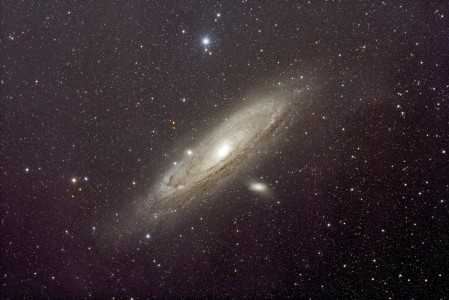
M31 with Redcat 51

My Account

New to Astromart?

Register an account...

Need Help?

Posts Made By: Inge Skauvik

March 17, 2005 11:18 AM Forum: Deep Sky Observing

Detecting detail in nebulae

Posted By Inge Skauvik

I have raised this issue previously, but since it is of considerable interest for the visual observer, and since new users probably now follow the discussion, I find it relevant to start a new thread about this.

Old DSO lists and tables used to list the integrated magnitude (sometimes together with the size of the object), and I used to believe that the visibility of the objects was closely related to the magnitude. Practical observation, however, showed me that it wasn't that simple.

More recently (like in the Night Sky Observer's Guide) surface brightness is also listed for galaxies and some other nebulae. This helps identifying large objects with low surface brightness, and is definitely a good supplement to the integrated magnitude.

However, even the surface brightness doesn't represent the whole truth. One reason is that the surface brightness is usually calculated from the integrated magnitude and the "visual extent" of the object. This is a rather rough simplification, since the surface brightness is normally not homogeneous across the object. An object with a very bright core surrounded by a large halo (e.g. M94), may get a relatively low value for the surface brightness, even though the central region is unusually bright.

I'm convinced that for low surface brightness objects the brightness gradient (how quickly it changes with position) plays a key role. A large face-on galaxy with a faint core where the brightness slowly drops towards the edge may be very difficult to detect. A similar galaxy which is nearly edge-on will be much easier to detect, since the distance from the core to the nearest edge becomes much smaller (higher gradient). The perfect sky map in my opinion should use isophotes (lines of equal light intensity) for the nebulae. Where the distance between the isophotes is large, the object will be difficult to detect, but where the isophotes are close to each other, the object will be easy to detect.

To some extent this is connected with the question of magnification on nebulae and galaxies. A lower magnification will bring the isophotes closer together in the image of the eyepiece than a higher magnification. The drawback of low magnification, however, is that the sky background becomes bright. And small, intricate detail may require more magnification. For extended objects with small brightness gradients, however, it seems that the optimum magnification is considerably lower than for objects like, e.g. M82, where the amount of detail is large, and the magnitude of the brightness gradients are larger.

Inge S

March 30, 2005 08:42 AM Forum: Deep Sky Observing

Spoiled

Posted By Inge Skauvik

It had to end up this way at last. A friend of mine finally completed his 18-inch Dob project, and yesterday night I had the chance to look through it for the first time. I have never looked through anything bigger than my own 12.5-inch before, and until now I have considered this to be a pretty large aperture. The leap to 18 inches gives a gain of one step on the magnitude scale, and of course it was very exiting to make the first views with it.

Of course such a large beast takes some effort to set up, and a ladder is often needed to reach the eyepiece. But still I found it surprisingly easy to use, and it was smooth and stable.

We observed quite a few objects, and I'll mention just a few ones here.

M51 appeared as on a photograph with this aperture, the only difference being that the direct view through the telescope is much more thrilling. The amount of detail is significantly larger than what can be made out with the 12.5-inch.

M101 was even more beautiful with several foreground stars, and with the emission nebulae in the spiral arms very bright and clear.

I have always paid much attention to the NGC3190 group in Leo. With an 8-inch scope NGC3190 and 3193 are not difficult to see. NGC3185 is quite difficult and NGC3187 is hardly visible with 12.5-inches of aperture. In the 18-inch all galaxies were clearly visible, the orientation of 3190 and 3187 being almost equal.

I have tried to make out the spiral structure of M99 with my 12.5-inch, but without success. In the 18-inch the spiral arms were easy to see.

In the Coma cluster the two giant ellipticals in the centre are within range for 8- and 12.5-inch scopes. Seeing more is very difficult. With the 18-inch an enormous number of faint smudges were distributed over the field of view. It is very facinating to contemplate over the real nature of those faint light spots. Hard to imagine, really.

We also observed some of the great star clusters. M13 was, of course, awesome. M37 was a very beautiful view, and seeing individual stars in distant NGC2158 (edge of M35) was not difficult at all.

I'm a bit worried about how it will be to return to the 12.5-inch after this. The drawback of the big scope is, of course, its size and weight. But the direct view of a galaxy like M101 with such an aperture is to die for. And I positively know that there are bigger scopes out there....

Inge S

April 1, 2005 06:31 AM Forum: Deep Sky Observing

Another challenging galaxy

Posted By Inge Skauvik

In previous threads, galaxies like NGC147, NGC185, NGC4236 and IC342 have been subject to discussion.

Last night I found another interesting galaxy where the integrated magnitude is 10.6, but still it is very difficult to see due to a very low surface brightness. (Another of those elusive face-on spirals).

The galaxy in question is NGC4395 in Canes Venatici. It lies very near the Coma border, 4 - 5 degrees east of the showpiece galaxies, NGC4631 and NGC4656.

I used my 12.5-inch, where it appeared as a faint round patch, say 20' in diameter. Some condensations could be suspected.

I guess that the galaxy can be seen in a good 8-inch scope. But is it possible with less?

Inge S

April 13, 2005 12:34 PM Forum: Equipment Talk

Very lightweight dobs in the 15 - 20-inch range

Posted By Inge Skauvik

During a period of 8 - 10 years I have had a growing appetite for aperture. From a very modest 80mm in 1996, I have upgraded through an 8-inch to my present 12.5-inch. Having had the chance to try the 18-inch of a friend, I realise that a further increase in aperture not only gives an improvement in the ability to see detail in faint nebulae, but also can give a substantial gain in resolving power.

I have not followed any recent threads about big dobs, so I hope for a quick update about the present market of scopes in the 15 - 20-inch range.

I'm basically interested in the biggest aperture that can be handled by a single person, and transported by a normal (European/Japanese) car.

I'm still a bit sceptical to fast scopes. My friend's 18-inch is f/5, and I was impressed by the planetary and double star images of this scope.

My local weather conditions are generally very unstable, but when the sky clears up, seeing is often good (0.5").

In which direction should I move?

Inge S

April 27, 2005 06:16 AM Forum: Deep Sky Observing

Last observing night - until August

Posted By Inge Skauvik

The period of nocturnal darkness is drawing to an end here in the high north, and it is time to put the scope away for the summer season. Yesterday night was clear, and I decided to sacrifice som hours of sleep to have a galaxy observing session with my 12.5-inch Portaball. Seeing wasn't excellent, and the sky in the north was still bright when I started observing at 11:45 pm. Therefore I used the first 30 minutes to teach a friend how to locate a couple of objects. From about 00:30 until the moon came up an hour later, the sky was dark enough for some decent deep-sky work. Totally I logged 58 galaxies this night. I spent some minutes galaxy hopping with a 13mm Nagler in the central part of the Virgo cluster, and just along the chain between M84 to M88 I found 18 galaxies. Afterwards I made a stroll through M87 with its satelites, down to the Siamese twins.

After a period of observing just moderately bright galaxies, I spent some time on the large spirals in Canes Venatici and Ursa Major. With this aperture M51 clearly shows its spiral structure at 63x magnification. More detail is, however, seen with higher power. M101 is great with the 13mm Nagler. I consider it to be the most appealing of the spiral galaxies within reach of my scope. This time I also located a group of neighbours to M101. The galaxies, NGC5473, 5422, 5443, 5475 and 5485 are almost arranged in a circle. None of them are impressive, but are easily found, and will probably be within range for smaller scopes.

After a new period of fuzzyball viewing, I turned to M106 which is an awesome galaxy, impressive in size and brightness, but not showing any appreciable spiral pattern. It has two neighbours, NGC4346 and 4271 (possibly line of sight coincidence), both much smaller, but with high surface brightness. In particular I found 4271 very appealing, being so different from the large galaxy.

Another very bright galaxy in the region is NGC4449. Yesterday night I saw it for the first time in the 12.5-inch and I was really impressed. A much smaller galaxy, NGC4460 is located nearby.

I also observed some globular clusters, all being old friends. M13, of course, and M5, which I don't observe so often. M53 is still fainter, but it is well resolved. Some effort was needed to spot the "ghost" of M53, NGC5053. Now the moon started interfering, and the sky background was affected. At 115x power, however, I could see individual stars in 5053.

I also observed a pair of calaxies in Draco, NGC4291 and NGC4319. They are fuzzyballs in the 12.5-inch, but I tried to use them as a guide to the distant quasar, Markarian 205. However, the sky wasn't dark enough for me to spot this faint starlike object.

Inge S

May 2, 2005 12:41 PM Forum: Deep Sky Observing

Some words from the moderator

Posted By Inge Skauvik

Hi all, and thank you for your support!

I need your help to keep this forum alive, and welcome the contributions from everyone.

All kinds of deep-sky related stuff is welcome. Personally I enjoy reading observation reports, and in particular I hope that novices (not necessarily equipped with large, expensive telescopes) will contribute. A binocular observation of the Coma Berenices star clusters is just as welcome as a post describing the emission regions in M74 based on observations with a 20-inch Starmaster.

I have followed the discussions under this forum for quite some time, and hardly seen any irrelevant posts. I hope that the number of active contributors and posts will increase rather than decrease.

Thank you in advance for your cooperation!

Inge S

May 2, 2005 12:58 PM Forum: Deep Sky Observing

M83 ????

Posted By Inge Skauvik

I'm very curious about objects that are too far south to be observed from my location. Of course, we have the famous wonders of the southern sky like the Magellanic clouds, the Jewel box and the Eta Carinae nebula complex.

But I'm also interested in objects that can't be observed from here, but are within range for observers in Southern Europe and the US. Have anyone observed M83 recently? How does this galaxy compare with the great spirals of Canes Venatici and Ursa Major?

Any reports about NGC4038/39? What about NGC5128? Which is the smallest aperture needed to see the dust lane in this galaxy?

Come on, guys!

Inge S

May 11, 2005 05:56 AM Forum: Deep Sky Observing

Very good, but neglected galaxies

Posted By Inge Skauvik

I'd like to draw your attention to a couple of nice galaxies in Coma Berenices, which tend to be overlooked. Both are located east of the Coma star cluster. NGC4559 is a very fine galaxy showing some detail even in modest scopes. It is located north of the famous edge-on NGC4565. 4559 is the brighter of the two, and can be spotted without difficulty in a 3-inch scope under average conditions.

NGC4725 is another great object, still further east and a bit to the south. I found it quite impressive with an 8-inch, and in my 12.5-inch spiral structure can be glimpsed with averted vision and 170x magnification. If NGC4725 were located e.g. in Pegasus, it would probably be considered a show object, but at its present location, nearby M64 gets all the attention.

Have anyone observed these galaxies lately? They are both recommended targets even in small scopes.

Inge S

May 12, 2005 07:05 PM Forum: Deep Sky Observing

A bad idea (INFO)

Posted By Inge Skauvik

Concerning the thread "Present yourself..." I realise that this was irrelevant. I got some good advice from users of the forum, and on the basis of this the thread was deleted.(For some reason one of the posts was impossible to remove - hopefully not a big problem)

Inge S

May 24, 2005 11:33 AM Forum: Deep Sky Observing

Lunar occultation of globulars

Posted By Inge Skauvik

I assume that the moon will occult globular clusters like M4 every now and then. At full moon I wouldn't expect it to be a really interesting sight, but at new moon and under relatively dark conditions this must be interesting to follow (for an observer in the south, of course).
Have anyone witnessed such an event?

Inge S