Image of the day

Captured by
Ralph Ford

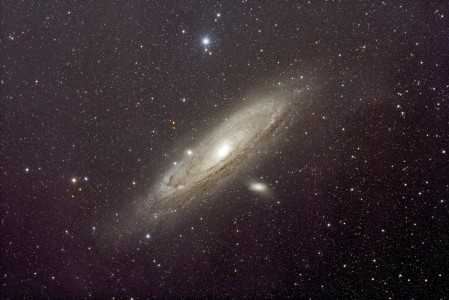
M31 with Redcat 51

My Account

New to Astromart?

Register an account...

Need Help?

Posts Made By: Kim Colter

October 25, 2003 07:13 AM Forum: Astro-Physics

AP 130 f/6 waiting list

Posted By Kim Colter

Debbie
About four years ago I found out that you are not able to trade your spot on one list for your spot on another. I was on the Traveler list. I found a Traveler on Astromart and bought it. I thought when my turn came up on "the list" that I could buy a 6 inch AP. When I was notified about the chance to buy a Traveler I naively asked to buy a 6 inch instead. No luck. The only way to get on the 130f6 list is to put your name on that list. While waiting to get your Traveler and then seeing if someone wants to trade is an option, you could certainly consider purchasing a 130f6 that comes up on Astromart before your name comes up for the Traveler. It seems that they (AP 130f6)are listed here with some regularity.

December 6, 2003 08:27 PM Forum: Deep Sky Observing

M1 Crab Nebula Neutron Star (Pulsar)

Posted By Kim Colter

Lee
My observing buddy, Mark Birkmann, and I felt that we saw the Crab nebula pulsar with our 40 inch f5 Swayze Dob two years ago. We had a diagram showing its location and were able to detect a star that seemed to be the proper magnitude in the proper location. I realize there is the possiblity that we were seeing a field star of similar magnitude in about the right location. I'm not sure how one can be absolutely certain they are seeing the pulsar and not a field star when observing visually. As to the minimum aperture necessary, I can't really address that. The night we were convinced we saw it had excellent transparency and good seeing as well and the nebulae was just about at the zenith while we were observing. Mark may have kept a log of the observation, I will ask him and update my response if there is any more relevant information.

January 24, 2004 04:19 PM Forum: Deep Sky Observing

Colourful DSOs?

Posted By Kim Colter

Inge
I would agree that color is common in planetary nebula. I see M57 as a neon blue smoke ring, The Ghost of Jupiter has both blue and green in it to my eye, the eskimo nebula has a bluish purplish tint to it's nebulosity, NGC 6543 is bluish, NGC 7662 is aptly named as the "blue snowball",
I must ask my 12 year old daughter, the one with the 9mm pupils and the 20/15 vision to look at some DSO's and tell me what she sees as far as color. I suppose there is the possibility that some of us old guys with large aperture instruments might be suffering from a "Monet" effect where as we develop lens opacification and cataracts some colors are transmitted better than others to our retinas. However, as I understood the explanation for Monet's "blue period", I think it was said that he had to put loads of blue on his canvas in order to get enough blue to come through his aging lens and have his painting look "blue enough" to him. If that be true, I guess Monet would have seen yellow more easily when observing than blue.

March 23, 2004 12:23 AM Forum: Deep Sky Observing

Obscuring clouds in external galaxies

Posted By Kim Colter

Inge
The dust lanes of the galaxies you have mentioned (and others) are seen to great advantage in large Dobs. In my 40 inch f5 Swayze Dob the dust lanes of NGC 4565 and M104 look very much like they look in astrophotos. (Not like the Hubble heritage photo of the sombrero, like ground based astrophotos.) NGC 891 is one of my favorites, the dust lane in this ghostly galaxy is quite well seen.
In truth, these dust lanes are well seen in a 20 inch Dob as well.
Your post has reminded me to look back at NGC 3628 and study its' dust lane.
The dust lanes in Andromeda are prominent in the 40 inch, but minimum magnification there is about 167X so one cannot fit the entire galaxy into one field of view. For that reason, the view of M31's dust lanes in the 20 inch from a truly dark site like the Western US national parks may be more striking with respect to the dust lanes. If you want to hunt globular clusters in M31, the 40 inch is better.

April 15, 2004 11:45 AM Forum: Telescope Making

May 7, 2004 01:18 PM Forum: Deep Sky Observing

Help, a good place to observe in Ozarks MO/AR?

Posted By Kim Colter

Paul
I have a pretty good deep sky site on the south bank Missouri River about 70 miles west of St. Louis. If our schedules are mutually compatible and you are coming somewhere close enough to me to make the trip work you would be welcome there. When/where are you coming? You can locate my observatory using the clear sky clock page, look for "Colter Menke observatory" under Missouri clear sky clocks.
Kim Colter
Washington, MO

June 22, 2004 11:20 AM Forum: Zeiss

APQ focuser

Posted By Kim Colter

Paul
I am not well qualified to answer this. Bob Luffel emailed me instructions for adjusting the backlash. It isn't too hard to do although I don't know if I have mine exactly where I want it yet or not. I am not aware of lubrication requirements. I am not at home to access the info on backlash adjustment but would happily send it along to you or post it here. Bob Luffel from Alpine Astronomical in Eagle, Idaho would be a good source of info on this. Kevin Barker would probably have some good input as well.
Kim

June 24, 2004 12:17 PM Forum: Zeiss

APQ focuser

Posted By Kim Colter

Paul
I attempted to forward an email to you today that has Bob Luffel's description of how to adjust the APQ focuser for tension and backlash. Hope it came through, I used a 2002 email address for you.

July 11, 2004 10:11 PM Forum: Deep Sky Observing

Omega Centauri--When to View?

Posted By Kim Colter

James
I see it at 38 degrees north latitude in Missouri just before morning astronomical twilight begins in January every year. Omega peeks over the southern horizon just as Spica culminates at your location. You can use one of those charts Sky and Telescope puts out that has the diagonal lines from right to left showing the times that various bright stars and planets culminate throughout the year. In February at WSP it culminates at about 4 AM. Every month the time of culmination should move two hours earlier, so mid March would be about 2 AM, mid April about midnight, mid May around 10 PM. I have seen it in June at Grand Canyon Star Party just after dark. I doubt that it is visible now unless you go farther south. By the time it is dark now, Spica has already passed the meridian. To find it use binos when Spica is culminating and drop directly to the horizon. You will find it a few degrees above the horizon if there isn't a lot of haze there. Once you have found it, swing the binos up to M13 and compare the size. I always say that Omega looks like a quarter and M13 like a dime when I make the comparison.
So, head south now or wait for very late December/early January right before dawn.

July 23, 2004 10:47 PM Forum: Deep Sky Observing

Find quasars other than 3C 273

Posted By Kim Colter

Doug
You may have this list already. There is a list of 17 "bright" quasars at http://www.seds.org/~spider/spider/Misc/qso.html
These all have apparent magnitudes greater than 15.0. The list includes RA and Dec values and the names of constellations. It doesn't include finder charts. Maurice Clark had a very nice finder chart for TON 490 in Leo at his web site when he was in Australia. That site was still up (a Murdoch University in Perth site) for quite awhile after Maurice came to the states. I have that data somewhere but don't have it with me in my car. I will see if I can find it. If memory serves me TON 490 is about 12 billion light years distant (correction: 8 billion light years) and represents one of the most distant objects one can expect to see with a large amateur telescope. I have seen it on a couple of occasions. It is located above and slightly behind the "sickle" of Leo. The twin quasar is very nice and if you catch the right combination of transparency and seeing it can be "split". Seeing a gravitationally lensed quasar with an amateur scope is pretty nice. As I type this I realize I am describing several objects that are not at all well placed for observing right now. Hopefully some other forum members will be able to point you to charts for other quasars. If your scope has a Sky Commander or another form of digital setting circles it will facilitate finding some of these dim objects. Good hunting when the season and the sky allows.