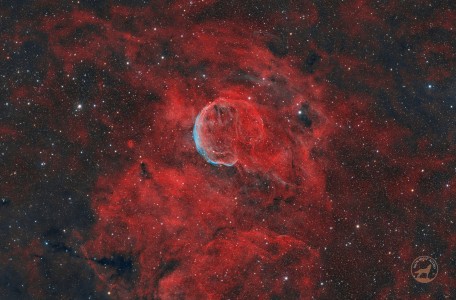
Image of the day

Captured by
Douglas Rollain

LBN 576 - The Garlic Nebula

My Account

New to Astromart?

Register an account...

Need Help?

Posts Made By: Paul Maxson

February 18, 2009 09:43 PM Forum: Refractors

Eon 120 OD

Posted By Paul Maxson

Hi all,

Does anyone know what the outside diameter is of the sun shade on the Eon 120?

Thanks!!
Paul Maxson

February 18, 2009 10:54 PM Forum: CCD Imaging and Processing/Solar System

Venus January 7, 2009

Posted By Paul Maxson

Hi all,

Here is a Venus from January 7, 2009. I used the Astrodon UV filter for this image for the first time.

http://www.sunspot51.com/Venus/Venus2006/Venus010609.jpg

Paul Maxson

February 28, 2009 01:48 PM Forum: CCD Imaging and Processing/Solar System

Registax 5 has been released!

Posted By Paul Maxson

You can get it and the manual at:

http://www.astronomie.be/registax/

Enjoy!
Paul Maxson

March 1, 2009 11:38 PM Forum: CCD Imaging and Processing/Solar System

Venus January 15, 2009

Posted By Paul Maxson

Hi all,

Seeing was getting better for this image, still not great though.

http://www.sunspot51.com/Venus/Venus2006/Venus011509.jpg

Paul

March 5, 2009 11:16 PM Forum: CCD Imaging and Processing/Solar System

Venus January 18, 2009

Posted By Paul Maxson

Hi all,

Seeing cooperated on this day.

http://www.sunspot51.com/Venus/Venus2006/Venus011809.jpg

Paul

March 17, 2009 06:19 PM Forum: CCD Imaging and Processing/Solar System

Saturn March 16, 2009

Posted By Paul Maxson

Hi all,

I shot this image on the evening of March 16 (actually about 6UT March 17). I'll probably reprocess it more carefully later, but the first draft turned out well enough to post. grin

This is a stack of 800 frames in each R,G,B shot through a Mewlon 250 scope at F/32. I used a SKYnyx camera with settings of 1.0 for each Gamma, Contrast and Brightness (in LuCam Recorder). The gain was 18, the frame rate was 17fps and exposure of 60ms (1/17sec).

Here at my NW Phoenix location my best seeing is just starting and normally lasts until late May...time to get cracking!! Thanks for looking.

http://www.sunspot51.com/Misc/r-RGBb.jpg

Paul Maxson

March 22, 2009 10:50 PM Forum: CCD Imaging and Processing/Solar System

Venus Feb 5, 2009

Posted By Paul Maxson

Hi all,

Seeing improved some for these images. About March 27 Venus becomes a morning star.

http://www.sunspot51.com/Venus/Venus2006/Venus020409.jpg

Paul Maxson

March 26, 2009 05:46 PM Forum: CCD Imaging and Processing/Solar System

Solar proms today....

Posted By Paul Maxson

Hi all,

I was viewing the sun in H-a today and it has some rather nice proms. I'm not sure of my directions, but here are the largest two:

http://www.sunspot51.com/Misc/Sun032609-Flare1.jpg
http://www.sunspot51.com/Misc/Sun032609-02pro-flare2.jpg

Shot with an Eon120 and SM60 at F/19.

Clear skies!
Paul Maxson

March 31, 2009 01:24 AM Forum: CCD Imaging and Processing/Solar System

Saturn March 29

Posted By Paul Maxson

Hi all,

I had some decent seeing on the evening of March 28 and got the following Saturn image. It was shot at about 350UT (March 29) with the 10" at F/32. I resized the image by 1.2x during Registax processing. The moon, Rhea, is seen at about 2 o'clock. A bright spot can be seen in the middle of the disk just under the shadow of the rings.

Paul

April 2, 2009 01:59 PM Forum: Refractors

Re: New study: FPL-53 is unstable

Posted By Paul Maxson

It was my understanding that this problem went away if the scope was totally immersed in water during observing.

Paul

Ed Neuzil said:

04/01/2009 FOR IMMEDIATE RELEASE:

A long-term study to be published in the SPIE (Society of
Photo-Optical Instrumentation Engineers) journal Optical
Engineering
has found that the fluoro-crown glass FPL-53,
widely used in telescope lenses, suffers from long-term
degradation. While it is well known that standard crowns
and flints, such as BK-7 and F2, have a stability now
measured in centuries, FPL-53 is a fairly recent glass
formulation and up to now there had been very little
data on its long term stability. The study finds that
the glass begins to devitrify after 20 years, and will
eventually become cloudy and opaque. Numerous microscopic
stress fractures also form in the glass. Full details
can be found in the May issue of Optical Engineering.
