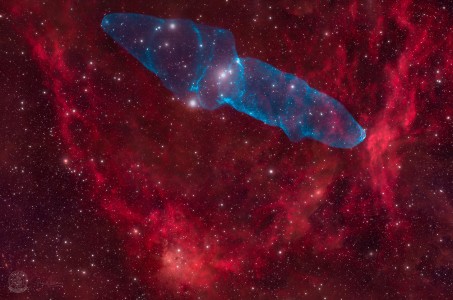
Image of the day

Captured by
Bruce Karbal

Bat and Squid

My Account

New to Astromart?

Register an account...

Need Help?

Posts Made By: Dan Ritts

February 20, 2009 12:45 PM Forum: Refractors

AP 130 GT price?

Posted By Dan Ritts

Anybody know what the final selling price was on that A-P 130 GT that was just taken off the Astromart auction site? I meant to check early this morning and slept through my alarm. javascript:insertEmoticon(getObj('body_tx'),%20':S');

Thanks

March 5, 2009 02:05 PM Forum: Telescope Making

source of 8", 10" parabolic mirrors?

Posted By Dan Ritts

I've been out of the hobby for some years, and now it seems that very few of the top mirror makers are bothering with optics below 12.5" dia. Can someone point me to the best sources for smaller Newtonian mirrors in the 6" - 10" range?

Also, does anybody know what became of the 10" f/5.6 plate glass mirror that was up for sale on Astromart a few weeks ago? Does anyone remember who was selling it? I wonder if it was taken off the list because it wasn't selling?

Thanks a lot!
D


March 15, 2009 02:16 PM Forum: Telescope Making

source for good newtonian spiders and secondary ho

Posted By Dan Ritts

I've built several scopes, including my current 14.5" dob with tectron parts purchased back in the mid 90's. At the time there was little choice in spiders and secondary holders as I recall, and I ended up with a straight four-vane model by novak I think. I would rate it as barely tolerable. Very difficult to accurately collimate. The threaded rod with nuts on both ends is difficult to secure without torqueing the mirror out of alignment with the focuser, and the angle adjustment for the secondary is even more frustrating. I've seen the VERY expensive ones from observatory.org, and that's out of the question. Who makes good mid-priced spiders now-a-days for mirrors 8" - 20"?? Thanks!

May 5, 2009 04:18 PM Forum: Refractors

collimating a TV Pronto?

Posted By Dan Ritts

Hello all,

Is collimating a TeleVue Pronto yourself advisable or is this best left to the folks at TeleVue? I'm an avid do-it-yourselfer so I'd like to give it a shot if it's feasible. However, I do not see three collimating push-pull screws on this lens cell.

With the lens cap on and using the cheshire I can see that the sets of small circles are not concentric. One set of circles is offset from the others by about 30-40% the diameter of the circle. In other words, they overlap but are clearly misaligned. I'm not sure how out-of-whack this is in the big scheme of things since I've never attempted to collimate a refractor, but a star at high power shows some asymmetry slightly out of focus, and doesn't snap into focus at any one point. There's a small range of equally mediocre focus positions. I also feel there might be an overall loss in contrast from what I remember this scope capable of when it was younger. Does this all strongly suggest that it's likely out of collimation?

Thanks for your advice,
Dan

July 7, 2009 10:54 AM Forum: Refractors

AP 130GT first light, star test question

Posted By Dan Ritts

In the fleeting few minutes of my first light with my new AP 130 GT (new from AP), before the clouds closed up, I observed an out of focus star that appeared slightly but obviously flattened on the bottom (inside focus). I had taken the scope out of the house just five minutes earlier, and I'd say the difference between inside and outside temperature was no more than 5 degrees - whatever it was, I couldn't really feel a temperature difference. The scope spent the day in its case in a room that was also at more or less ambient outdoor temperature. The diffraction pattern I observed looked like a textbook picture of the effects of tube currents. But a refractor with such a small temperature differential would show this? Unfortunately, the sky immediately clouded over and the mosquitoes were out in force. At one point during the star test I think one walked across the objective. [gasp]
I gotta say, it would be hard to overstate the beauty of this instrument. This is my first refractor and probably my last.

Dan

August 25, 2009 01:51 AM Forum: Equipment Talk

truss designs and rigidity

Posted By Dan Ritts

Back when I made my dob in around '93, guided mostly by the book by Tom Clark of Tectron Telescopes, one paradigm of good truss OTA design was 8 LARGE diameter poles in the typical criss cross arrangement in order to reduce flex to a negligible amount, helping ensure good collimation at both zenith and horizon. The angled trusses force the stress into tube tension/compression, with aluminum tube being extremely resistant to either deflection. But now I see designs such as the well-reviewed Teleport and similar parallel-pole mass-produced models which seem to ignore this tenet of engineering. The Teleport in particular interests me since not only are there only four parallel poles, but they even have tripod style fittings allowing the tubes to collapse. So is the value of 8 angled pole rigidity overstated? Any insight into this change in style would be appreciated. If I could find a good source of tripod style telescoping tubing fittings I would like to rebuild my dob and take advantage of this sort of design.

Thanks,
Dan

October 31, 2009 02:45 PM Forum: Telescope Making

secondary mirror sizing

Posted By Dan Ritts

Hello all,
Could someone please direct me to a good explanation of proper secondary sizing, illuminated field diameter, etc?

I ask because I've long suspected my secondary is undersized. If memory serves me, I followed the advice of Tom Clark of Tectron Telescopes back in the early '90s. I used a 2.14" secondary for my 14.5" f/5.2 primary. If nothing else, it makes collimation harder for me as I can not see the periphery of the primary in the reflection of the secondary. I also suspect some vignetting. What do you all think?

Forgot to say that this is a Newtonian we're talking about... a typical Dobsonian.

Thanks,
Dan

November 10, 2009 01:16 AM Forum: Telescope Making

fork mounted newtonian

Posted By Dan Ritts

Hello all,

I got into astronomy using a equatorial fork mounted 12.5" f/5 Newtonian permanently mounted in a dome. I always enjoyed that instrument and found it very comfortable to use with its rotating solid tube. You don't see many fork mounted Newts however in the 12-18" aperture range. What is the reason for this? Is the equitorial fork mount inferior to a German or split ring equatorial on some level?

My MAIN question is however whether there's any reason a good fork couldn't be made of wood instead of welded steel plate. As a woodworker I'm always approaching ATM projects from a wood rather than metal perspective. I have CNC capability and my intuition tells me I could easily produce a baltic birch fork that would be interally braced, harmonically dead, and plenty strong enough. At least for visual purposes (maybe flexure or wood movement would be more of a concern for long exposure photography), would this seem to be an economical basis for a permanently installed tracking Newtonian?

Thanks,
Dan

November 22, 2009 04:59 PM Forum: Equipment Talk

trying to reconsile mirror test data with observat

Posted By Dan Ritts

Last night our astronomy club decided to compare their 15" f/4.8 Tectron Dob against a nearly identical 14.5" f/5.1 Dob with a Galaxy mirror and an Astro-Physics 130-GT refractor. The club Tectron has a mirror that many members feel is inferior. It was tested and found to have a turned edge at the outer 0.3" - 0.4" averaging 1/4 - 1/2 wave and a zonal depression spanning the central ~3.5" dia. of approx 1/6 - 1/4 wave. Some slight astigmatism (~1/8 wave) and some surface roughness was noted. The specific test numbers are as follows:

TECTRON MIRROR TEST RESULTS
---------------------------
Description: 15" Mirror
Ross Null test @ 543 nm
Output Units: Waves
RMS: 0.113
Peak-Valley: 0.85
Strehl Ratio: 0.60
Defocus: Removed
Astigmatism: 0.15 54.6deg
Coma: 0.15 -59.3deg
Spherical: -1.09
Scale: 1.00
Wavelength: 543.8 nm
Data Sets: 10
---------------------------

The Galaxy mirror has never been tested, but I've never been thrilled with its performance above about ~150x. The image seems to break down, even in good seeing. I'm not a terribly experienced observer however, so I've never been able to say with confidence that it's the mirror's fault.

Seeing was mediocre last night. Transparency was pretty good. We pointed all three scopes at Polaris at about ~160x with Nagler eyepieces. This was the only magnification our eyepiece collection would permit on all three scopes at the same time. All scopes were set up before dusk and had hours to acclimate. However, temps were dropping by at least several degrees per hour leading up to the testing. Both mirrors are 2" thick and neither had fans running.

The Tectron displayed an out of focus outer diffraction ring with pronounced "spikiness" and some asymmetry. Turbulence prevented much analysis of the inner diffraction pattern but I did think it was a bit mottled which I assume could be the surface roughness.

Some thought the Galaxy mirror seemed a little more uniform inside the outer ring and a little less spiky on the outer diffraction ring. Others couldn't really see a difference. Any differences were certainly subtle.

The A-P's diffraction pattern was much smoother, seemingly perfectly round, with a very uniform and smooth outer ring. The inner diffraction rings were much more steady and easier to see. Overall the difference between the reflectors and the AP was huge compared to the differences between the two reflectors.

All observers felt that the Tectron showed a very pleasing IN-FOCUS image of the orion nebula at ~107x with a 17 Ethos. In-focus stars seemed pretty nice and round.

At the suggestion of the mirror tester, an aperture mask was cut from roofing paper to mask off the outer 0.5" of the mirror, covering the turned edge. No clear improvement was observed at the eyepiece, though we didn't look very hard for differences.

I found a few things surprising about these results: First, that a mirror with such a low Strehl could produce an image of the orion nebula that was everyone thought was hard to fault at 107x. Second, that a Galaxy mirror did not clearly outperform the Tectron of known low quality. Third, that the AP blew away a Galaxy mirror in the out of focus star image with much smoother outer ring and much more visible inner ring structure.

My first question is how much of a very good mirror's strehl might be "wasted" in typical New England seeing conditions? I've never been able to reconcile the immutable laws of physics stating the diffraction limit strehl of 0.80 with scope manufacturers' and consumers' obsession with getting as close as possible to strehl 1.00. People pay double for a strehl .98 objective compared to a .8 one. How visible is this difference in reality and under what conditions might it be INVISIBLE?

Is it plausible that the Galaxy mirror might be diffraction limited or better, but that some combination of the seeing and some thermal issues with the scope prevented any meaningful improvement in the image compared to the Tectron's .6 strehl? Or is it more likely the Galaxy mirror is a lemon and comparable in quality to the Tectron?

The answers to these questions will help the club determine how worthwhile it is to have the mirror refigured and what improvements we might reasonably expect with a top quality mirror.

Thanks for your input,
Dan


March 15, 2009 08:46 PM Forum: Telescope Making

source for good newtonian spiders and secondary ho

Posted By Dan Ritts

thanks gents - that's what I was looking for.
-D
