Hope everybody can give me some pointers
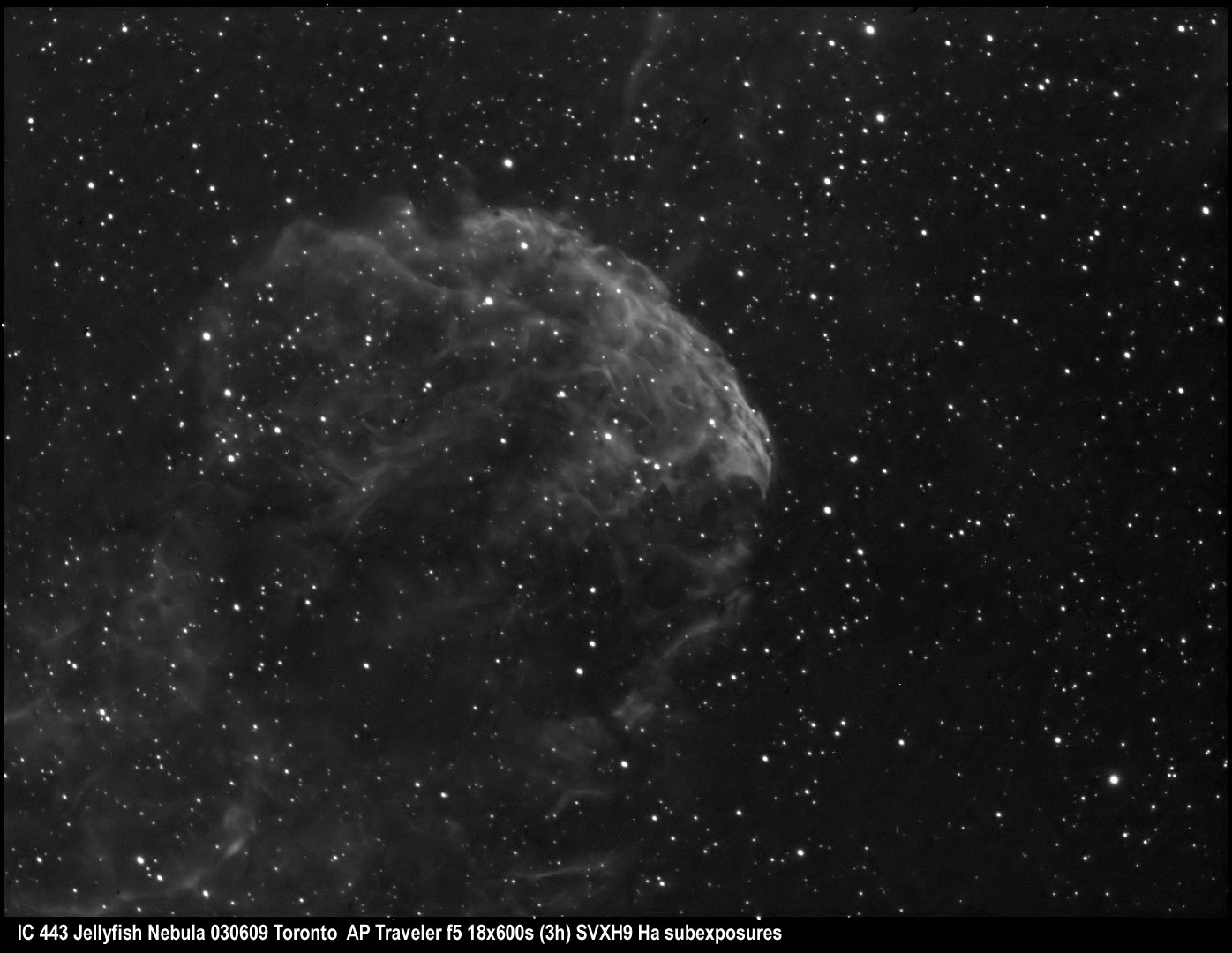
Haven't used the Traveller for a few months and took it out to do some Ha imaging but when I fine adjust the focus instead of a round star I get an enlongated star even on axis. I can't imagine that the scope has been knocked out of collimation since it lives in a padded hard case in the garage and although its cold in Toronto, its only about -10 C. Any ideas? These are also very short exposures on the order of 1 s so its not a mount drift issue and I'm focusing via the CCD and observing the star shape on my laptop. I initially thought that maybe the CCD wasn't orthogonal to the tube and adjusted the compression ring so it was better centered but no difference.
Haven't used the Traveller for a few months and took it out to do some Ha imaging but when I fine adjust the focus instead of a round star I get an enlongated star even on axis. I can't imagine that the scope has been knocked out of collimation since it lives in a padded hard case in the garage and although its cold in Toronto, its only about -10 C. Any ideas? These are also very short exposures on the order of 1 s so its not a mount drift issue and I'm focusing via the CCD and observing the star shape on my laptop. I initially thought that maybe the CCD wasn't orthogonal to the tube and adjusted the compression ring so it was better centered but no difference.