Amateur Takes Photos From Edge of Space... NASA Wants to Know How
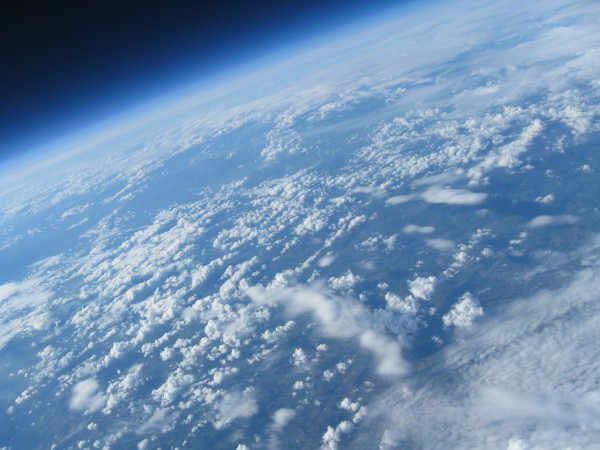
Some pretty impressive images of the Earth from the edge of space have been captured by Robert Harrison, an amatuer photographer in the UK, using a cheap digital camera purchased on eBay, a helium balloon, a texting cellphone with GPS capabilities, and a bunch of duct tape. The rig had experts at NASA scratching their heads.
Comments:
Well... there's been software for years that let's a plane run on auto pilot. I wonder how much you could strip it down just to fly the camera back to it's starting point. There's plenty of R/C airplanes. We have small enough GPS processors. How much computer does it take to steer the plane back home? If it's 20 miles up and you could get a 5:1 to 10:1 glide ratio it could be 200 miles away and still make it back.<br>Ok all you hackers, get to work. Do some surgery on an old blackberry and tell that plane what to do. Write an app that reads the GPS offf the phone and sends the right signals to the r/c servos.
Wow....Has been done before, see story from MIT student's, Sept. 2009 <br>http://space.1337arts.com/<br>Looks like a whole new era of exploration is ahead <img class='' src='http://new.astromart.com/astromart/javascripts/sceditor/emoticons/wink.png' alt='wink' title='wink'/> <br>
If 150 - 300 dollars can lift a camera to 95,000 feet,<br>how much would it cost to lift a gyro-stablized GPS position monitored platform with a tracking mount and 10" RC OTA to that level or perhaps higher. How about a 20"?<br><br>I think many of us breathed a long sigh of relief when S O F I A was ressurected a year ago, but - in this case - amateur ingenuity has demonstrated how we might collect data at a very low cost by marring old technology to new.<br><br>Somewhere today, there is a high school senior reading about this stuff as he prepares to continue his physics education at an institution of higher education this fall. If he has been and continues to be part of a local astronomy club, perhaps he will be the innovator who will lead us to put productive floating atmospheric observatories into the stratosphere before 2020. <br><br>In a world where energy efficiency and resourcefulness are directly related to the future of our species, the first amateurs to send cameras 20 miles high (with nothing but the principle of simple buoyancy) for a few bucks may render thirsty 400 ton 747s with telescopes as obsolete as 5 megabyte hard drives the size of a refrigerator.<br><br>A more capable infrared observatory with a much longer duty cycle looking through less atmosphere and providing an international data source is a good thing! If fuel cost, pilots, ground crew, aircraft maintenance and other operating costs are not an issue, most of the dollars are serving science.<br><br>We can float a stable platform at 100,000 feet. It may move around, but GPS technology can easily be incorporated along with gyro stabilizers to target with accuracy measured in arc seconds or better.
I am the faculty sponsor for a NASA funded educational program that routinely launches high altitude balloons and make photos such as those posted in this article. It is rather doubtful that NASA is "scratching its head" since every state in the union receives funds for flights like this and several universities and colleges in each state have balloon programs. Results from each participating school are presented annually at regional and national conventions. For information in your state check for Space Grant Consortium listings. Attached is a photo from a recent flight.<br><br>Prof. Tim Frazier<br>Idaho State University
Amazing photo!
I agree that it's been done before and it's continuing to be done by researchers and hobbyists. There was a article about this using a title or a segue about low-cost space exploration (my seive-live memory thinks this was video segment on a science or technology show) showing a university professor and students (Prof. Frazier?) launching a balloon with camera and chasing it across a whole lot of territory before recovering the balloon and looking at the recorded images.<br><br>There are now movies taken from these balloons and one ad in HD, no less, for Toshiba. You can see this Toshiba HD movie on YouTube. I know ASTROMART has a thing about ads here, but I'm not advertising anything other than mentioning the video that's on youtube. The video is short, barely 1-minute long compared to the 1-hr flight that it takes to rise to nearly 100,000 ft altitude. <br><br>Toshiba called it "The Space Chair Project". <br><br>Here's the youtube video of the final video: http://www.youtube.com/watch?v=k6PSbUl_68k&feature=related<br><br>Here's a little behind the scenes video (~10min) about the launch and recovery of the balloon: http://www.youtube.com/watch?v=TK4S2XkcmJo<br><br>If you want to know more about that video, you can go to the Toshiba website and you can not only see the final video, but you can also see the "behind-the-scenes" story on the video at the Toshiba website (I'm sure you can figure out the URL for that). <br><br>I know this sounds like a Toshiba ad, but what can I say, they produced the video (and *NO* I don't own or use any Toshiba products!). I just thought that the video was kind of cool and didn't think anything of it until this balloon article came up. <br><br>Sorry about the long story.<br><br>Enjoy!