Are Electroweak Stars Precursors to Stellar Black Holes?
Stars don't exactly ease into retirement, and for some stellar objects, the twilight years just got more complicated.
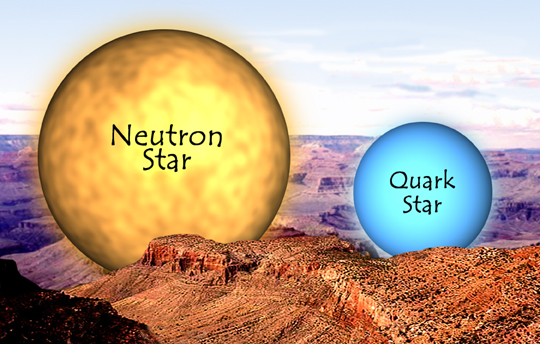
How a star spends its final days depends on its mass. After burning through their supply of nuclear fuel, smaller stars collapse into extremely dense neutron stars. Scientists believe more massive stars implode into black holes—regions of space where the force of gravity created by the collapsing star is so strong that not even light can escape its pull.
But a group of physicists say there may be another stage in the life of massive stars before being snuffed out by total collapse into black hole.
Stars could burn for millions of years as electroweak stars, according to Glenn Starkman, a professor of physics at Case Western Reserve University.
Starkman and his team theorize that at the extreme temperatures and densities reached during stellar collapse could give rise to the electroweak phase of a star's life. Ordinary stars are powered by the fusion of light nuclei into heavier ones—such as hydrogen into helium in the center of our sun. Electroweak stars would be powered by the total conversion of quarks - particles that make up the building blocks of those nuclei — into much lighter particles called leptons.
The energy created by the conversion could halt the implosion of the dying star, granting it something of a celestial reprieve before total collapse into a black hole. In fact, if the electroweak burning is efficient, it could consume enough mass to prevent what's left from ever becoming a black hole.
Most of the energy eventually emitted from electroweak stars is in the form of neutrinos, which are nearly without mass and hard to detect. A small fraction comes out as light, which is where the electroweak star's signature will likely be found, says Starkman. "But to understand that small fraction, we have to understand the star better than we do," he says.
And until scientists know more, it's hard to tell electroweak stars from other stars. Generations of scientists have plenty of time to learn though. Starkman's group calculates that this phase of a star's life can last more than 10 million years—a long time for us, but just an instant in the life of a star.
For more information:
http://www.case.edu/think/breakingnews/newstar.html
http://www.astromart.com/news/news.asp?news_id=846
AstroMart News Archive:
http://www.astromart.com/news/search.asp?search=.+&search_btn=Go
Funding Member
