Are We Ready for Contact with Extraterrestrial Intelligence?
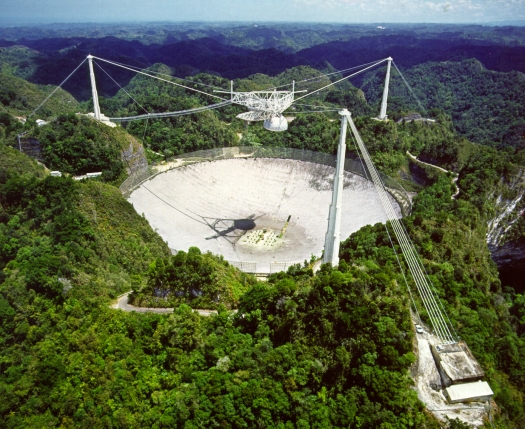
The Search for Extra-Terrestrial Intelligence (SETI) project is an initiative that began in the 1970s with funding from NASA. It has evolved over the years with a mission to explore, understand, and explain the origin, nature, and prevalence of life in the universe. Up to now, this work has been performed in a passive, listen-only mode.
Now the members of SETI want to go further and not only listen for extraterrestrial signs, but also actively send messages from Earth that could alert possible extraterrestrial civilizations of our existence and location. Astrophysicists, such as Stephen Hawking, have warned of the risk that this may imply for humanity, as it could trigger the arrival of beings with more advanced technology and unknown intentions.
The ethical and sociological implications of this proposal have been analyzed by the neuro-psychologist Gabriel G. de la Torre, a professor at the University of Cadiz in Spain. Professor de la Torre has also been a participant in previous projects such as Mars 500 and the space psychology topical team project financed by the European Space Agency (ESA). He wonders "Can such a decision be taken on behalf of the whole planet? What would happen if it was successful and someone (or something) received our signal? Are we prepared for this type of contact?"
To answer these questions, the professor sent a questionnaire to 116 American, Italian, and Spanish university students. The survey assessed their knowledge of astronomy, their level of perception of the physical environment, their opinion on the place that things occupy in the cosmos, as well as religious questions. For example, "Do you believe that God created the universe?"
The results, published in the journal "Acta Astronautica," indicate that, as a species, humanity is still not ready for trying to actively contact a supposed extraterrestrial civilization, since people lack knowledge and preparation. For this reason, SETI researchers are recommended in this study to look for alternative strategies.
"This pilot study demonstrates that the knowledge of the general public of a certain education level about the cosmos and our place within it is still poor. Therefore, a cosmic awareness must be further promoted, where our mind is increasingly conscious of the global reality that surrounds us, using the best tool available to us: Education," de la Torre emphasized. "In this respect, we need a new Galileo to lead this journey."
It was deduced from the questionnaires, which will soon be available to everyone on-line, that university students and the rest of society lack awareness on many astronomical aspects, despite the enormous progress of science and technology. It also revealed that the majority of people consider these subjects according to their religious belief and that they would rely on politicians (heaven help us) in the event of a huge global-scale crisis having to be resolved.
"Regarding our relation with a possible intelligent extraterrestrial life, we should not rely on moral reference points of thought, since they are heavily influenced by religion. Why should some more intelligent beings be good?" added the researcher, who believes that this matter should not be monopolized by a handful of scientists. "In fact, it is a global matter with a strong ethical component in which we must all participate."
This news item was prepared by the Information and Scientific News Service (SINC), the first state public agency specializing in science, technology, and innovation information in Spanish. The SINC team produces news, reports, interviews, and audiovisual materials (videos, photographs, illustrations, and infographics).
For more information:
http://www.agenciasinc.es/en/News/Are-we-ready-for-contact-with-extraterrestrial-intelligence
http://www.seti.org/seti-institute/explore-with-us/books/communications-extraterrestrial-intelligence-0
http://www.astromart.com/news/news.asp?news_id=1036
AstroMart News Archive:
http://www.astromart.com/news/search.asp?search=.+
Funding Member
