Astronomers Get New Tool for Gravitational-Wave Detection
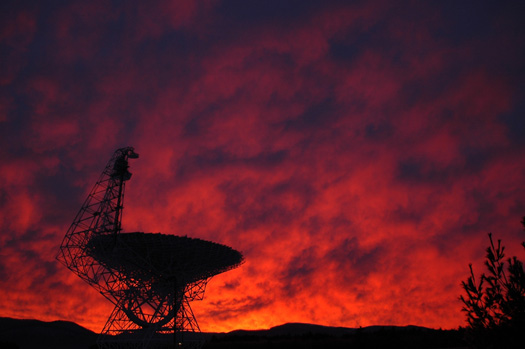
Millisecond Pulsars, rapidly-spinning super-dense neutron stars, can serve as extremely precise and stable natural clocks. Astronomers have recently come up with a method that they believe can be used to detect gravitational waves by measuring tiny changes in the rotation of Millisecond Pulsars. The problem, however, is that after nearly three decades since the discovery of the first Millisecond Pulsar, only about 150 of them have been found -- Simply not enough to test this new method of detecting gravitational waves. But now astronomers have discovered a new technique for finding Millisecond Pulsars that should quickly add to the total. The approach looks first for tell-tale signs of Gamma-Ray emmissions. Astronomers then follow-up with more traditional radio astronomy techniques -- A perfect collaboration between NASA's Fermi Gamma-Ray Space Telescope and the Robert C. Byrd Green Bank Telescope in West Virginia.
Comments:
Funding Member
