Image of the day

Captured by
Gary Taylor

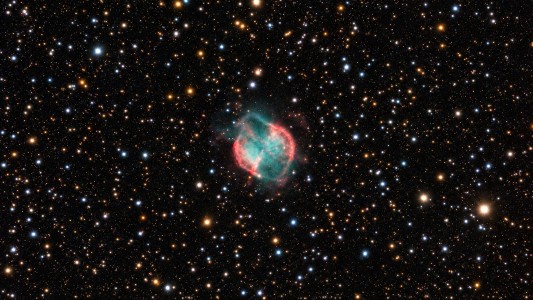
M27 - Dumbell Nebula

My Account

New to Astromart?

Register an account...

Need Help?

Dark Side of the Moon Mystery Solved After 55 Years
06/12/2014 04:23AM

Dark Side of the Moon Mystery Solved After 55 Years

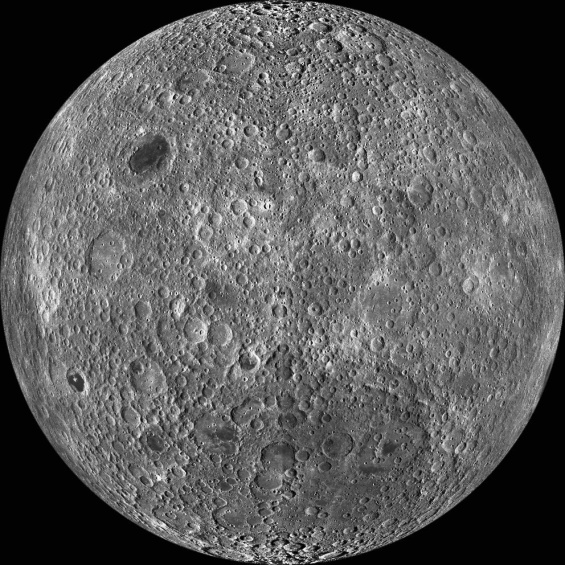
When looking up at the full moon at night, many of us see a "man in the moon" - a face smiling down at us from the lunar surface. The "face," of course, is just an illusion shaped by the dark splotches of lunar maria, which are the smooth plains formed from the lava of ancient volcanic eruptions. But very few dark splotches exist on far side of the moon. It is basically all mountains and craters. This mystery is called the "Lunar Far Side Highlands Problem" and dates back to 1959, when the Soviet spacecraft Luna 3 transmitted the first images of the dark side of the moon back to Earth. Researchers immediately noticed that fewer "seas" or maria existed on the portion of the moon that always faces away from Earth. Now, after 55 years of head-scratching, scientists have finally figured out why.


Comments:

There is no dark side of the moon. Its all dark.

If the impactor was that large, and struck a glancing blow, I wonder if its core survived to become the core of the moon.
<blockquote class="blockquote"><div class="italic"><i>Larry Geary said:</i><br><br>If the impactor was that large, and struck a glancing blow, I wonder if its core survived to become the core of the moon.</div></blockquote><br>Awfully good question, Larry!<br><br>Impulsively, I can conjure four possible scenarii:<br><br>1. It was absorbed into Earth.<br>2. It was absorbed into Earth and Moon - more likely than #1, above.<br>3. It was absorbed into Earth and Moon and some vaporized, more likely than #2, above.<br>4. It was absorbed into Earth and Moon, some vaporized, and some dissipated at escape velocity form the chaotic CoG of the local system to enjoy a solar orbital trajectory, elements of which may have accumulated into the occasional asteroid. More likely than #4., above.<br><br>Claudio

<blockquote class="blockquote"><div class="italic"><i>Larry Geary said:</i><br><br>If the impactor was that large, and struck a glancing blow, I wonder if its core survived to become the core of the moon.</div></blockquote>[QUOTE]<i>Larry Geary said:</i><br><br>I believe I saw a simulation of the glancing blow, and the result was the proto-moon was disintegrated, due to its velocity striking the earth, but a sizable chunk of the earth was not.