Excuse Me While I Kiss the Sky -- Month of July 2026
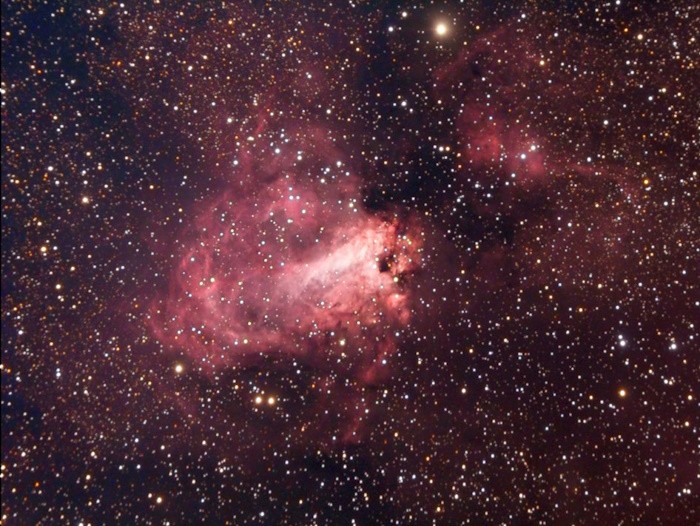
Welcome to the night sky report for July 2026 -- Your guide to the constellations, deep sky objects, planets, and celestial events that are observable during the month. This month brings a predawn meetup between the Moon and planets, a returning comet, dark skies for the Milky Way, and Saturn's unusually thin rings. Before sunrise on July 11 and 12, look east/southeast for the waning crescent Moon, Mars, and Saturn. Uranus is in the same part of the sky, but you will need binoculars or a telescope to spot it. Around July 14, use binoculars or a telescope to find Comet 10P/Tempel 2 under dark skies of the New Moon. July is also a prime time to view the Milky Way in all its glory. Find the constellation Scorpius to identify the reddish supergiant star Antares, which will lead you to the globular star cluster M4 (NGC 6121). M22 (NGC 6656) in the constellation Sagitarius is one of the brightest globular clusters in the sky and is visible to the naked eye. Keep observing around the group of stars commonly known as the Teapot and you’ll be looking toward the center of the Milky Way. In that direction, you can see the Lagoon Nebula (M8, NGC 6523), the Omega Nebula (M17, NGC 6618), and the Trifid Nebula (M20, NGC 6514). Two open star clusters, the Butterfly Cluster (M6, NGC 6405) and the Ptolemy Cluster (M7, NGC 6475), can be found on the end of the constellation Scorpius, just above the stinger.
Comments:
There are no comments yet.