Excuse Me While I Kiss the Sky -- Month of June 2026
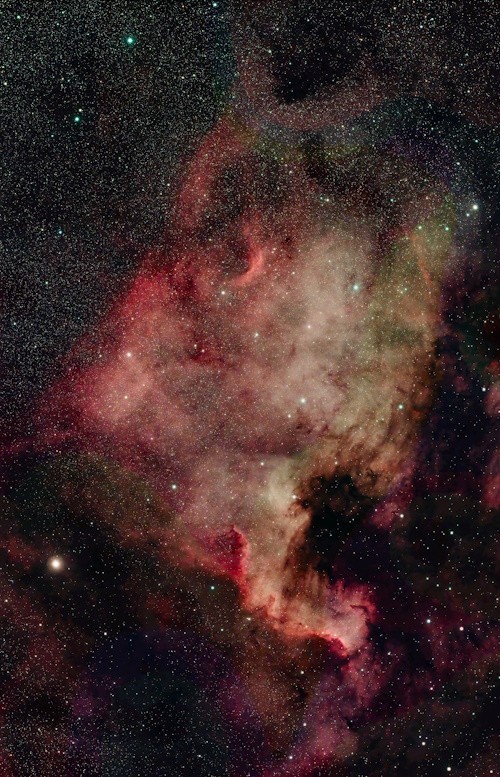
Welcome to the night sky report for June 2026 -- Your guide to the constellations, deep sky objects, planets, and celestial events that are observable during the month. This month, Venus and Jupiter meet after sunset, the Moon passes in front of Venus, and Summer begins. Once the sky gets dark, Summer brings some favorite targets for telescope users and astrophotographers. First, look for the Summer Triangle, formed by the bright stars Vega, Altair, and Deneb. Inside and around this region are deep sky objects like the Dumbbell Nebula (M27, NGC 6853), the Ring Nebula (M57, NGC 6720), the North America Nebula (C20, NGC 7000), and the East and West Veil Nebulae (East -- C33, NGC 6992 and West C34, NGC 6960). The Dumbbell Nebula was the first planetary nebula ever discovered. These objects are not bright like planets, but with telescopes or long exposure photography, they reveal glowing gas, dying stars, and stellar nurseries in our galaxy. The bright central bulge of our home galaxy, the Milky Way, is visible all night in June, continuing through August. It is best observed from dark sky locations far from bright city lights and appears as a faint, cloud-like band arching across the sky toward the south. During the month, look for the Hercules constellation, which will lead you to a globular star cluster with hundreds of thousands of densely packed stars. Globular cluster M13 (the Great Hercules Globular Cluster, NGC 6205) is best observed with a telescope, but binoculars will reveal it as a fuzzy spot. You can also spot Draco the dragon, which will point you to the Cat’s Eye Nebula (C6, NGC 6543). The night sky is truly a celestial showcase. Get outside and explore its wonders from your own backyard.
Comments:
There are no comments yet.