Killer Asteroids May Not Have Been the Cause of Mass Extinctions After All
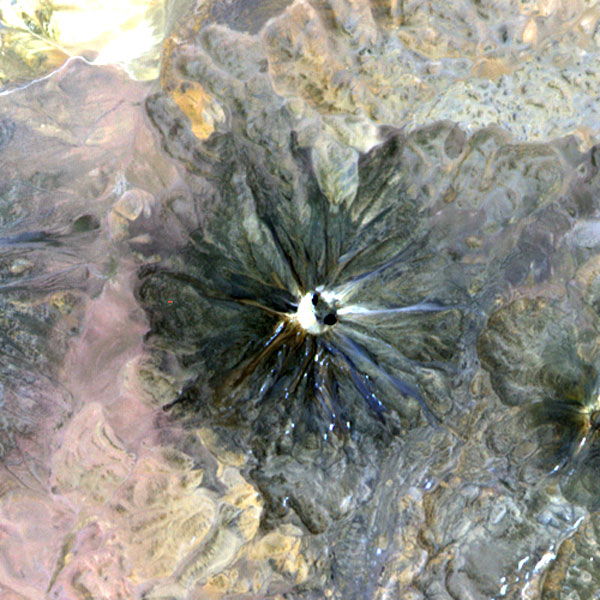
Earth history has been punctuated by several mass extinctions that have rapidly wiped out nearly all life forms on our planet. What causes these catastrophic events? Are they really due to asteroid impacts? Scientists at the University of Leicester and Imperial College in the UK and at the Utrecht University in the Netherlands now believe that the world's largest mass extinctions occurring about 250 Million and 65 Million years ago were probably caused by vast amounts of poisonous volcanic gas from within our own planet -- an unpredictable event that could repeat at any time.
Comments:
I've worked with Andy Saunders on North Atlantic basalts; he's a great guy and an excellent petrologist (study of igneous rocks). But I have to tell you, the evidence for the 65 million year extinction being caused by an impact in the vicinity of northern Yucatan is exceedingly strong. There really was a "smoking gun" found for this- Leg 171B of the Ocean Drilling Program recovered cores with 100% recovery that crossed the Cretaceous-Tertiary Boundary, noted by a VERY sharp boundary, with a few mm-thick rusty-colored, very Iridium-rich layer overlying carbonate ooze (representing fallout from the actual bolide), then fallout debris, then fossil-barren carbonate overlyinging it all giving way to ooze increasingly rich in new species of foraminifera (you can google Leg 171B for a range of related literature). This change in fauna, this extinction, was SUDDEN, not caused by increased volcanic activity that would have taken place over hundreds of thousands of years. There is currently a model of this core on display at the Smithsonian' National History Museum in Washington, as well as at other museums. Andy and his colleague have a challenge with the timescale of build-up of gases; in the meantime, the rapid way Earth is resurfaced, and the fact that 70% is covered by water, makes it no surprise that definitive impact sites have not been found for all extinctions (there has been a site proposed off of northwest Australia for the Permian extinction, according to memory). My opinion for the Cretaceous-Tertiary extinction event is that a large majority of scientists who are studying this would concur with an angled bolide impact in Yucatan, represented by the Chixculub impact crater found by oil drilling and seismics (and the proposed site of Integrated Ocean Drilling Program drilling), was a cause of the extinction (IODP drilling would help further test this!).<br><br>Jamie Allan<br>
