Lawrence Livermore One Step Closer to Creating Mini-Gamma Ray Bursts in a Lab
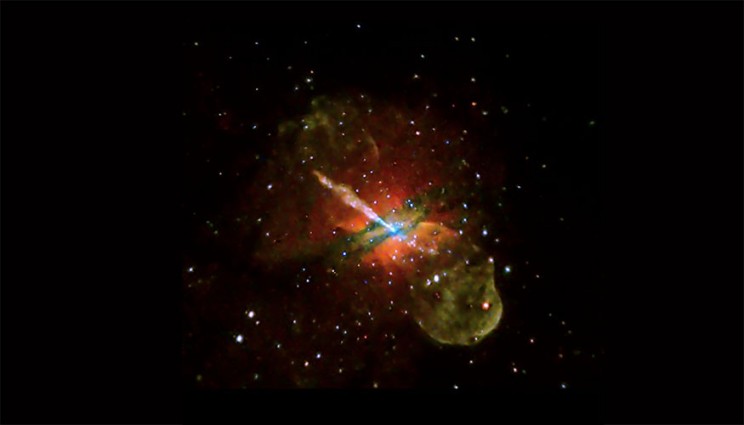
Positrons, or "anti-electrons," are anti-particles with the same mass as an electron but with opposite charge. The generation of energetic electron-positron pairs is common in extreme astrophysical environments associated with the rapid collapse of stars and the formation of black holes. These pairs eventually radiate their energy, producing extremely bright bursts of gamma rays. Gamma Ray Bursts (GRBs) are the brightest electromagnetic events known to occur, but the mechanism of how GRBs are produced is still a mystery. Using ever more energetic lasers, Lawrence Livermore researchers have produced a record high number of electron-positron pairs, opening exciting opportunities to study extreme astrophysical processes like GRBs in a laboratory environment.
Comments:
There are no comments yet.
Funding Member
