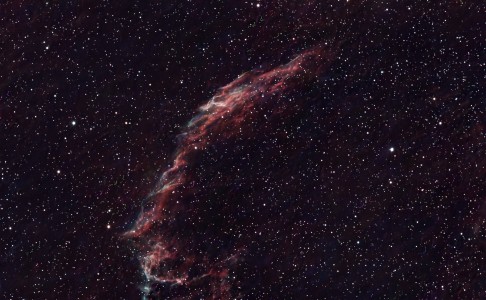
NASA's Chandra Watches the GK Persei Nova Expand Into Space
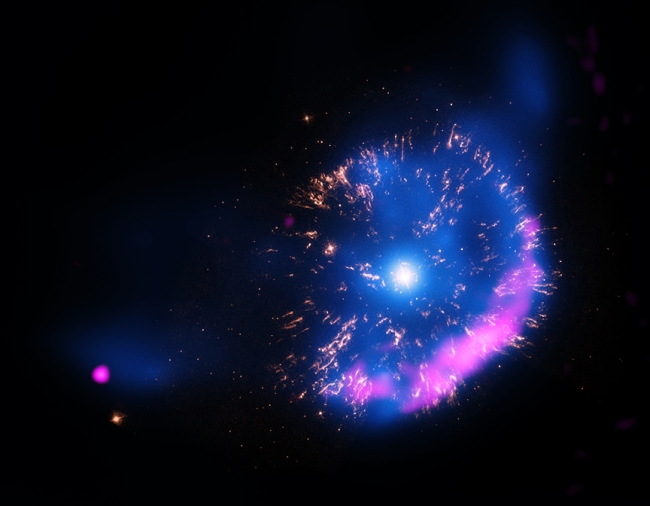
The GK Persei Nova became a sensation in the astronomical world in 1901 when it suddenly appeared as one of the brightest stars in the sky for a few days, before gradually fading away in brightness. Today, astronomers cite GK Persei as an example of a Classical Nova -- an outburst produced by a thermonuclear explosion on the surface of a white dwarf star. Chandra first observed GK Persei in February 2000 and then again in November 2013. This 13-year baseline has provided astronomers with enough time to notice important differences in the X-ray emission and its properties. These new observations are helping astronomers develop a better understanding of the births, lives, and deaths of stars and how they interact with their surroundings.
Comments:
There are no comments yet.
Funding Member
