Pluto: The Other 95% of Astronomers Start to Speak Out
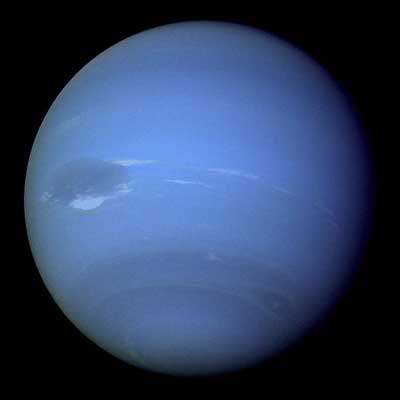
Only 474 members of the of the International Astronomical Union's (IAU) 10,000 members took part in the vote that stripped Pluto of its status as a planet. Now the other 95% of astronomers are starting to speak out and the consensus seems to be that the IAU's new definition of a planet is confusing -- especially the requirement that a planet must “clear its immediate neighborhood.” If taken literally, under that definition Neptune is at risk of losing its status as a planet too because it has been unable to clear it's orbit of Pluto... Oh dear.
Comments:
474 out of 10,000...<br><br>Collusion, intrigue, back-room deals...<br><br>I wonder if the book rights have been sold yet and when the made-for-TV movie will air?<br><br>My opinion of the whole thing...silly. I hope they vote it back to full status soon.<br><br>Keith (Even Jupiter hasn't cleared its immediate neighborhood yet.)<br><br>
Dwarf stars, dwarf planets, and a dwarf concensus on a dwarf issue. Pluto and dwarves- I think the vote shoulda been held at DISNEYLAND. What more fitting setting for all the histrionics, no? Though perhaps with all the bluff and bluster maybe DISNEY WORLD would be more appropriate weatherwise. They could all have arrived singing 'Hi Ho, Hi Ho....' Plutons, planemos- its really quite plathetic.<br><br>Jess Tauber
Typical voter apathy--the minority votes a certain way, then the non-voting majority gripes about the results. <img class='' src='http://new.astromart.com/astromart/javascripts/sceditor/emoticons/wink.png' alt='wink' title='wink'/>
Some people are claiming that planets such as Jupiter and Neptune do not clear their neighborhoods. It is obvious that none of them (including Alan Stern who wants to justify having obtained federal funds for a mission to a "planet") has read the full 22-page paper defining "clearing the neighborhood". <br><br>Clearing the neighborhood was scientific shorthand for what astrophysicist Steven Soter described in his paper he submitted on August 16 to the IAU. The IAU used that paper as the basis of its dynamical qualification for inclusion in the set of planets. Clearing out the neighborhood essentially means possessing more than 100 times the combined masses of other objects that share a planet’s orbital zone (not counting its own satellites.) The eight major planets actually meet this qualification by factors of more than 10,000. Pluto fails. <br><br>Here is the abstract from the paper:<br><br>A planet is an end product of disk accretion around a primary star or substar. I quantify this definition by the degree to which a body dominates the other masses that share its orbital zone. Both theoretical and observational measures of dynamical dominance reveal a gap of five orders of magnitude separating the eight planets of our solar system from the populations of asteroids and comets. This simple definition dispenses with upper and lower mass limits for a planet. It reflects the tendency of disk evolution in a mature system to produce a small number of relatively large bodies (planets) in non-intersecting or resonant orbits, which prevent collisions between them.<br><br>And here is a link to the full paper: <br><br>http://xxx.lanl.gov/abs/astro-ph/0608359<br>
Hello:<br> There may be 10.000 members of the IAU, but not all of them could go to Prague, much less fit into the conference room. 474 is still a large enough number to get a representative handle on how the community feels. <br> In my (and several other's option) Pluto isn't a planet, but a Kuiper Belt Object. Ceres is closer to being a planet, seeing how it's orbit is round and in the ecliptic. And Neptune HAS cleared out it's orbital neighborhood, contrary to what the article suggested. The dynamical lifetime of a small body in a Neptune crossing orbit is very short (compared to the lifetime of the solar system). This includes Pluto. Pluto gets closer to Uranus than it ever does to Neptune since it is in a 3:2 orbital resonance with Neptune. Anything in a orbit like Pluto would quickly get ejected from the solar system if it is not in such a resonance. And Jupiter most definately has cleared it's neignborhood. It's nearly cleared out the whole solar system! It's been argued that without Jupiter, there would have been too many impacts of comets on the Earth for life to develop to where it is today. Jupiter has also cleared out the Kirkwood gaps in the asteroid belt. There are objects around Jupiter, of course. Some are in orbit around it, and some are the Trojan asteroids which live at the Lagrange points in Jupiter's orbit. Everything else, such as the Centaurs, have a very short life time in that part of the solar system. As such, that area is effectively cleared out. <br><br>Cheers<br>Mike Connelley
That definition referred to celestial objects visible to the eyes of the ancients. That included Sun, Moon, Mercury, Venus, Mars Jupiter and Saturn. Although the Sun and Moon were of such great significance that in most contexts the definition only referred to the latter five. I would not object to preserving the original definition. However, it's understandable that modern astronomers have totally excluded the Sun and Moon from the definition. The Earth was added after a long historic debate. That debate makes the Pluto controversy seem of no consequence. Both the later discovered Uranus and Neptune obviously possess the mass and orbital characteristics necessary to be included in the set of planets. Smaller objects tend to fall into groupings with others of similar size and orbital peculiarity. Keeping them in distinct categories tends to help in understanding the origin, attributes and future of the entire solar system. We'll just have to learn to set aside our natural conservatism as we dismiss some of the things that our fourth grade teachers taught us.
Over the years, a number of historical definitions of the word planet have existed:<br><br>1) The Sun, the Moon, Mercury, Venus, Mars, Jupiter, and Saturn <br>2) Mercury, Venus, Earth, Mars, Jupiter, and Saturn<br>3) Mercury, Venus, Earth, Mars, Ceres, Pallas, Juno, Vesta, Jupiter, Saturn, Uranus, and Neptune (the post-telescopic definition) <br>4) Mercury, Venus, Earth, Mars, Jupiter, Saturn, Uranus, Neptune, and Pluto (the post-1930's version)<br>5) Mercury, Venus, Earth, Mars, Jupiter, Saturn, Uranus, and Neptune (the post-KBO definition)<br><br>We now know that including Pluto as a "planet" opens a totally unnecessary can of astronomical worms. IMO, the IAU vote was correct.<br><br>Dave Mitsky<br>
Apparently, the solar system once consisted of 18 "planets".<br><br>Dave Mitsky<br><br>From the September 13 and 14 editions at http://www.spaceweather.com <br><br>18 PLANETS: Have you ever heard of the planet Hygea? It's listed in the 1850 Annual of Scientific Discovery along with 17 other planets: <br><br>In those days, large asteroids such as Hygea, Ceres and Vesta were widely deemed planets. They appeared so in textbooks and scientific journals. Adding asteroids to the other known planets, Mercury, Venus, Earth, Mars, Jupiter, Saturn, Uranus and Neptune, gave a grand total of 18. Imagine the mnemonic: "My Very Educated [insert ten adjectives here] Mother Just Served Us Noodles." <br><br>The asteroids were eventually demoted. It was a long, drawn-out affair, marked by decades of disagreement and confusion. (Sound familiar?) By 1900, however, order was restored to the Solar System: the planet count was down to eight. <br><br>And then came Pluto... <br>
I think the real problem is the term KBO. Ask most people what they think a KBO is?<br><br>Let's PROMOTE Pluto to capitol of the Plutoids.<br><br>Hey, we have Asteroids close to home. Let's have Plutiod's out there past Neptune, with Pluto as the capital world.<br><br> <img class='' src='http://new.astromart.com/astromart/javascripts/sceditor/emoticons/smile.png' alt='smile' title='smile'/>
Funding Member
