Polarized Light Brings Exoplanet Into View
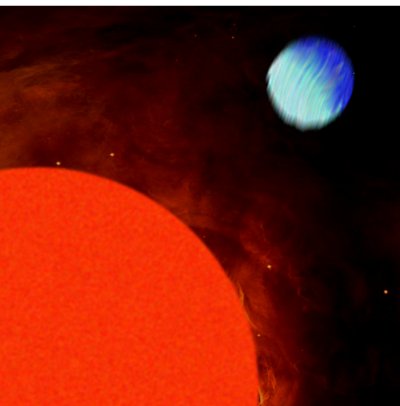
An international team of astronomers has made the first direct measurements of the visible light that is scattered in the atmosphere of an exoplanet. Polarization measurements allowed the scientists to infer the size of the planet's atmosphere, and to trace the orbit of the planet directly – a visualization feat that's not possible with indirect detection methods.
Comments:
Somehow I think I've missed the significance of this article. This is not the first time planetarty scientists have directly studied the atmosphere of an extrasolar planet (Charbonneau, et al) and I really didn't learn much about the planet itself. I mean - how far away is it? What are the orbital dynamics? And what gasses did they find in the atmosphere? You know - the important stuff everybody wants to know...
David, <br><br>All great questions, however this article is from an optics site and is geared toward that particular readership. I submitted it so that the AM folks could get a taste of other scientific perpectives related to astronomy.<br><br>Lee<br>
