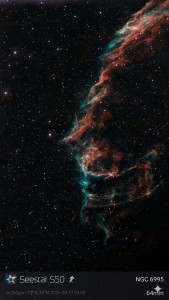
Image of the day

Captured by
Arthur Hogan

NGC 6995 - Veil or Bat Nebula

My Account

New to Astromart?

Register an account...

Need Help?

Surprise! The Sun is a Variable Star

02/14/2010 03:28PM

Surprise! The Sun is a Variable Star

For some years now, an unorthodox idea has been gaining favor among astronomers. It contradicts old teachings and unsettles many solar observers -- The Sun is a Variable Star. Over long periods of decades to centuries, solar activity waxes and wanes with a complex rhythm that researchers are still trying to figure out. The most famous "beat" is the 11-year sunspot cycle, which really varies in length from 9 to 12 years. Between 1645 and 1715, during a period called the 'Maunder Minimum,' the cycle appeared to stop altogether for about 70 years and no one knows why. In fact right now the sun is climbing out of a century-class solar minimum that no one anticipated. This past Thursday, February 11, 2010, NASA launched the Solar Dynamics Observatory (SDO) to help researchers sort this out.


Comments:

  • Lee_S [Lee Spain]
  • 02/14/2010 05:31PM
This is an interesting and somewhat scary article. I'd really wonder how leading scientists believe this influences climate.
  • Jef [Jef Spalding]
  • 02/15/2010 02:41AM
Its implications for earth evolutionary theory and search for other life are intriuging. Could this be where we search for life beyond planet earth? Variable stars? Perhaps the sun was previously more/less variable. Climate implications may become more apparent as data pours in from SDO.

If the solar energy output is variable, then its affect on heating of the Earth's atmosphere is, of course, also variable. The consequences would have to be factored with how well the model predicts affects from solar contribution with, say, natural evolution of the atmosphere and how significant the human component is.

  • newtgem [Ronald Abraham]
  • 02/17/2010 01:46PM
We've known about semi-regular/cyclical solar output variations for a long time. I assumed ice ages and other climate change phenomena were significantly due to these cycles. Are peaks and valleys in solar output are responsible for catastrophic climate changes in the last 10,000 years? <br><br>Anthropololigal research in the Americas indicate the likelihood that the quick demise of many prehistoric native civilizations is associated with pandemic diseases transmitted by vermin, insects, etc. which flourished in cool moist conditions. Significant, unanticipated climate change has been cited as a likely cause in virtually every case of the sudden deaths of civilizations from the Anasazi, to the Mayans and back to the mound builders from southeastern Oklahoma through southwest Tennessee. <br><br>Solar output, greenhouse gases, continental drift, asteroid impacts, and volcanism all can impact climate significantly enough to affect life on the planet. The fact remains, however, that until we have conducted decades - perhaps centuries of solar research, the secret of the degree of variability in solar output will be mostly dependent on a forensic approach.<br><br>

  • sandersc [sanders chai]
  • 02/17/2010 04:21PM
another notion to consider is Lovelock's Gaia hypothesis and how it factors into solar output variability. Homeostatic forces could moderate the effect of such variability - ie lessen impact on ecological systems as a consequence of moderated changes in the climactic system. <br><br>if we look at venus and mars, there are huge fluctuations on climate, regardless of where in cycle sun is - it's just the way things are there. <br>is it our distance which is optimized or is it gaia? how much their climate change as result of these solar cycles could help us decipher things going on here.<br>