
When Earth’s Magnetic Field Took Its Time Flipping
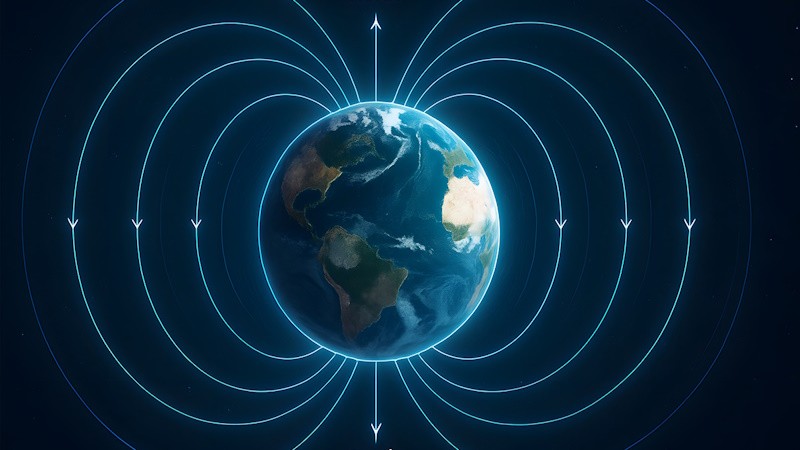
Earth’s magnetic field is generated by the churn of its liquid nickel-iron outer core, but it is not a constant feature. Every so often, the magnetic north and south poles swap places in what are called geomagnetic reversals. The record of these flips is preserved in rocks and sediments. Over the past 170 million years, the magnetic poles have reversed 540 times, with the average reversal process typically taking around 10,000 years to complete each time. Now, a new study by University of Utah geoscientists and colleagues from France and Japan has upended this scenario after documenting instances 40 million years ago where the process took far longer to complete -- upwards of 70,000 years. These findings offer a new perspective on the geomagnetic phenomenon that envelops our planet and shields it from solar radiation and harmful particles from space.
Comments:
There are no comments yet.
Funding Member