Yes Virginia, Pluto is a Planet

09/28/2014 04:16PM

Yes Virginia, Pluto is a Planet
What is a planet? For generations the answer was easy -- A big ball of rock or gas that orbited the Sun. And there were nine of them in our Solar System. But then astronomers started finding more Pluto-sized objects orbiting beyond Neptune. Then they found Jupiter-sized objects circling distant stars. First by the handful and then by the hundreds. Suddenly the answer wasn't so easy. Were all these newly found things planets? The International Astronomical Union (IAU), who is in charge of naming newly discovered worlds, tackled the question at their 2006 meeting. They tried to come up with a definition of a planet that everyone could agree on. But the astronomers couldn't agree, so they voted and picked a definition that they thought would work. The results have been mixed. In the end, the IAU did accomplish one thing -- They figured out a way to turn something simple into something complex.


Comments:

<br><br>The title of this news item "Yes Virginia, Pluto is a planet" is taken from a quote by Dr. Richard Binzel, Professor of Planetary Science at the Massachusetts Institute of Technology, made at the IAU Conference in August of 2006.<br>
  • rmollise [Rod Mollise]
  • 10/01/2014 07:32PM
Well, it depends on how you want to define "planet," but it's been obvious for decades that Emperor Pluto has no clothes. His orbit is highly inclined to the ecliptic. He's very small--everytime we've learned more about him he has gotten smaller...originally he was thought to be larger than the Earth. He has little in common with the major planets.<br><br>Still, people are upset about Pluto's "demotion." Why? I used to poll my freshmen astronomy students about it. My findings? They were sad because 1. They remembered learning "the nine" in elementary school fondly. 2. They conflated this hellish little world with Disney's friendly cartoon dog.<br><br>Since Pluto has many brothers and sisters out at the reaches of the Solar System, why shouldn't they also be "planets"? If so, should kids have to memorize the nine-thousand rather than The Nine. <img class='' src='http://new.astromart.com/astromart/javascripts/sceditor/emoticons/wink.png' alt='wink' title='wink'/>


With all due respect, it seems that this article is not so much about Pluto's classification as it is about the question of who should classify celestial objects. I do not believe that even the author thinks that that task should be turned over to the general public, as the article implies.<br><br>Let the public think sentimentally about Pluto if they wish, but let professional astronomers do their job.<br><br>(By the way, dwarf fruit trees are not simply small fruit trees; they have been altered via genetics and breeding to be different in an important way. In the same way, dwarf planets have some things in common with planets, but they are significantly different--thus, the new classification is reasonable.

  • Geo31 [George Roffe]
  • 10/10/2014 05:05PM
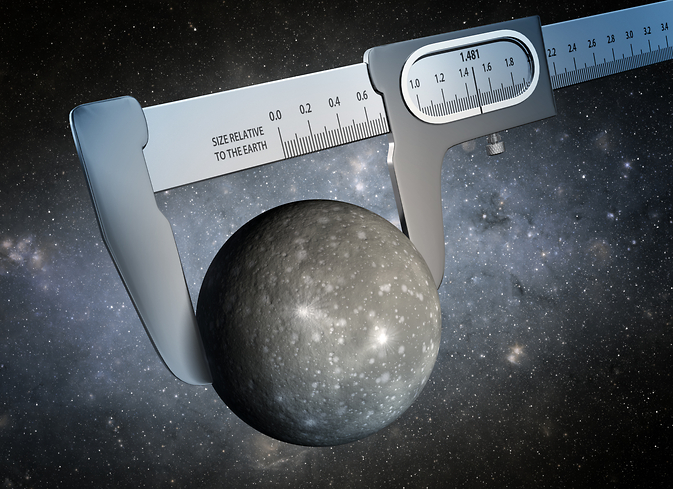
The lead photo to this article is misleading. Pluto is not 1.4x the diameter of the earth. More like 0.19x.
