Reviews & Articles
Image of the day
About Astromart
My Account
New to Astromart?
Register an account...Need Help?
NASA In the Balance
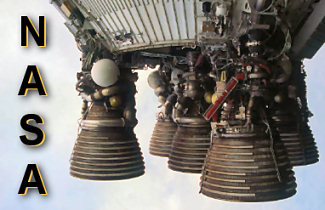
(Washington, DC) Tuesday evening, House Science Committee Ranking Member Rep. Bart Gordon (D-TN) and the entire Democratic Caucus of the Committee introduced The NASA Reauthorization Act of 2005 (H.R. 3250) - their alternative to H.R. 3070, NASA Reauthorization legislation introduced by Science Committee Republicans (see below for info on H.R. 3070.)
The multi-year Democratic alternative lays out clear and directed priorities for the space agency. It provides the resources needed to move forward on the Moon-Mars mission without sacrificing other critical science and technology responsibilities of NASA.
"Our bill recognizes that NASA has been, is and should continue to be a multi-mission agency with significant research and development activities in science, aeronautics and human space flight," stated Ranking Member Gordon upon introduction.
At the Space and Aeronautics Subcommittee markup two weeks ago, nearly all Subcommittee Democrats withheld their support for H.R. 3070, citing significant concerns with the bill. Democratic Members indicated they would work toward a more substantial NASA Authorization bill that realistically addressed the challenges facing the agency in the coming years.
The bill introduced Tuesday makes it clear that Committee Democrats support the goal of making exploration beyond low Earth orbit the long-term objective of NASA's human space flight program. Equally important, the Democratic alternative recognizes the need to ensure that the productive balance existing between NASA's major program areas is maintained.
"NASA science and research contributes to improved weather forecasting methods, safe and more effective air transportation and a better understanding of how to preserve our environment. These vital near-term benefits must not be sacrificed," added Rep. Mark Udall (D-CO), bill cosponsor and Ranking Member of the Space and Aeronautics Subcommittee.
"This alternative bill gives the clear Congressional direction to NASA with respect to priorities and balance," continued Rep. Gordon. "At the same time, it is intended to be flexible enough to accommodate changing circumstances and emergencies. Our alternative is credible, practical and conferenceable."
The multi-year Democratic alternative is similar in structure to bipartisan legislation (S. 1281) already passed by the Senate Committee on Commerce, Science and Transportation.
The entire text of H.R. 3250 can be found on the Science Committee Democratic website at:
Click here for more about this subject. -Ed..
Committee Democrats are hopeful compromise legislation can be reached and continue to work with Republican counterparts to develop a unified, bipartisan NASA Authorization bill for consideration by the full House Science Committee on Thursday.
______________________________
A SHORT SUMMARY OF H.R. 3070:
The National Aeronautics and Space Administration Authorization Act of 2005.
Overall Mission: The bill charges NASA with carrying out a balanced set of programs including programs in human space flight, aeronautics research and development, and scientific research including space and earth science. It encourages NASA to work with entrepreneurs and to involve other nations to the extent appropriate.
Vision for Space Exploration: The bill directs NASA to return Americans to the Moon no later than 2020, launch a Crew Exploration Vehicle as close to 2010 as possible, and conduct research on the impacts of space on the human body to enable long-duration space exploration. The bill directs NASA to retire the Shuttle at the end of 2010.
New Policies and Plans: The bill requires the Administration to develop policies and plans to guide NASA’s efforts in missions other than human space flight and in managing its facilities and workforce:
*The bill requires the President, through the Administrator to develop a national aeronautics policy to guide NASA’s aeronautics programs. The report is due with the President’s FY 2007 budget request.
*It requires NASA to develop a policy to guide NASA’s programs in space and earth science, drawing on the work of the National Academy of Sciences, and requires the agency to prioritize its scientific missions. The bill requires the policy to describe NASA’s plans in regard to servicing the Hubble Space Telescope. The report is due with the President’s FY 2007 budget request.
*The bill requires NASA to develop a plan for managing its facilities, including a description of any facilities NASA intends to build or no longer to use. The report is due with the President’s FY 2008 budget request.
*The bill also requires NASA to develop a human capital strategy to ensure that it has a workforce of the appropriate size and with the appropriate skills. It limits NASA’s flexibility to reduce its workforce until 60 days after the plan is submitted. The report is due with the President’s FY 2007 budget request.
Transparency in Program Management: The bill provides incentives for good program management by requiring annual reporting on programs costing over $100 million and initiating reviews of any such program that experiences large cost overruns or schedule delays.
Prizes: Gives NASA the authority to conduct competitions for cash prizes, modeled after the X-Prize won last year by famed airplane designer Burt Rutan and his SpaceShipOne, to stimulate innovative technology development.
Reports: The bill requires NASA to report to Congress on its plans in a number of areas, including its strategy for sending humans to the Moon, the costs of the Crew Exploration Vehicle, a plan for updating the U.S.’s system of space communications and navigation satellites, and a plan for helping NASA’s Shuttle workforce make the transition to other jobs.
Miscellaneous Provisions: The bill includes several miscellaneous provisions, including an extension of NASA’s indemnification authority, programs addressing near-Earth asteroids and comets, and a requirement for better coordination between NASA and the National Oceanic and Atmospheric Administration (NOAA) on earth science missions.
Funding: The bill authorizes to be appropriated to NASA $16,471,050,000 for fiscal year 2006, the same amount provided in the House Science, State, Justice and Commerce Appropriations Bill for FY 2005, or approximately $15 million above the President’s FY 2006 request.
Click here for more about this subject. -Ed.
The multi-year Democratic alternative lays out clear and directed priorities for the space agency. It provides the resources needed to move forward on the Moon-Mars mission without sacrificing other critical science and technology responsibilities of NASA.
"Our bill recognizes that NASA has been, is and should continue to be a multi-mission agency with significant research and development activities in science, aeronautics and human space flight," stated Ranking Member Gordon upon introduction.
At the Space and Aeronautics Subcommittee markup two weeks ago, nearly all Subcommittee Democrats withheld their support for H.R. 3070, citing significant concerns with the bill. Democratic Members indicated they would work toward a more substantial NASA Authorization bill that realistically addressed the challenges facing the agency in the coming years.
The bill introduced Tuesday makes it clear that Committee Democrats support the goal of making exploration beyond low Earth orbit the long-term objective of NASA's human space flight program. Equally important, the Democratic alternative recognizes the need to ensure that the productive balance existing between NASA's major program areas is maintained.
"NASA science and research contributes to improved weather forecasting methods, safe and more effective air transportation and a better understanding of how to preserve our environment. These vital near-term benefits must not be sacrificed," added Rep. Mark Udall (D-CO), bill cosponsor and Ranking Member of the Space and Aeronautics Subcommittee.
"This alternative bill gives the clear Congressional direction to NASA with respect to priorities and balance," continued Rep. Gordon. "At the same time, it is intended to be flexible enough to accommodate changing circumstances and emergencies. Our alternative is credible, practical and conferenceable."
The multi-year Democratic alternative is similar in structure to bipartisan legislation (S. 1281) already passed by the Senate Committee on Commerce, Science and Transportation.
The entire text of H.R. 3250 can be found on the Science Committee Democratic website at:
Click here for more about this subject. -Ed..
Committee Democrats are hopeful compromise legislation can be reached and continue to work with Republican counterparts to develop a unified, bipartisan NASA Authorization bill for consideration by the full House Science Committee on Thursday.
______________________________
A SHORT SUMMARY OF H.R. 3070:
The National Aeronautics and Space Administration Authorization Act of 2005.
Overall Mission: The bill charges NASA with carrying out a balanced set of programs including programs in human space flight, aeronautics research and development, and scientific research including space and earth science. It encourages NASA to work with entrepreneurs and to involve other nations to the extent appropriate.
Vision for Space Exploration: The bill directs NASA to return Americans to the Moon no later than 2020, launch a Crew Exploration Vehicle as close to 2010 as possible, and conduct research on the impacts of space on the human body to enable long-duration space exploration. The bill directs NASA to retire the Shuttle at the end of 2010.
New Policies and Plans: The bill requires the Administration to develop policies and plans to guide NASA’s efforts in missions other than human space flight and in managing its facilities and workforce:
*The bill requires the President, through the Administrator to develop a national aeronautics policy to guide NASA’s aeronautics programs. The report is due with the President’s FY 2007 budget request.
*It requires NASA to develop a policy to guide NASA’s programs in space and earth science, drawing on the work of the National Academy of Sciences, and requires the agency to prioritize its scientific missions. The bill requires the policy to describe NASA’s plans in regard to servicing the Hubble Space Telescope. The report is due with the President’s FY 2007 budget request.
*The bill requires NASA to develop a plan for managing its facilities, including a description of any facilities NASA intends to build or no longer to use. The report is due with the President’s FY 2008 budget request.
*The bill also requires NASA to develop a human capital strategy to ensure that it has a workforce of the appropriate size and with the appropriate skills. It limits NASA’s flexibility to reduce its workforce until 60 days after the plan is submitted. The report is due with the President’s FY 2007 budget request.
Transparency in Program Management: The bill provides incentives for good program management by requiring annual reporting on programs costing over $100 million and initiating reviews of any such program that experiences large cost overruns or schedule delays.
Prizes: Gives NASA the authority to conduct competitions for cash prizes, modeled after the X-Prize won last year by famed airplane designer Burt Rutan and his SpaceShipOne, to stimulate innovative technology development.
Reports: The bill requires NASA to report to Congress on its plans in a number of areas, including its strategy for sending humans to the Moon, the costs of the Crew Exploration Vehicle, a plan for updating the U.S.’s system of space communications and navigation satellites, and a plan for helping NASA’s Shuttle workforce make the transition to other jobs.
Miscellaneous Provisions: The bill includes several miscellaneous provisions, including an extension of NASA’s indemnification authority, programs addressing near-Earth asteroids and comets, and a requirement for better coordination between NASA and the National Oceanic and Atmospheric Administration (NOAA) on earth science missions.
Funding: The bill authorizes to be appropriated to NASA $16,471,050,000 for fiscal year 2006, the same amount provided in the House Science, State, Justice and Commerce Appropriations Bill for FY 2005, or approximately $15 million above the President’s FY 2006 request.
Click here for more about this subject. -Ed.