Reviews & Articles
Image of the day
About Astromart
My Account
New to Astromart?
Register an account...Need Help?
News
Kiss the Sky Tonight -- Month of February 2018
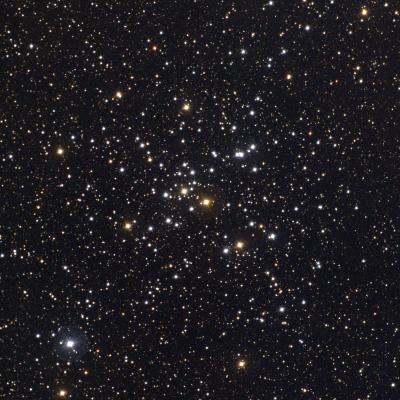
Welcome to the night sky report for February 2018 -- Your guide to the constellations, deep sky objects, planets, and celestial events that are observable during the month. The night sky is truly a celestial showcase, so get outside and explore its wonders from your own backyard.
John Wall, Inventor, Dead at 85

Ever use a Crayford focuser?
Explorer I -- 60 Years Ago Today

During 1957, the US and the Soviet Union worked diligently on plans to orbit satellites as part of the 1958 International Geophysical Year (IGY). Given the Cold War competition between the two superpowers, the first to launch a satellite could claim technological preeminence. The Soviet Union leaped ahead of the US and stunned the world when they orbited Sputnik 1, the world's first artificial satellite on October 4, 1957. Explorer 1 successfully launched from Cape Canaveral on January 31, 1958 -- 60 years ago today.
The Supernova That Just Won't Die

Supernovae, the explosions of stars, have been observed by the thousands and in all cases, the events signal one thing -- the death of a star... Until now. Astrophysicists at UC Santa Barbara (UCSB) and astronomers at Las Cumbres Observatory (LCO) have reported a remarkable exception -- a star that has exploded multiple times over a period of more than 50 years. This new observation is challenging existing theories of how certain stars end their lives.
"Stay Thirsty, My Friends" -- Meet the Most Interesting Star in the Universe
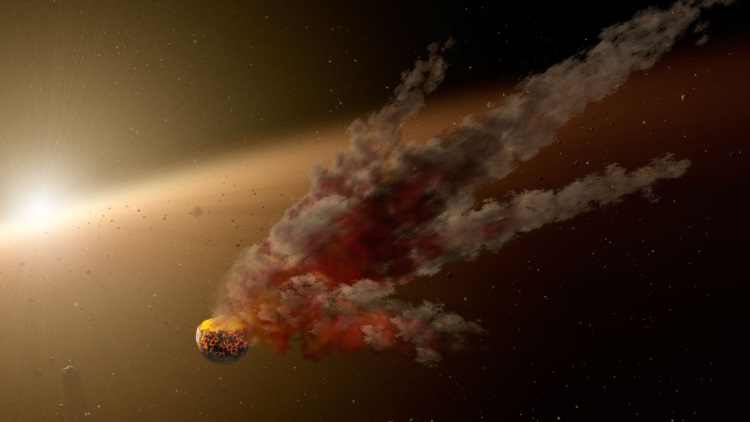
A team of more than 100 researchers, led by LSU Department of Physics and Astronomy Assistant Professor Tabetha Boyajian, is one step closer to solving the mystery behind "the most interesting star in the Universe." At first blush, KIC 8462852 (or Tabby's Star, nicknamed after Tabby Boyajian) is an average star. It is about 50 percent bigger and 1000 degrees hotter than the Sun. However, the sporadic, random, and inexplicable dimming and brightening of the star has led to several theories, including one that purports an alien mega-structure is orbiting the star. Could this really be? Nah... It turns out that the most interesting star in the Universe is really nothing special.
Some Words of Wisdom

The New Year is a good time for reflection, so let's start off with some words of wisdom. Here is my collection of quotable quotes. Some are deep -- Others not so much...
Did You Know That Only 313 Stars Have Officially Approved Names?
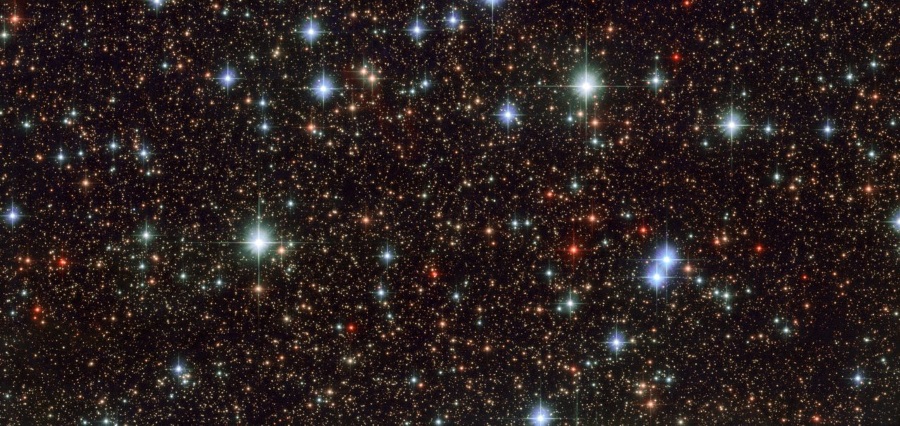
The cataloging of stars has seen a long history. Since prehistory, cultures and civilizations all around the world have given their own unique names to the brightest and most prominent stars in the night sky. Certain names have remained little changed as they passed through Greek, Latin, and Arabic cultures, and some are still in use today. As astronomy developed and advanced over the centuries, a need arose for a universal cataloging system, whereby the brightest stars were known by the same labels, regardless of the country or culture from which the astronomers came. This past year, the International Astronomical Union (IAU) formally approved 86 new names for stars and the IAU catalog now contains the officially approved names of 313 stars.
Kiss the Sky Tonight -- Month of January 2018
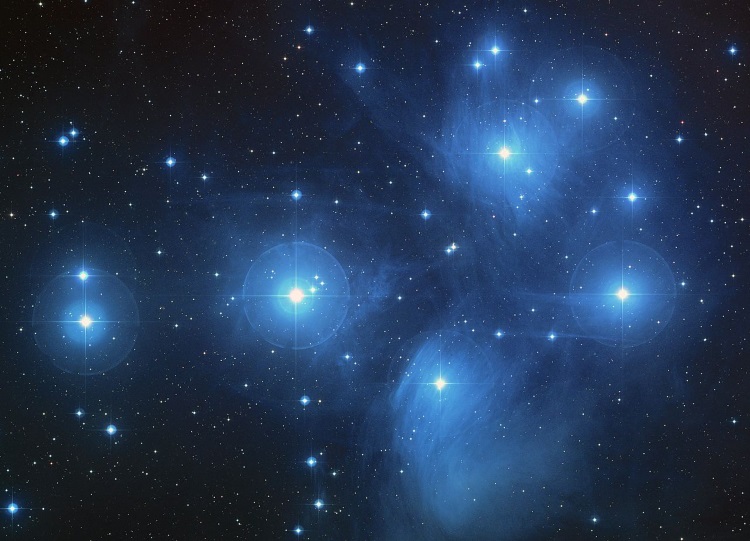
Happy New Year and welcome to the night sky report for January 2018 -- Your guide to the constellations, deep sky objects, planets, and celestial events that are observable during the month. The night sky is truly a celestial showcase. Get outside and explore its wonders from your own backyard and follow the advice of James Marshall Hendrix (apparently a fellow admirer of the heavens): "Excuse me while I kiss the sky."
A New Twist in the Fantasy World of Dark Matter

An innovative interpretation of X-ray data from a cluster of galaxies could help scientists fulfill the quixotic quest they have been on for decades -- determining the nature of dark matter. Dark matter is the mysterious invisible, and as of yet undetected, substance that many scientists believe makes up about 85 percent of the matter in the Universe. In 2014, astronomers reported the detection of an unusual emission line in X-ray light from the Perseus galaxy cluster. A new interpretation of this detection and follow-up observations may provide an explanation of this signal. If confirmed with future observations, this may represent a major step forward in understanding the nature of dark matter.
NASA's Juno Probes the Depths of Jupiter's Great Red Spot

Data collected by NASA's Juno spacecraft during its first pass over Jupiter's Great Red Spot in July 2017 indicates that this iconic feature penetrates well below the clouds and has roots that go about 200 miles (300 kilometers) into the planet's atmosphere. The spacecraft also detected a new radiation zone just above the gas giant's atmosphere, near the equator. The zone includes energetic hydrogen, oxygen, and sulfur ions moving at almost light speed.
Night-Sky Light Pollution -- Satellite Imagery Confirms What We Already Know

Five years of advanced satellite images show that there is more artificial light at night across the globe... And that light at night is getting brighter. The rate of growth is approximately two percent each year in both the amount of areas lit and in the radiance of the light. As streetlights the world over change from sodium lamps to LEDs, scientists wonder what this means for night skies. Scientists are finding that much of the financial savings derived from the improved energy efficiency of outdoor lighting is being wasted in the deployment of more lights. As a result, the projected large reduction in global energy consumption for outdoor lighting is not being realized.
It Came From Outer Space -- Astronomers Find First Interstellar Asteroid

Astronomers recently scrambled to observe an intriguing asteroid that zipped through the Solar System on a steep trajectory from interstellar space -- the first confirmed object from another star. Now, new data reveals the interstellar interloper to be a rocky, cigar shaped object with a somewhat reddish hue. The asteroid, named Oumuamua by its discoverers, is up to one quarter mile (400 meters) long and highly elongated -- perhaps 10 times as long as it is wide. While its elongated shape is quite surprising and unlike asteroids seen in our Solar System, it may provide new clues into how other star systems formed.
Kiss the Sky Tonight -- Month of December 2017

Welcome to the night sky report for December 2017 -- Your guide to the constellations, deep sky objects, planets, and celestial events that are observable during the month. The night sky is truly a celestial showcase, so get outside and explore its wonders from your own backyard.
Have the Imaginary Concepts of Dark Matter and Dark Energy Finally Run Their Course?
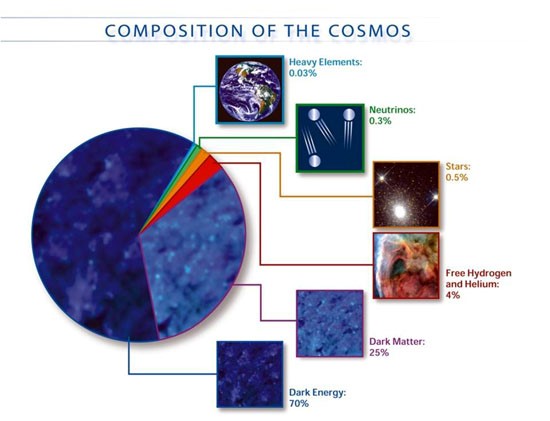
A University of Geneva researcher has shown that the accelerating expansion of the Universe and the movement of the stars in galaxies can be explained without drawing on the concepts of Dark Matter and Dark Energy... And the work is pointing to a very inconvenient conclusion -- These two entities may not actually exist. History provides us with many examples where scientists have simply invented ideas out of thin air to help explain away things that are just not understood. In some ways, Dark Matter and Dark Energy bring to mind another imaginary concept -- the so called "Aether Wind." In 1887, Albert Michelson and Edward Morley proved that there was no such thing, even though everybody just "knew" that space was filled with it. Will this new work lead to the development of a Michelson-Morley-like experiment for the 21st century that does away with the concepts of Dark Matter and Dark Energy? Time will tell.
Thanksgiving

From all of us here at Anacortes Telescope and Wild Bird: Have a great Thanksgiving with your family and friends.