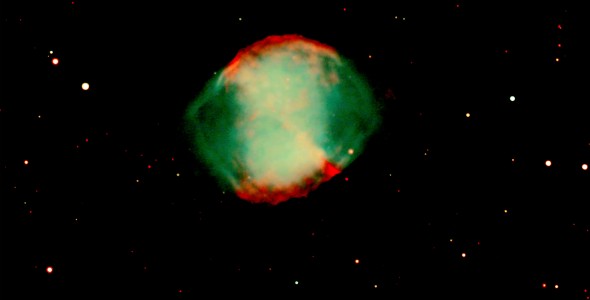
Meade 102 ED/APO
Introduction
I'll keep it short. I wanted this review to be relevant to the beginning astronomer with some money, but not a fortune, to spend. He/She will be inexperienced but reasonably intelligent and quick to learn - but not have the time to wade through hundreds of reviews.
While very new to Astronomy, I have 25 years experience as a photographer. I've even sold a few pics. Granted, while my knowledge of celestial bodies is limited to a couple of planets, Luna and "that bright thing over there", I know a good (or bad) piece of glass when I see one.
Though no Al Nagler, I feel reasonably qualified to pass judgement on optics. At least subjectively.
Brave New World (?)
How odd. ED or Apo glass has been used in photographic lenses for 30-something years. Arguably the best being Canon's Fluorite & Nikon's ED telephoto lenses.
Assuming that astronomers would be even more picky than photographers, I was rather surprised to find that apochromatic lenses are a fairly new and still very expensive component in telescopes. Well... live and learn
The telescope
As I've mentioned, I may not know my ass'n from my dec. but I know a good bit of glass when I see one, and the Meade 102 ED/APO is a VERY, VERY good bit of glass.
It has a clear apeture of 102mm and an focal length of 920mm's making it.. well f9-ish. Perfect for solar system observations. The multi-coated objective is housed in a solid, Crayford style focuser. The focuser is very stiff out-of-the-box, but a few squirts of WD40 and some Lithium grease quickly cured this. The tube is Aluminium and the whole assembly cools to ambient very quickly: <30 mins.
All-in-all, it has a very solid, well built feel to it, though I believe there were not a few QC issues with this model. So, you either have to trust your vendor or try before you buy.
Note: The supplied 8x50 finder is hopeless. Bin it and get a Telerad or similar.
My new toy
I bought this telescope 2nd hand from another Astromart-er. It arrived perfectly packed and virtually ready-to-go.
The first real telescope I purchased, I bought primarily for the tripod - a Vixen HAL 110. Its a perfect for mount for large telephoto lenses. Not too heavy, but can handle a huge weight. The shop owner practically threw in the telescope (a Vixen A80 MF) for free. A planisphere, a star chart and a moon-map later and I was ready.
After a fortnight with the A80MF, I was eager to move up a grade or two. As I live in a fairly light-polluted area, a big reflector or cat was not really an option. I wanted a 'scope primarliy for planetary and lunar viewing, with the odd DSO thrown in. In addition to providing top-notch views under less than perfect conditions, the telescope needed to be portable and relatively inexpensive.
The latter requirement, ruled out such units as Takahashi, WO's and older Vixen FL's. The former ruled out many of the 4" achromats and "semi-apos"(?!), currently on the market. Please bear in mind that here in Australia we have far less choice than in the US or Europe.
After reading a ridiculous number of reviews. I settled on the Meade as my first choice for a high-end, backyard scope. I have not been disappointed.
First light
A 4-day Luna. Using both 20mm and 6mm 'pet-food grade' Plossls (as supplied with the Vixen). Transparency was excellent but 'seeing' was quite poor. Lots of heat turbulence from nearby clay roofs.
With both eyepieces, views were crystal clear. No fringing was visible (unlike the 80mm). Even the largest of craters (I KNOW: these have names - I just don't know them yet), were perfectly defined and contrasty. Colour was natural and the scope took a 0.6 ND filter without a whimper.
Jupiter
Same night, same conditions. No filters.
Sublime! Even with the eyepieces available, Jupiter and its moons popped out from the background. Sky - black as black. Detail - good to very good. Colour - Fair. The big bonus to my mind: the planet actually looked like a sphere rather than a disk. Superb contrast.
"That bright thing over there"
This is where the Meade seems to fall down a bit.
If you are facing west from Melbourne, the double is on your left, somewhere near zenith at this time of year. While the stars split easily there is some red fringing and a 'twinkling' aspect to the image. This may well be down to the eyepieces, so I think its best to reserve judgement here. I will update as soon as I get some decent EP's.
Also in the coming weeks I will have an opportunity to test it against a Tak 102 and a Televue NP101. Stay tuned!
In summation:
This really is a brilliant telescope for the money (about $750-$900 depending on condition and accessories). If you are after faint fuzzies, nebulae etc etc. this is probably not the scope for you. Its competent on these objects, but not much more. At least under suburban skies. If you are lucky enough to live in a dark site, then very likely your results will be much better. However on planets, the moon and brighter DSO's I think it would be very hard to walk by this telescope.
A parting note:
I understand that this telescope is no longer in production! A great shame as it a magnificent 4". Pretty much ideal for sububan planetary / bright nebula observations. Grab one if you can.
P.James
I'll keep it short. I wanted this review to be relevant to the beginning astronomer with some money, but not a fortune, to spend. He/She will be inexperienced but reasonably intelligent and quick to learn - but not have the time to wade through hundreds of reviews.
While very new to Astronomy, I have 25 years experience as a photographer. I've even sold a few pics. Granted, while my knowledge of celestial bodies is limited to a couple of planets, Luna and "that bright thing over there", I know a good (or bad) piece of glass when I see one.
Though no Al Nagler, I feel reasonably qualified to pass judgement on optics. At least subjectively.
Brave New World (?)
How odd. ED or Apo glass has been used in photographic lenses for 30-something years. Arguably the best being Canon's Fluorite & Nikon's ED telephoto lenses.
Assuming that astronomers would be even more picky than photographers, I was rather surprised to find that apochromatic lenses are a fairly new and still very expensive component in telescopes. Well... live and learn
The telescope
As I've mentioned, I may not know my ass'n from my dec. but I know a good bit of glass when I see one, and the Meade 102 ED/APO is a VERY, VERY good bit of glass.
It has a clear apeture of 102mm and an focal length of 920mm's making it.. well f9-ish. Perfect for solar system observations. The multi-coated objective is housed in a solid, Crayford style focuser. The focuser is very stiff out-of-the-box, but a few squirts of WD40 and some Lithium grease quickly cured this. The tube is Aluminium and the whole assembly cools to ambient very quickly: <30 mins.
All-in-all, it has a very solid, well built feel to it, though I believe there were not a few QC issues with this model. So, you either have to trust your vendor or try before you buy.
Note: The supplied 8x50 finder is hopeless. Bin it and get a Telerad or similar.
My new toy
I bought this telescope 2nd hand from another Astromart-er. It arrived perfectly packed and virtually ready-to-go.
The first real telescope I purchased, I bought primarily for the tripod - a Vixen HAL 110. Its a perfect for mount for large telephoto lenses. Not too heavy, but can handle a huge weight. The shop owner practically threw in the telescope (a Vixen A80 MF) for free. A planisphere, a star chart and a moon-map later and I was ready.
After a fortnight with the A80MF, I was eager to move up a grade or two. As I live in a fairly light-polluted area, a big reflector or cat was not really an option. I wanted a 'scope primarliy for planetary and lunar viewing, with the odd DSO thrown in. In addition to providing top-notch views under less than perfect conditions, the telescope needed to be portable and relatively inexpensive.
The latter requirement, ruled out such units as Takahashi, WO's and older Vixen FL's. The former ruled out many of the 4" achromats and "semi-apos"(?!), currently on the market. Please bear in mind that here in Australia we have far less choice than in the US or Europe.
After reading a ridiculous number of reviews. I settled on the Meade as my first choice for a high-end, backyard scope. I have not been disappointed.
First light
A 4-day Luna. Using both 20mm and 6mm 'pet-food grade' Plossls (as supplied with the Vixen). Transparency was excellent but 'seeing' was quite poor. Lots of heat turbulence from nearby clay roofs.
With both eyepieces, views were crystal clear. No fringing was visible (unlike the 80mm). Even the largest of craters (I KNOW: these have names - I just don't know them yet), were perfectly defined and contrasty. Colour was natural and the scope took a 0.6 ND filter without a whimper.
Jupiter
Same night, same conditions. No filters.
Sublime! Even with the eyepieces available, Jupiter and its moons popped out from the background. Sky - black as black. Detail - good to very good. Colour - Fair. The big bonus to my mind: the planet actually looked like a sphere rather than a disk. Superb contrast.
"That bright thing over there"
This is where the Meade seems to fall down a bit.
If you are facing west from Melbourne, the double is on your left, somewhere near zenith at this time of year. While the stars split easily there is some red fringing and a 'twinkling' aspect to the image. This may well be down to the eyepieces, so I think its best to reserve judgement here. I will update as soon as I get some decent EP's.
Also in the coming weeks I will have an opportunity to test it against a Tak 102 and a Televue NP101. Stay tuned!
In summation:
This really is a brilliant telescope for the money (about $750-$900 depending on condition and accessories). If you are after faint fuzzies, nebulae etc etc. this is probably not the scope for you. Its competent on these objects, but not much more. At least under suburban skies. If you are lucky enough to live in a dark site, then very likely your results will be much better. However on planets, the moon and brighter DSO's I think it would be very hard to walk by this telescope.
A parting note:
I understand that this telescope is no longer in production! A great shame as it a magnificent 4". Pretty much ideal for sububan planetary / bright nebula observations. Grab one if you can.
P.James