Image of the day

Captured by
Erwin Forbragd

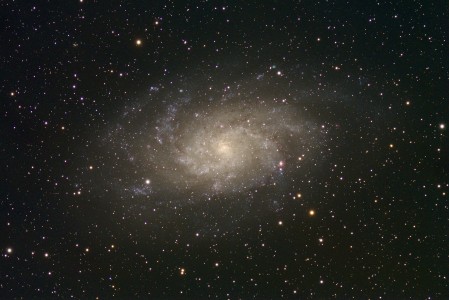
M33 in Triangulum

My Account

New to Astromart?

Register an account...

Need Help?

First Scope-Will this be too frustrating?

Started by toomanytoes, 06/23/2004 03:52AM
Posted 06/23/2004 03:52AM Opening Post
Basically, I'm interested in buying this telescope (http://store.yahoo.com/hardin-optical/dsh6.html ) because it appears it's a completely adequate telescope, and really maybe more than adequate for a beginner. I also like the price of the telescope, and from what I understand Hardin-Optics is a very good company. What concerns me is, it doesn't have any kind of 'go to' computerized feature, and with being a new user, I'm concerned that this will frustrate me because I won't be able to "see anything cool." The last thing I want is for something to acquire "gadget" status and end up being sold at a garage sale in the future. So far, I very much enjoy what I'm going to call amateur astronomy (going to star paries, and looking at really cool stuff @ slooh.com), and am really excited about making a purchase on a telescope I can use at home.

Hope this makes sense. Thanks so much for any input you might have for me, in advance.
Posted 06/23/2004 04:03AM | Edited 06/23/2004 04:07AM #1
Don't worry about goto. Just one tip, use your lowest power eyepiece (makes it nice and bright and easier finding stuff anyway) and just wander aimlessly through the Milky Way -- don't feel like you have to hunt down specific objects right away, just relax and enjoy it a little at first. Look at the Moon, the first look at that in a 6" scope it will absolutely blow you away. An f/8 scope is very forgiving with collimation/alignment so you can get by without worrying too much about that yet. You made an excellent choice for a first scope, no complex gadgetry needed, just point and shoot. Congrats!

P.S. one thing that may be frustrating is timing of the purchase: all the planets are currently hiding amongst the Sun's glare. But you will see some very cool stuff with this scope as they re-emerge in the early pre-dawn sky later in summer/fall.
Posted 06/23/2004 04:05AM #2
Hi Sarah,
I think the scope sounds like an excellent choice for a first telescope. It should give very good views of many things. I would recommend that you don't worry about "go to" yet. What are you interested in observing and what is your observing situation (rural or city?) I am interested in photography and I have heard it said that it is not the camera that makes the photographer, it is the person, what you see and how you photograph it. It is like that with astronomy. Enjoy what you see and don't let the equipment (or lack of it) become more important than what you see and the wonder that you find in that. I hope for you the best of luck in starting out.
Drew
Posted 06/23/2004 05:07AM #3
Sarah, A 6" Hardin will show you alot. Remember that the pictures you see in books and magazines are not going to be what you see in your telescope. Those pictures were taken with super sensitive cameras. If you like Galaxies and nebulas, you will need as much aperature as possible to resolve them. In scopes less than 10" most objects appear as fuzzy blobs. It will take awhile to learn how to observe and see the details in these faint fuzzys. I would suggest buying a telescope with the biggest mirror you can afford. If you can get the Hardin 10" dob you will be set for a long time. A GOTO scope can be great. But it also requires that you know Almach from Vega. You have to tell the computer where "it is". If you have not learned the constellations and Major stars even a GOTO will frustrate and become a "NOTO" scope. You are better off learning the sky and struggling abit as you learn to observe. It takes patience. All the best to you in your purchase.

John
Posted 06/23/2004 12:13PM #4
A 6" dob is a great first scope. The only thing I would recommend is a telrad or red dot finder to go with it. I find them way easier than the little 6x30 finder that is advertised with that scope. There are many choices available. A Telrad brand is probably the best, but may be big enough to throw your scope out of ballance if you put it up near the eyepiece. I have used a Daisy red-dot finder from Walmart (~$11) with much success.

I also wouldn't worry about GOTO or setting circles or any other attachments at this point. Just a star chart or field guild and some practice. A pair of binoculars also helps find many of the "really cool" things to see in the sky.

Enjoy,
Charlie

Fort Lewis Observatory: (37.238, -108.052) ~2360m (7744 ft.) elevation.
Darkness - typically 6.5+
Scope - Meade 16" LX200; f6.3 focal reducer
Focus - JMI Smart focus
Camera - SBIG ST-10XE; (~.5"/pixel)
Guiding - AO-8 and/or Meade 5"/DSI/PHD
http://www.fortlewis.edu/observatory
Posted 06/23/2004 12:56PM | Edited 06/23/2004 12:57PM #5
Sarah -

First, a 6" dob is good choice. I am going to recommend a combination of what Bob and Charles said above. First, I recommend getting a reflex finder, but the telrad is a bit big for a 6" dob. I would recommend a Rigel Quickfinder. It is the same idea - you attach to the scope (double sided sticky tape - no drilling required), then look through a little window and see a red bullseye projected onto the sky. Makes finding things much easier. Costs about $35.

Second, rather than get DSC's to be "like having an experienced astronomer with you", I strongly recommend taking your new scope to a star party. Check your local astronomy club for when they have their next event. The people there will probably be happy to help you with any set up issues (like collimation) you may have, and will show you how to find some objects. They will also let you look through their scopes so you know what to expect in yours. The best way to learn how to starhop is by observing with someone who already knows, and can show you the tricks.

Have fun!

Jarad
Posted 06/23/2004 01:44PM #6
Hi Sarah,

Just a few thoughts and opinions...

After having been through a lot of scopes, and looking back on my own astronomy start, I think your choice of a first scope (a dob reflector) is a very good one. I suggest the 8" or 10" version of what you're looking at, because they will let you see more (especially the 10") but it ain't a big deal.

The Hardin scopes you're looking at are priced reasonably, and are fine in terms of quality. If in the future you decide to move to a different scope, you'll get a lot of your money back out of your current scope.

You'll get collimation figured out soon enough, and remember that it is important to get it right. It makes a real difference in the quality of what you see.

Digital setting circles (DSCs) are IMO are big advantage. The starhopping route can be enjoyable - I think it's a personality thing. Some people like the "hunt", and others (like me) enjoy studying the object of interest. You'll figure that out over time. IMO, you definitely don't need motorized GOTO for now, although it it a fun feature to use.

Finally, going to star parties or hanging out with astro folks inyour area for some nights of observing will really accelerate your understanding and enjoyment of astronomy. You'll learn a lot and have way more fun.

Good luck!
Doug

Posted 06/23/2004 02:59PM | Edited 06/23/2004 03:00PM #7
Sarah,

Star hopping is more fun than go-to. You should start star hopping because that is how you learn your way around the cosmos.

A very good first book is "Turn Left at Orion" available from www.telescope.com. It has most of the best targets for a scope the size your are considering. There are other books but this one will really get you started as well as any. It shows you what you should expect to see and will show you both the finder scope view and telescope view in the proper orientations. Includes galaxies, nebula, clusters, and double stars.

I also find a computer star map a big help as you can print out various zoom levels of star maps and it makes it very easy to find your targets.

But the book above is a good place to get started and will introduce you to a good number and a variety of objects that you can find easily.

Good luck and welcome aboard!

Daryl
Posted 06/23/2004 05:15PM #8
Sarah,

To add to the numerous suggestions, having the largest field of view possible is very helpful for a beginner. I knew one beginner who's setup gave only 0.5 degrees true field of view (TFOV), and this was very frustrating. Even for experienced people this is too small.

You'll likely get a 25mm plossl eyepiece with your telescope. This will give you about 1.0 degrees, this is not terrible, but I would suggest getting more.

I would recommend at a minimum that you purchase a new plossl eyepiece 30mm to 32mm in size. This will get you about 1.3 degrees, doesn't sound like much improvement, but every bit helps. These can be found on astromart or through your telescope dealer for not much money. The 1.3 degrees is the most you can get with an ordinary 1.25" focuser on your telecope (8" f/6).

If you have the budget, you could consider going to a 2" focuser and getting an inexpensive 2" eyepiece like the BW Optik 30mm (about $100 new and $70 used). This eyepiece would give a whopping 2.0 degrees field of view and would make life much easier. The biggest problem with this setup is the weight and size of a 2" eyepiece will likely throw your scope off balance. You could then add counterweights. But the 2 degree field of view would be really nice for hunting around.

If you get the Rigel finder instead of the Telrad, then you'll have fewer balance problems.

Other suggestions:

1) binoculars, easier to find the brighter objects.
2) classic book by Rey on finding constellation star patterns
3) Book "Turn left at Orion" for finding easier objects.
4) Rigel finder.
5) Club star parties for help and for security at dark sky locations.

I used a 6" f/8 as my primary scope for seven years. It was wonderful.

Have fun!

Mike
Posted 06/23/2004 05:20PM #9
Good choice going with the 8". That should serve you nicely. My first scope (about 2.5 yrs ago) was a 6" newt and I wish I had gotten the dob mount instead of the clunky GEM. You will definitely want to get a telrad (or other reflex finder). There are plenty of objects that are easy to find and are fun to look at while you are first learning to use your scope (planets, moon, andromeda, orion nebula to name a few). Don't take your scope out under light polluted skies and try to find dim DSO's on your first few nights as this will be an exercise in frustration.

btw, I knew a Sarah Graves in College (about 5-7 yrs ago.)
