Hi all,
I tried asking this question on the CCD forum, but did not get a responce, so maybe someone here can help.
I am looking at getting an H-alpha filter for CCD imaging and I am trying to decide which one to get. From looking at what is available, there seems to be a choise of 4.
Custom Scientific 10nm $170
Custom Scientific 10nm/with AR coatings $220
Custom Scientific 4.5nm/with AR coatings $275
Astrodon 6nm $275
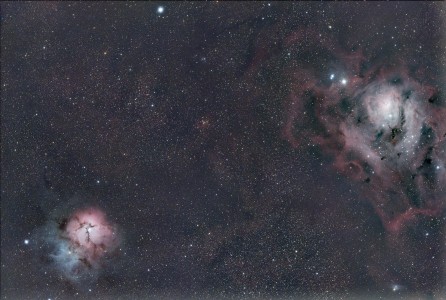
I understand that the narrower the bandpass, the better the light pollution rejection and the fewer stars in the image, but I gather that longer exposures are required, so my gut feeling is to go with the Astrodon, but I would like to hear from other users as to their recomendations.
For example, what difference is there between the 10nm and the 4.5nm? Is the extra cost worth it? What about the anti-reflection coatings, are they worth the extra cost?
Thanks in advance
Maurice
* Teach a man to fish and you feed him for a day.
* Teach a man to use the internet and he won't bother you for weeks.
