Image of the day

Captured by
John Roach

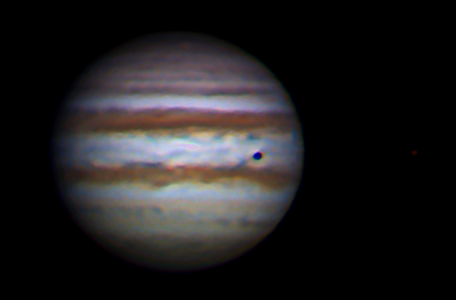
Jupiter IO Transit 12-10-26

My Account

New to Astromart?

Register an account...

Need Help?

Saving money in astronomy 2

Started by Alex McConahay, 01/28/2010 09:44PM
Posted 01/28/2010 09:44PM Opening Post
I got inspired by thread 1 on the topic, but did not want to hijack the thread.

But, I just started a series for our club newsletter called "The Cheap Observer's Report." (It's a play on words from our newsletter's wonderful monthly "Chief Observer's Report".....) At any rate--seriously, I gotta write something once a month about money saving tips in astronomy. What topics would you guys suggest?

Alex
Posted 01/28/2010 10:18PM #1
Alex McConahay said:

I got inspired by thread 1 on the topic, but did not want to hijack the thread.

But, I just started a series for our club newsletter called "The Cheap Observer's Report." (It's a play on words from our newsletter's wonderful monthly "Chief Observer's Report".....) At any rate--seriously, I gotta write something once a month about money saving tips in astronomy. What topics would you guys suggest?

Alex

How about observing reports using inexpensive telescopes? Let's put a limit on the new cost of the scope and let people work from there. I think $100 or maybe $150 makes sense, like Yogi says, there is a lot to see if you just look.

A review of the new Orion 100mm F/4 brother to the Starblast might be a good place to start.

A few years ago I did a review of a Telestar/Meade 60 AZ-A for Uncle Rods Skywatch, I called it Fifty Dollars at Walmart... It was later printed in Amateur Astronomy.

http://skywatch.brainiac.com/swspring05.pdf

The good news is that with a $100 limit, being a telescope junky will only cost you $100/month.

The bad news is that after a year you will have $1200 of junky telescopes...

Jon
Posted 01/28/2010 11:29PM #2
Scott brings up a good point. Maybe I am cheap, but I have almost never purchased a "new" astronomy product becuase I cant stand the pain of paying premium price. Purchase of used equipment here, sold by experienced and trusted sellers, almost ALWAYS represents a 30 - 50 percent savings on the sticker price. However.....

I do feel some slight pangs of guilt since I am sort of denying the makers of these products some profit to continue R&D. I recall once a tense conversation with a binoviewer maker who was frustrated at me "and the rest of the amateur astronomers" for buying used binoviewers instead of new ones from him. I think he thought that maybe half of the actual binoviewers purchased were used-to-customer sales rather than new-to-customer sales. And he felt that this would "put him out of business". He had a point, I think....
Posted 01/28/2010 11:31PM #3
Yeah, that is gonna be my next article.

But, c'mon, that's a gimme.

Alex
Posted 01/31/2010 04:18PM #4
I'm not an expert-and I am just a beginner but my 2 cents in:

1) Buy used where it makes sense-which is almost always
2) Forget taking pictures-be visual only. This will save allot of cost and allot of complexity.
3) Stick with long F ratio scopes which are more forgiving with eyepieces (not as much need for a $300.00 eyepiece-mind you I didn't say NO need)
4) Limit the number of scopes that you have at once-in order to buy one you must sell one
5) Buy your equipment at the beginning of winter. Many scopes go on sale (especially used) because people want Christmas money. Also the demand for used scopes is always highest when the weather is nice.
6) Learn to use what you have to its limit before upgrading. Sometimes equipment desires will change once you get some more experience
7) Keep to a budget
8) Set priorities. Will a $300.00 eyepiece be more valuable in obtaining your observing goals or will 2" of more aperture? What will give you the most "bang for the buck" ? This equation changes for everyone-there is no right answer. I am also sorry to pick on the eyepiece manufacturers but some of the prices for the fancy eyepieces mean that they will be out of my budget for quite some time. Someday I plan on getting one set of REALLY nice eyepieces but its going to be few years.
9) when purchasing used equipment look for "package deals". You want the scope from the guy who dropped a bundle on equipment and got almost every accessory. The accessories do not add that much value to a used scope but they sure cost allot if purchased separately.
10) Join a club and look through other peoples fancy scopes. (This is on my to-do list this year). Seeing new gear before you purchase it will avoid any future mistakes.
11) Build up your equipment inventory over time-don't rush to but everything at once.

Posted 01/31/2010 05:04PM | Edited 01/31/2010 05:06PM #5
Buy one telescope, three or four good eyepieces, a couple of filters, and a good atlas. If necessary spread your purchases out over time. Now take them out on every clear night and enjoy and learn the night sky. Don't even think about buying more equipment. Stay away from equipment discussions and say "I don't need the latest and greatest - I need to spend time behind the eyepiece learning to see what my telescope can show me, and enjoying the beauty of the heavens."

It's not the initial investment that makes the hobby expensive, it's the unending chase after something better. If you want better views, a trip to darker or steadier skies is probably better than a new telescope.

Clear skies, Alan (who would have done well to have followed this advice, but is getting better!)
Posted 01/31/2010 05:22PM #6
Here are some ideas:
- Binocular observing
- Improvements to a cheap scope:
+ red dot finders
+ stabilizing a cheap tripod
- planetary and lunar observing with a 50mm or 60mm scope
- making your own filters
- making your own eyepieces
- vendors
- Top 10 targets for limited aperture
- Salvaging a thrift store telescope
- building your own scope
- cheap astrophotography/moonshots (web cams, digital cameras)
- the perils of being too cheap (the ebay "Red Telescope")
- the $100 telescope

[SIZE="Small"]------------
I have several telescopes, but none are semi-APO, APO, or in anyway valuable.
[/SIZE]
Posted 02/03/2010 02:19PM #7
How about some short blurbs on how/where to find replacement parts for DIY projects (ie: Starbound observing chairs) replacement cables and such. It gets pretty costly shipping back to seller for repairs starting with shipping.
Posted 02/07/2010 09:50AM #8
Alex McConahay said:

I got inspired by thread 1 on the topic, but did not want to hijack the thread.

But, I just started a series for our club newsletter called "The Cheap Observer's Report." (It's a play on words from our newsletter's wonderful monthly "Chief Observer's Report".....) At any rate--seriously, I gotta write something once a month about money saving tips in astronomy. What topics would you guys suggest?

Alex


Some things I have noted:

Among the best scopes money can buy: are available for use at ones local club for the humble price of membership.

A few used plossl's: a good modest budget choice for any target and scope focal ratio.

Local rural sky: it's darker, quieter, with broader horizons. Lets any size scope see more, with out having to buy more aperture. For free.

Public hunting land: it's dark sky you already own. Spend some time learning it's secret places that will work for telescoping. Then use them.

Work out some kind of active cooling on your newt: save a ton o' funds on upgrading to more better scopes of marginally more aperture or snazzier ep's. Because half the problem with the views in that newtonian are seeing issues inside the tube and/or on top of the mirror.

Cargo pockets: the simplicity of observing with 3 or 4 ep's, each in it's specific pocket, protected from dew.

Specific clothes or gear for telescoping, and used for only that: will last for decades before needing to be replaced.

Paperbound printed atlases: the only power supply needed is two AA's, the whole sky is plotted right at hand, they last for decades, and with it's coordinates one can find the location of any target. The BSA is only ten bucks from Willmann-Bell and is a great combo with Uranometria, which is itself one the best values out there.

Just say no to caffeine: water is cheaper, hydrates better, doesn't screw up sleep after/between observing nights.

Budget wide field ep's in combo with a fast focal ratio scope: can cost more in time and money. Money to replace them with better corrected and or coated ones. Time lost chasing fuzzies around the edges of the field looking for DSO's, or time lost barlowing something else better coated when trying to get a critical look in the center of the field.

To build something(s) for telescoping: scope, mount, chair, table, case, finder. Anything at all is a hoot, at any price point.