
I think so.
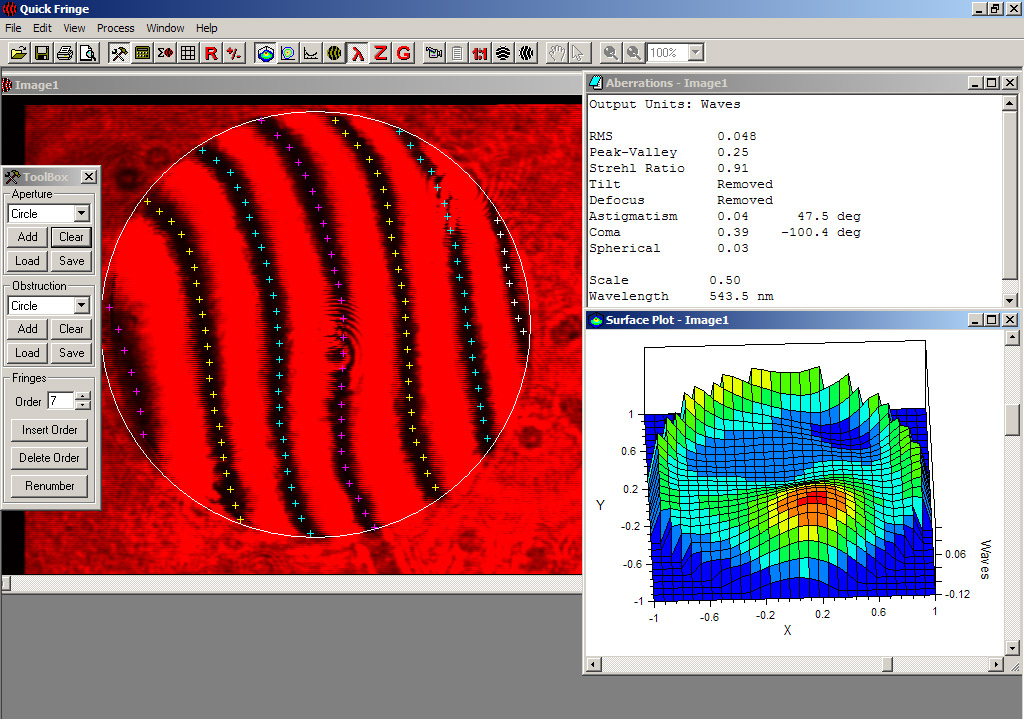
Most people do not relate to waves peak-to-valley (PV) or waves RMS (much more meaningful, but numerically 3-5 times smaller).
The Strehl on the other hand--the actual peak intensity of a star (or point spread function if you want to impress people) as a fraction of the theoretical maximum--is something you can see at the eyepiece.
And numerically it is easy to relate to:
80% or 0.8 of 1.0 is nominally diffraction limited. Remember when 80-89% got you a B in school?
90-100% got you an A.
And 95% and above got you a A+.
Your thoughts on this most pressing matter?
"--Granted, that's a worse case scenario. The destruction might in fact be ... limited to our own galaxy."