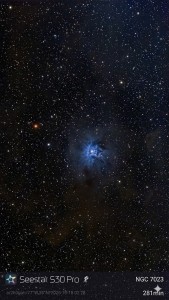
Image of the day

Captured by
Arthur Hogan

Iris Nebula

My Account

New to Astromart?

Register an account...

Need Help?

Upright Image-What Does it Mean?

Started by Jud, 05/03/2007 02:18PM
Posted 05/03/2007 02:18PM | Edited 05/03/2007 02:35PM Opening Post
Recently I bought a 12X70 right angle finder scope that was advertised as an "upright image". Unfortunately, according the the vendor and a close personal friend, this implies a "mirror image". First, my curiosity causes me to ask; how many of you aficionados out there knew this; how many of you were unaware; and how many of you would have assumed as I did that this was a "correct image"?

According to the vendor, direct quote "you (I) are he very 1st person I have met in the 10 years I have been making these that did not knwo the difference".

Unfortunately I could not confirm this information in any of my reading or Astronomy text books. In my opinion, we have at least accepted a poor choice of words to describe an erect mirror image finder/scope.

Secondly the vendor said "As for what is stated in the ad....I have literally sold hundreds and hundreds of these finders and get no complaints at all, in fact....MOST people comment on how well they work and wonder how I can sell them so cheap when the parts alone are worth more than I sell the finder for".

Has anyone else out there bought a mirror image finder and decided they were not so deligted as quoted above after learning of the type of image it produced?

Interestingly a few days ago I looked through an old Meade cassegrain 100 mm scope and for the first time witnessed the mirror image view and wondered why we would ever accept such a design. Simple yes, confusing, yes, difficult to use, yes; particularly as a finder scope for star hopping.

The way I see it, I would have to print all my star charts in mirror image in order for my brain to make the transformation and re-practice all my star hopping patterns. Not an inviting task.

So if you are interested in a larger finder for your scope, at least be advised to confirm what sort of image you will be seeing and whether that is going to be suitable for your use.

I Yam What I Yam!
Posted 05/03/2007 02:34PM #1
In astronomy left to right means little (quite frankly either does up or down). So yes most finders that correct for vertical are Upright only (some however do do both). Most main scopes don't purposely correct for anything - usually a function of the scope design.

To correct for left/right would add another optical path to do so - IE mirror or lens, and in astronomy the more in your light path the less through put, contrast, etc... One of the reasons that usually terrestrial spotting scopes (which are usually corrected for both) are not as desirable for astronomy.

These are general rules however....
Posted 05/03/2007 02:36PM | Edited 05/03/2007 02:40PM #2
I once bought a used Tuthill 80mm finder and the owner thought it was a non-mirror reversed image, but he was mistaken (how one could miss that escapes me). Luckily, I did find an amici prism diagonal that converted the Tuthill into a RACI (Right Angle Correct Image) finder.

Even though amici prisms degrade the image, I think it's a small, small price to pay for getting an natural, map-compatible image that makes sense to me at 3 in the morning. I love my RACI finders - I too have absolutely NO interest in doing the mental gymnastics to un-reverse a finder image...

Now I *always* ask that question just to clear up any such doubts. As far as what the phrase "upright image" means, I've long assumed that doesn't necessarily mean upright AND non-mirror reversed. Probably a thought that occurred to me only after the above incident.

K. Michael M.
Posted 05/03/2007 04:53PM #3
>>>Recently I bought a 12X70 right angle finder scope that was advertised as an "upright image". Unfortunately, according the the vendor and a close personal friend, this implies a "mirror image". First, my curiosity causes me to ask; how many of you aficionados out there knew this; how many of you were unaware; and how many of you would have assumed as I did that this was a "correct image"?
---

Judson:

In anwser to you questions:

I am quite aware of the difference between an "Erect/Upright" Image and a "Correct" Image. In general refractors, SCTs, Maks are all used with a star diagonal so they provide an Erect image (assuming the diagonal is upright) but not a Correct image.

Correct image diagonals are complicated and in general degrade the image somewhat, particularly at higher magnifications so they are rarely used in astronomy except in finders. I personally I prefer an erect image reversed for bird watching too, it doesn't take long to become natural.

As far as the difficult of using Erect Image finders with Starcharts:

I don't find using a erect image for star hoppin difficult, it requires less mental manipulation than using a straight through finder or a Newtonian.

For some reason I am comfortable with different orientations when starhopping or otherwise trying to use a chart. A typical scope will have 3 different orientations, a straight through finder, the scope itself and a Telrad/Rigel. And one needs to switch between these without difficulty...

I have wondered about how myself and others do this because it does seem like a daunting bit of mental work but I have come to believe there are couple of things that make it quite simple.

1. I don't worry about the orientation in the eyepiece, IMHO, that is the road to disaster. I pay attention to the origination/motion of the telescope. If the star hop is from a bright star to another bright star 3 degrees SW, I move the telescope SW. That way the chart image in my mind's eye is satisfied.

2. I try to use pairs of stars as pointers in starhopping. The pair tells me on which line to move the scope, the chart tells me which of the two ways. Using pairs as pointers, one can hop quite long distances to pickup another guide star grouping. This also helps if you think in ALT-AZ like I tend to do because over the year, the relationships involving pairs remain the same.

That's my 2 cents, for whatever it might be worth.

Jon
Posted 05/03/2007 05:43PM #4
I empathise with you on this one. Not quite ambiguous, but certainly easily miunderstood. Even worse, IMHO, is calling a mirror diagonal an erect image diagonal.

I am a fanatic about having right-angle correct-mage finders on all my scopes, so I just memorized RACI, and if it does not say that, I ask for clarification.

On a handful of occasions, I have misunderstood what was being offered for sale on Astromart. Usually, I catch my mistake before the seller ships, but not always. On the last occasion, the seller recognized that the item might be confused with the one I really wanted, and clarified that what he was selling was not what I wanted. In all cases, even if it was shipped and I wanted to return it for a refund, the seller was accomodating.

Since most people would want a RACI finder (rather than a reversed upright view), I find "Upright" or "Erect" image to be misleading. I find it incredible that this guy has sold hundreds of these worthless finders without anyone complaining about not getting what they thought they were getting.

The honorable thing for the seller to do would be refund your money for the misunderstanding, and let you send it back. Short of that, you can get a 1.25" Amici prism RACI diagonal for about $50. I also have a 2" one from William Optics that cost several times that amount but is worth it for the wide field of view.

Hugh Bartlett

"Praise the Lord for the expanding grandeur of creation, worlds known and unknown, galaxies beyond galaxies, filling us with awe and challenging our imaginations." 2007 Reform Siddur
Posted 05/03/2007 07:10PM #5
By the way, the only text I could find so far using the term "upright image" was on the top of page 37 of Orion's #073 catalog. It referred to a "correct image" spotting scope which was confirmed by an Orion representative who I called for clarification.

I Yam What I Yam!
Posted 05/03/2007 08:53PM #6
My probable path on this is to purchase a RACI prism and shorten the body so that it will come to focus with the prism. This way it can also be adapted for multiple EP use. There just happens to be one just posted in the classified with a similar solution, plus another independently made the same suggestion after a successful modification.

I Yam What I Yam!
