Image of the day

Captured by
Philip Imbrogno

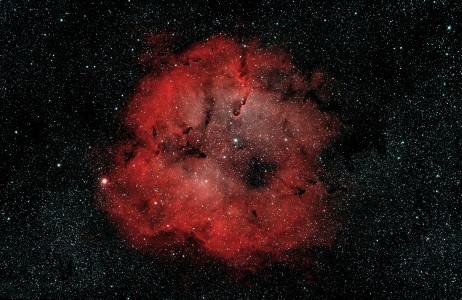
Elephant Trunk Nebula

My Account

New to Astromart?

Register an account...

Need Help?

How Much Vignetting At Front Aperture Is Okay?

Started by web0178230, 09/11/2005 09:07PM
Posted 09/11/2005 09:07PM Opening Post
[COLOR="Purple"]For my 18.75" project, NEWT tells me I need at least a 20.6" front aperture to avoid vignetting of the 75% rays.

For transport design reasons, I'd like to keep the opening to about 20". Is this going to be a significant issue for visual only use?
Bill [/COLOR]
Posted 09/11/2005 09:33PM #1
Hello:
No, it wouldn't make a difference. You'd lose a little light at the edge of a wide field of view, but nothing that's noticable. You'd probably lose more light off of the edge of the secondary mirror than you would off of the front. For visual use, a loss of up to 50% may not be objectionable near the edge of the field. Even for phototographic purposes, this sort of thing can be calibrated out.

Cheers
Mike Connelley
Posted 09/12/2005 12:04AM #2
Hi Bill,

The 75% limit at the edge of the field is an assumption NEWT makes for simplicity. What you want the edge illumination to be depends on what you plan to do with the scope, what eyepieces you use, and how much you care. It is more important to have the size of the 100% illumination be large enough to suit your goals.

Let's discuss the limits.
I would never design any scope where the area of 100% illumination is zero. You might as well have bought a smaller mirror to begin with. In my opinion, its a bad decision to give up center illumination to chase a little extra contrast. The improvement for using a secondary smaller than 0.2 * primary
diameter is insignificant. The best choice is to step up to a larger scope.

I would never design any scope where the area of 100% illumination completely fills the f.o.v. For photographic purposes, you want to approach this limit, but it isn't possible to achieve it. For visual use, it isn't practical or even necessary.

My personal design guideline is to make the center half of my most used (for critical galaxy hunting) eyepiece be at least 100% illuminated. The selection of 1/2 is arbitrary, but at least I have a reason for making the selection. If I'm hunting down galaxies at the limit of detection, a good size of my field better be fully illuminated. Asking it to be fully illuminated across the entire field is an option, but I figured I couldn't
take in the entire field at one time anyway. I use the periphery for recognizing star patterns where illumination isn't key, and it might cost me too much elsewhere in the design.

Although I now mostly use a 7mm Nagler, I selected the 9mm Nagler as my "standard" eyepiece. The size of the full field of the 9mm Nagler is 9mm * 82/57.3 = 13mm. Half this diameter is 6.5mm, or about 0.25". Planetary viewers could get by with less. Those interested in detecting the faintest objects across a wider field can select more. By the way, in the above formula, "9mm" is the eyepiece focal length, "82" is the apparent field of view, and 57.3 converts degrees to radians. You can use this formula for all eyepieces.

For the reasons stated above, the diameter of 100% illuminated field should be at least 0.25". In practice, the size of 100% illuminated field of my personal scopes turns out to be 0.3" - 0.5".

The edge illumination should be determined by your lowest power eyepiece, how you use it, and how much you care. 75% at the edge of your lowest power eyepiece is a guideline, not a hard-and-fast rule. Some people use 50%. It is OK to ignore when NEWT flags that the edge illumination drops below 75%. On the other hand, you won't go too wrong if you use it.

NEWT doesn't tell what the center is when its not 100%. It also doesn't tell you what the edge illumination is of any particular eyepiece. These are understandable limitations and the selection of 100% and 75% limits will result in good scopes. Providing more versatility in NEWT would probably be confusing to most people.

For a more detailed representation of what the illumination distribution looks like, I created my own spreadsheet. You can use the program SEC made available by Alan Adler to see how the illumination varies for any eyepiece, diagonal size, scope, etc. You can download it via the Sky and Telescope website.

Albert

Posted 09/12/2005 05:06PM #3
There is no chance that the front
opening causes any significant vignetting. Even if you leave it to be equal to the mirror
diameter, in this case 18.75", it would result in as little as 6%
vignetting 23mm off-axis for an f/4.5. The effect is entirely invisible. Moreover, since a stop
placed at the focal length distance in front of paraboloidal mirror cancels
its astigmatism (nearly 3 waves 23mm
off-axis), edge definition
may get slightly better - but it ultimately will depend on the eyepiece used.

Vlad
Posted 09/17/2005 04:32AM #4
[COLOR="Purple"]Hi Mike![/COLOR]

> Unless I miss it, what is your Focal length and
> also what size secondary do you intend to use?

[COLOR="Purple"]Focal length is just under 2500mm; f/5.22. Not exactly a super "fast" mirror. I'm looking at using a 3.1" secondary.[/COLOR]

> So……. If you’re going to use the 3.1 your clear
> could be 20” with no additional light loss. Also
> understand that if you use a 3.1 and a 20” clear
> aperture you’re able to push the secondary out
> further in the light cone resulting in less
> vignetting. The thickness of your focuser board
> can also help in this case.

[COLOR="Purple"]I like 20", if I'm not losing too much on the front end, so to speak. grin Understood about the secondary being further out.[/COLOR]

[COLOR="Purple"]One wrinkle: I might try to "fold" the light path back down a little bit to end up with a shorter EP height. Even with the 3.1" secondary, I don't think I'll be limiting illuminated FOV. [/COLOR]

> Point I trying to make is if you’re going to
> undersize your secondary it makes little since to
> run a full clear aperture unless you intend to
> change to the larger secondary down the road.

[COLOR="Purple"]At 3.1" for an f/5.22 focal ratio, I don't think I'm undersizing the secondary...thus probably never going to "upsize" it.[/COLOR]

> Also do you know the quality of the mirror? If it > has edge defect you’re better off masking the edge
> anyway.

[COLOR="Purple"]It's good to the very edge. WooHoo!! 8)

Thanks for your insight! Any thoughts now that I've thrown out some more details?
Bill[/COLOR]