Image of the day

Captured by
John Roach

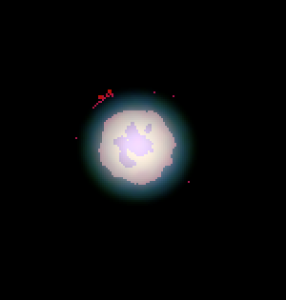
Enhanced Uranus showing Polar Cap and possible Aurora

My Account

New to Astromart?

Register an account...

Need Help?

First Outreach Attempt / Seeking Object Advice

Started by deccles, 05/23/2006 06:22PM
Posted 05/23/2006 06:22PM Opening Post
Hi All,

On Thursday, May 25th, I will be conducting my first outreach program with a group of 8th grade students, their science teacher, and parents. The viewing session will run from 8:30 to 10:30. At this point, I have confirmed 16 students (25-30 people if you count parents) and am looking for advice on an object list. Here's what I have chosen so far. Depending on your input, this list is subject to change. As always, your input is appreciated.

SATURN, MARS, JUPITER,
CLUSTERS - M3, M4, M13, M35, M37, M44, M92
GALAXIES - M51, M81
NEBULAE - M27, M57
OTHER - MIZAR DOUBLE STAR

I was also planning to spend a little time explaining how to measure RA and DEC by hand to assist in finding objects just by looking up.

If anyone could also give me a list of binocular objects, and web resources for beginners, that would help. All of this, as well as other information regarding distances (e.g., distance from sun to pluto / nearest star) will be part of a handout I'm printing for everyone to take home.

Am I missing anything? Let me know. Thanks

Clear Skies,

David Eccles
Lompoc, CA

Posted 05/23/2006 06:45PM #1
I've always liked the free monthly star charts from http://skymaps.com/ Each month's chart is a double-sided 8-1/2 x 11 page, with a chart on one side and lists of objects (and other details) on the back.

I also see that they are free for non-commercial, educational use. They might make a fine handout.

Allen
Posted 05/23/2006 08:08PM #2
David,

I've done lots of these for 5th grade groups of 25. One comment I would make is that you have planned for 25 people to look at 15 different objects in a 2-hour span that begins in daylight (8:30PM) and you are looking for more. That's a minimum 375 looks through your scope in between switching objects and answering questions! It may not be practical to cover this many objects.

Everybody does these sessions differently according to their own interests, the type of group, and time restraints. Many of us include a brief talk on some subject or two appropriate to the age of the students.

Since this is your first attempt I would suggest keeping it simple. You will soon learn how much you can and cannot accomplish in a given period of time. Aside from that, jump in, get your feet wet and enjoy the experience.

Jim DellaPenna
Raleigh, NC
Posted 05/24/2006 01:09AM | Edited 05/24/2006 01:10AM #3
David: Based on a few years' experience with outreach programs to middle school pupils, I would emphatically confirm what some others have told you here: Your list of objects is already too long. With one telescope for 30 people and two hours' viewing time, you will find that four objects, viewed for half an hour each is ample (that allows each viewer one minute to observe each object). Also: include Saturn and Jupiter for sure, but I would forget Mars this month. And you may find that galaxies, as seen through an 8-inch telescope, would disappoint most of the 14-year olds, regardless of whatever fascinating lore you can impart to them about how large these objects are and how long it took their light to reach us. M44 by all means if you have a low-power wide-angle eyepiece that allows the kids to see most of it through your 8-inch scope; otherwise leave M44 to be viewed through the binoculars and use your scope for M37, M3, etc. (I think M4 and M57 will not be available or well positioned before 10:30 p.m. this Thursday, but M13 may be ok near the end of your session).

NexStar 8i SCT, Orion 80ED APO refractor, Orion 120 mm EQ refractor, 3.5-inch Questar
Posted 05/24/2006 03:08AM #4
I know you will be alone on this one but a great crowd pleaser I use to keep the natives from getting too restless is a TV/VCR unit hooked up to a Meade digital EP on a planet like Jupiter or Saturn (the moon is the best when visible.) I use an equatorial platform driving a dob or Astroscan. If the platform is aligned well, that gives me time to keep my main scope on target. A volunteer from the crowd can be deputized to keep the object centered and to explain the view- pointing out faint moons of Saturn, for example. It's amazing how many times newbies will lean on a scope to steady themselves in the dark.

To add another object to your list, try Polaris to show its companion. This is a good one for a dob pusher like me, no tracking!

Customized Zhumell Z12 on Dedicated Atomic EQ Platform
Customized Hybrid Z12/Lightbridge on Baltic Birch Planisphere Mount

(I'm holding famous Martian meteorite ALH84001 in the picture.)
Posted 05/24/2006 04:14AM #5
Average distances of the planets.
Mercury 58 million km from the sun.
Venus 108 million km from the sun.
Earth 150 million km from the sun.
Mars 228 million km from the sun.
Jupiter 778 million km from the sun.
Saturn 1429 million km from the sun.
Uranus 2870 million km from the sun.
Neptune 4504 million km from the sun.
Pluto 5900 million km from the sun.
I hope this helps i did 65 fifth graders but just talked and showed pictures. I set up my scopes and showed them off. Then at the end of the day i gave away two 60mmx700mm telescopes i bought off ebay for cheap. I cleaned them up fixed everything and explained to the boy and girl winners dont expect alot. Told them to look at the moon and planets and just explorer. Have fun.
Posted 05/24/2006 05:36PM #6
I think I'd skip Mars. You'll spend all your time explaining why it's just a tiny, featureless dot.

Joe Bergeron

Moderator, Astro-Physics Forum
Posted 05/24/2006 10:45PM | Edited 05/24/2006 10:48PM #7
As someone who does dozens of outreach events a year, I have to echo what others have said - you list is too long. Galaxies will disappoint. Open clusters (if they fit in your FOV), globulars, double stars, Jupiter and Saturn are crowd pleasers.

Show them Castor - a great double. Tell them about how it's much more than a double - it's 6 stars!

Print out the Heavens-above data on Iridium flares and satellite passes - those are naked eye things people can watch for while in line. Beware that the Iridium flares are VERY short lived and you will need an accurate watch, set precisely.

Binoculars on a tripod aimed at M44 or the Coma cluster will be good & easy. Keep in mind that the Coma cluster may be high enough in your sky to produce neckaches with binoculars. M44 is much lower. M45 is gone this time of year.

Print out this month's Skymaps.com handout - perhaps the best single astronomy handout ever made for outreach events.

Posted 05/24/2006 11:31PM | Edited 05/24/2006 11:33PM #8
This has been really great folks!! Thank you so much for the input. It's helped me understand what goes into an event like this, and has helped with the organization of what they'll see, along with the how's and when's.

I'll have my camera and tripod with me to get group photos and will surely report back to you all with pictures and a summary of how it went.

The event is tomorrow night (Thurs.) and I'm hoping to have the film developed the following weekend (June 3). I'll need to wait that long because I'm heading up to the mountains around here on Friday and Saturday night and will be using the remainder of the roll for some deep space photos. That and I have to drive 20 miles to the nearest camera shop that knows what they're doing. So look for it the first full week of June.

Again, thank you all very much.

Clear skies and happy hunting.

David
Posted 05/24/2006 11:46PM | Edited 05/25/2006 12:13AM #9
David,

One thing you should do before you begin with the observing part of your event is gather everyone together and tell them the does and dont's... like don't touch the scope! Don't finger the eyepiece! Don't use it as a spit bucket! Be nice, but let them know what to do...

The latter is such a common happening - kids and adults asking, "..where do I look - in here?" and then sticking their finger right into the eyepiece, perhaps even rubbing it around for emphasis - that I never, ever, EVER use my naglers and panoptics at public events.

NEVER.

Not after having to clean a big wad of green snot off an eyepiece - no kidding! So I have a set of "Combat Zone" eyepieces - cheap ones for star party use.

Another tip - bring a ladder with rails for the short ones - it also gives adults something to grab instead of your scope.

K. Michael M.
