Image of the day

Captured by
Lawrence Parchman

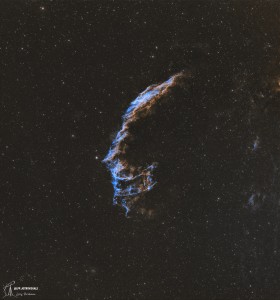
Eastern Veil Nebula (NGC 6992) - Wide View

My Account

New to Astromart?

Register an account...

Need Help?

EQ Newt vs. Dobsonian for Planetary Viewing?

Started by Lee_S, 04/23/2006 01:50PM
Posted 04/23/2006 01:50PM Opening Post
Last night, I was reading some tips on picking a telescope in the back of my Star Atlas. Apparently, Sir Patrick Moore doesn't think Dobsonians are good for planetary viewing. Why? Is it very difficult to keep a planet in the FOV under high magnification with a 6 or 8 inch Dob?

[SIZE="Small"]------------
I have several telescopes, but none are semi-APO, APO, or in anyway valuable.
[/SIZE]

Posted 04/23/2006 02:14PM #1
Hi Lee,

The advantage of an equatorial mount is that to track a planet across the sky you need only move it in RA rather than in altitude and azimuth as with a DOB. Especially when motor driven, this allows much easier use of high power. Having said that, there are certainly plenty of DOB drive systems out there that will do the same thing. And I routinely do high power obsevations of the planets with a 12.5" Portaball at 300x and above. The best eyepieces I have found for planetary use are the TMB Monos and Pentax SMC orthos. The monos are a little tight for a non-driven DOB but certainly work. It is something of a subjective issue anyway, do you want to let the planet drift across the field and then reposition or constantly nudge the scope versus having the image stay put in the center of the field of view?
One last thought, a traditional non-driven DOB is at its worst near zenith ( hardest to track smoothly) where the planets are normally at their best. I had a 12.5 DOB and it was much harder to use near zenith than the Portaball or an equatorially mounted scope.
Posted 04/23/2006 02:25PM | Edited 04/23/2006 02:41PM #2
>>Is it very difficult to keep a planet in the FOV under high magnification with a 6 or 8 inch Dob?<<


The best method is to not try to keep the planet in the field of view. But rather allow it to drift through your eyepiece field. Then re-align the scope for successive passes. Smooth scope movements are very important to make this fun and easy.

There is no question that a tracking mount is very desirable. But specifically a really really stable tracking mount for high power observing. That's the other half of the equation here, and can't be over emphasized. Dobsonian mounts are very stable.