Image of the day

Captured by
Lawrence Parchman

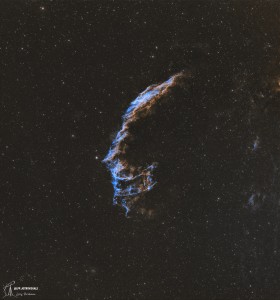
Eastern Veil Nebula (NGC 6992) - Wide View

My Account

New to Astromart?

Register an account...

Need Help?

Essential resources for the beginning astronomer

Started by Kay, 01/14/2007 09:24PM
Posted 01/14/2007 09:24PM Opening Post
Is there any official, expert-approved list of what resources (books etc.) beginning astronomers should have access to?

Right now I have Nightwatch (for me) and two of H.A. Rey's books (for the kids). I am also reading a borrowed copy of The Backyard Astronomer.

I am planning to also purchase:

Turn Left at Orion
Star Watch
and a Firefly Planisphere (either the 10" or 15" - not sure what the difference is except the size)

Is there anything else that would be helpful in addition to OR instead of the above? Is any of this overkill (would we be just as well off with just one of the two books as with both of them?)?

Thanks for all of your help. Hopefully I'll be too busy reading, sky-watching and learning to keep pestering all of you!

Kay
Posted 01/14/2007 10:42PM #1
Star Watch by Phil Harrington is my most used book. I use it to plan my viewing and refer to it often while viewing. I like that it tells what I can expect to see and that the items it lists are things that we beginners can find and appreciate. It tells what you should see (and rates the "wow" of the view) with binoculars, a small scope, and a large scope.
Posted 01/14/2007 11:31PM #2
I agree about Star Watch.

IMHO SkyAtlas 2000 is a little overwhelming for a beginner. I would suggest either Norton's Star Atlas (which I started out on) or The Cambridge Star Atlas. Each of which is alot less expensive.

The difference in the 2 planispheres is the 10" shows stars to 4th magnitude and the 15" shows stars to 5.5 magnitude. I would suggest the 15" one unless you'll be observing in a urban (light polluted) area.

There is also free planetarium software available on the net. One of them being Cartes du Ciel
which you can find here: http://www.stargazing.net/astropc/index.html

Fred Dase

Wisdom Begins In Wonder
Posted 01/15/2007 11:06AM #3
Kay,
I like Turn Left At Orion. It's like Astronomy 101. It has 100+ targets that are easy star-hops, many of which can be viewed from a light-polluted area or through binoculars. I like it because it gives black and white sketches of the targets rather than fancy color photos that won't look anything like the view through the eyepiece, making it easier to know what to expect. Some detailed but brief descriptions accompany each target, arranged by season.

For "Astronomy 201," get Sue French's book, Celestial Sampler. A columnist for Sky and Telescope magazine, six years of her columns "Small Scope Sampler" are in this book, arranged by month. It's a terrific book from a professional observer.

Keeping a simple observing log is a great way to learn. You can be detailed if you like, showing equipment, viewing conditions, eyepieces used etc, or just simply list what you saw that night. My first "log book" was a Messier catalog list printed from SEDS: http://www.seds.org/messier/Messier.html
When I saw one, I just circled and dated it. (I still have a few to go!) Writing stuff down for me always makes it easier to learn.

David E
Posted 01/15/2007 01:25PM #4
I am a big believer in binoculars.

Given a simple star map and a pair of hand held binoculars, many of the Messier objects can be identified and some, like M33, are easier to find for the first time in binoculars than in a scope. True, you can't see the separate stars in a globular cluster through binos but you do get a better idea of relationships in a given portion of the sky. Even an inexpensive pair of binos can add a great deal to the experience, especially under dark skies. I have several pairs including some very nice older Japanese 7X35 binos that came from yard sales for less than $10 each.

I would rather leave my maps at home than forget my binos.

clear skies,
dan
Posted 01/15/2007 07:45PM #5
I just bought both Star Watch and Turn Left at Orion online not knowing that there is a lot of duplication in them.

I do like the star charts in Star Watch better but then I know the brighter constellations pretty well by now. The star hopping sequences are well detailed but you would have to know where to look to begin with. The charts in "Turn Left.." however are simpler to read and use and would stand out well with minimal lighting if you want to copy the pages and take them outside to view.

For intermediate level, I agree that Sue French's sampler is great, but it does require the viewer to have developed good star hopping skills. Alternatively, the use of setting circles or an object locator will solve this issue. One of my "best buys" is Storm Dunlop's Sky Atlas with Moon Charts by Rukl and Star Charts by Tirion. A truly beautiful work, and a must have in my opinion.

Rey
