Image of the day

Captured by
Byron Davies

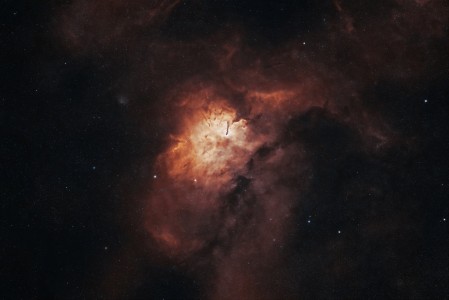
Sh2-86 (NGC-6820)

My Account

New to Astromart?

Register an account...

Need Help?

How to observe

Started by Alex McConahay, 12/31/2008 04:19AM
Posted 12/31/2008 04:19AM Opening Post
I'm writing a series of articles on how to observe various classes of objects. I have found lots of books with descriptions of objects--but I have not found a concise description of what to look for when first observing an object.

For instance, if I were looking at a galaxy, what should I try to notice? A globular? An open Cluster? A Planetary? A diffuse nebula?

Any good sources out there you know of?

Alex


Posted 12/31/2008 10:24AM #1
Alex,

As a starting point, I'll tell you how I make my observations of one particular group of objects, open star clusters. These objects vary quite a lot in appearance, and are therefore among my favourite deep-sky targets.

After having located the object, try out different magnifications, and decide which one gives the best impression of the objects.

Give an estimate of the total number of stars you can see!
Which is the magnitude of the brightest stars and the majority of the stars?
What is the approximate visual diameter of the cluster?(Knowing the field diameter of your eyepieces in arc-minutes you may use this as a scale).
Which is the general shape of the cluster (round, elongated, irregular)?
Do you see any colour in the stars? If all stars are very faint this may be difficult to see, but many open clustars contain stars brighter than the 8th magnitude, and then it is usually easy to see some colour.
Is there any nebulosity associated with the cluster? Any dark voids?

Does the cluster contain any double stars? Some clusters, e.g. M34 contains very close doubles, requiring magnifications of 200x to split them.

Asking this kind of questions will normally make you spend more time with the object, and give you the chance to discover interesting features which otherwise would go undetected. Using enough time is very important.

I'll be back later with hints of observing other kinds of objects.

Good luck!

Inge S
Posted 01/01/2009 02:54PM #2
Burnhams' seems like a good place to start from. His abbreviative code itself focuses what to look for, and perhaps in what order.
Posted 01/02/2009 08:45PM #3

Following Inge's lead, I'll tell you what I try to answer for galaxies--

How bright is it, relatively speaking--that is, how easy is it to observe at all?
Is its brightness uniform or does it brighten considerably toward the middle? If so, does it do so gradually or abruptly?
Is its core diffuse or stellar?
What is the diameter of its major axis (in arcminutes, usually).
If it is elongated, what is the position angle of the major axis, and what is the aspect ratio?
Is any detail observable---does it appear mottled, are dust lanes visible, are spiral arms or HII regions apparent?
Does it have any companions, how bright, and where are they located?
Are any field stars involved, of what magnitude, and where located with respect to the galaxy?

That sort of thing. As a general guideline, the descriptions in the Night Sky Observers Guide are good examples of what to try for.

George

George Golitzin
