Image of the day

Captured by
Lawrence Parchman

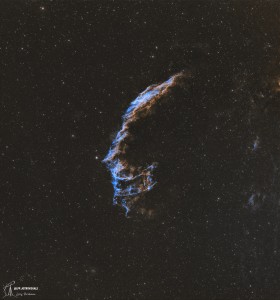
Eastern Veil Nebula (NGC 6992) - Wide View

My Account

New to Astromart?

Register an account...

Need Help?

Have a Look at Jupiter Tonight

Started by Dave Mitsky, 09/02/2009 06:00PM
Posted 09/02/2009 06:00PM Opening Post
Tonight Jupiter will appear to be "moonless".

http://www.skyandtelescope.com/observing/highlights/52543517.html

Dave Mitsky

Chance favors the prepared mind.

De gustibus non est disputandum.
Posted 09/02/2009 06:31PM #1
Maybe not--the nearly full earth moon may be in almost the same field of view.....Some five degrees off (Okay, that would be a really big field of view----but there will be lots of skyglow aroung Jupiter).

Moreover--I've been having a problem with this. I like looking at Jupiter and its moons. Why am I excited about seeing the planet without its moons. Its moons are one (okay 4) of the coolest things about Jupiter.

Alex
Posted 09/03/2009 02:32AM #2
Here's the sequence of satellite events from the S & T page:

Wednesday, September 2, 2009

23:28 UT, Callisto enters occultation behind Jupiter.

Thursday, September 3, 2009

03:44 UT, Io enters occultation behind Jupiter.
04:00 UT, Europa begins transit of Jupiter.
04:46 UT, Ganymede begins transit of Jupiter.
04:56 UT, Europa's shadow begins to cross Jupiter.
06:32 UT, Io exits eclipse by Jupiter's shadow.
06:46 UT, Ganymede's shadow begins to cross Jupiter.
06:50 UT, Europa ends transit of Jupiter.
07:50 UT, Europa's shadow leaves Jupiter's disk.
08:24 UT, Ganymede ends transit of Jupiter.
08:44 UT, Callisto exits eclipse by Jupiter's shadow.
10:24 UT, Ganymede's shadow leaves Jupiter's disk.

Dave Mitsky

Chance favors the prepared mind.

De gustibus non est disputandum.
Posted 09/03/2009 07:52AM | Edited 09/03/2009 07:53AM #3
That was excellent. Thanks Dave.
I started off with some scattered clouds and smoke from the fires out here, but conditions improved as the night progressed.
When I began, all the moons were already hidden. As conditions improved, I detected a shadow in transit. After looking longer, it appeared to be either two shadows,...or a shadow and a moon. At that point, I consulted with starry nights...the moon was Ganymede and the shadow was that of Europa, which was leading the procession even though I could not really detect it. I figured the shadow of Ganymede would begin it's own transit soon, and it did...but not before Io popped out from behind the planet. Not much later, just about midnight (PDT), Europa began to emerge back out into the blackness of space. By now, the Ganymede shadow had begun it's trek across the planets surface. Another Jovian eclipse. smile
Linton - with my 10" f/6 Starmaster tonight
Posted 09/03/2009 08:42PM #4
I checked out the timings on Sky and Tel, and it seemed that my events were happening consistently 5 minutes before listed. (And yes, my UTC clock was set right!!!!)

Also, The Sky did not have Ganymede in the right place. It had several inconsistencies.

I have not thought it out, but are the events location dependent? I do not recall there being any "geographic setting" input request in the Sky and Tel thing--and besides I cannot see why it would be dependent. Wasn't timing the moon's appearances one of the ways to tell longtitude before they invented clocks?

Alex
Posted 09/04/2009 01:42AM #5
Glad I read this... I took my binoculars outside for a very quick look around last night and when I looked at Jupiter, I thought, "that's odd, I don't see any of the moons... and I usually see them pretty well." Didn't think much more about it and had pretty much attributed it to being "blinded" by having just looked at the moon for a while. Now that I know what was going on, I'm glad I accidentally stumbled upon this event!
