Image of the day

Captured by
Erwin Forbragd

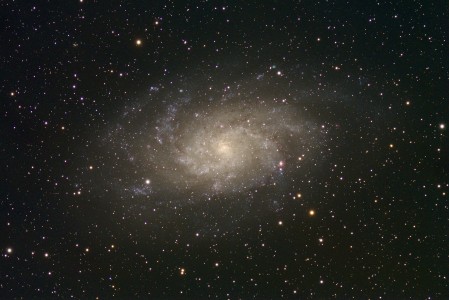
M33 in Triangulum

My Account

New to Astromart?

Register an account...

Need Help?

Assistance w/Andromeda

Started by Biscuit, 10/22/2006 11:55AM
Posted 10/22/2006 11:55AM Opening Post
I'm looking for some tips on photographing M-31, the great galaxy in Andromeda. I'm at the advanced beginner level. I took a number of images last night, but found if I do enough to get the outer areas, the core is overexposed, but if I reduce the exposure times the outer areas don't show at all.

Equipment: Meade 8"/f4 SN reflector on an LXD-75 mount. Meade DSI II Color CCD. Using the supplied Meade Envisage software to capture.

Any tips on gain/offset settings, exposure times, or other ideas? Or can the problem be fixed in post processing?

Meade 12" LX-200 ACF
SkyShed POD
Stellarvue 80 mm 80/9D Achromat
Meade LXD-75 8" SN
Posted 10/22/2006 03:05PM | Edited 10/22/2006 11:00PM #1
Hi Brian,
I believe the DSI is an 8 bit camera (?) so your dynamic range is going to be a bit limited. You might be able to show everything by careful processing, i.e., when stretching your image, stretch the low end more than the high end. If not, there are a couple of ways to go then.
--If you can fit M31 into your field of view, then you could take two sets of exposures, one so that the core isn't overexposed and one longer set to show the arms. The best parts of one set can then be layered onto the best parts of the other set using Photoshop or some similar software.
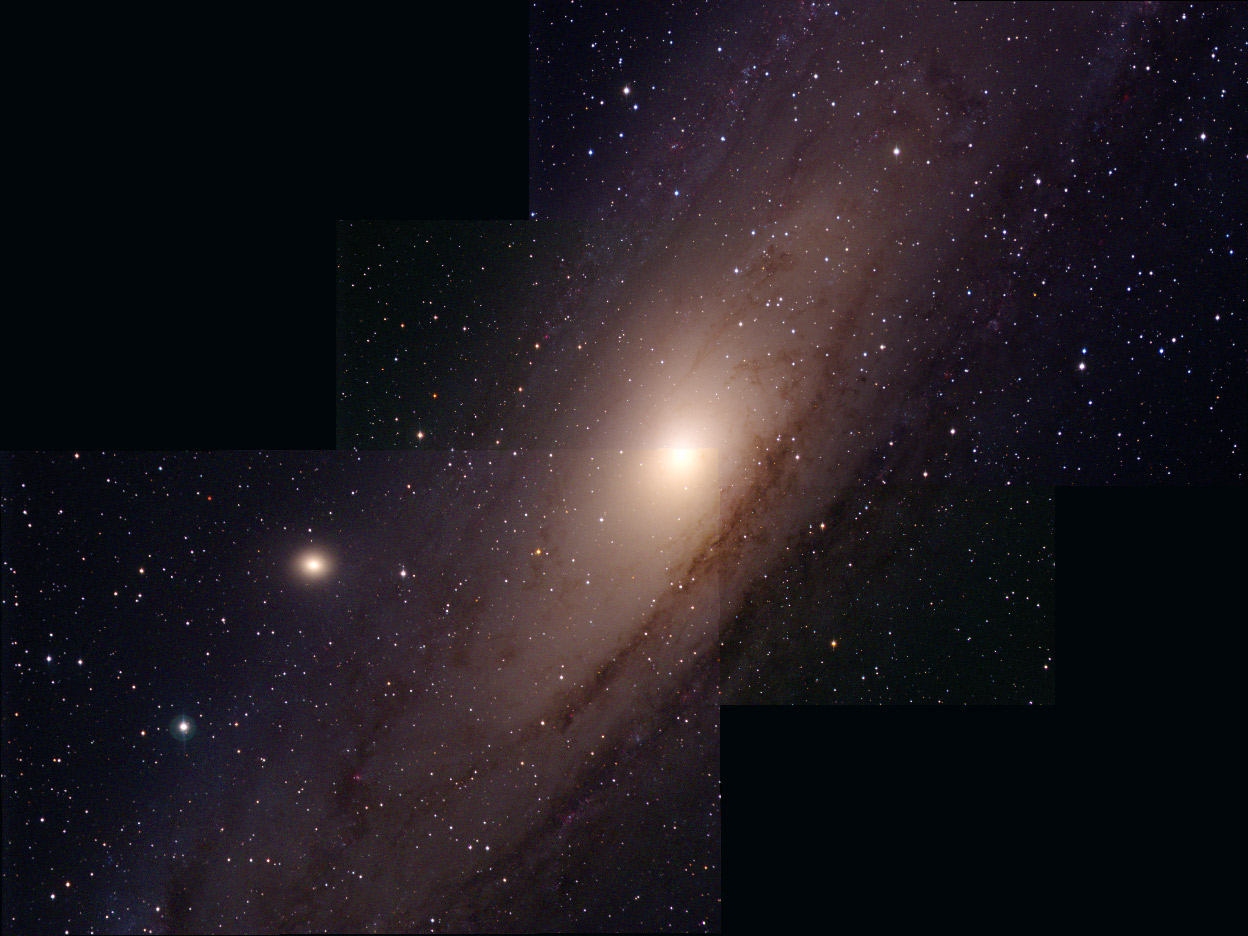
--If M31 is bigger than your field of view, then make a mosaic. If you're just exposing the arms, you won't have to worry about core burnout. If you don't have Photoshop or Registar there are still programs out there that can stitch images together. I believe a lot of digital cameras come with software that can do this, though many people aren't aware of that.
I've attached a test image of the start of an M31 mosaic where the core exposures were something like three times as long as the arm exposure.

Later edit:
(Ooops! I meant to say that the arm exposures were three times longer than the core exposures.)

Attached Image:

dan  kowall's attachment for post 108380