Image of the day

Captured by
Byron Davies

Sh2-86 (NGC-6820)

My Account

New to Astromart?

Register an account...

Need Help?

Is a light box needed for good flats?

Started by Martin Willes, 04/24/2010 04:55PM
Posted 04/24/2010 04:55PM | Edited 04/24/2010 05:16PM Opening Post
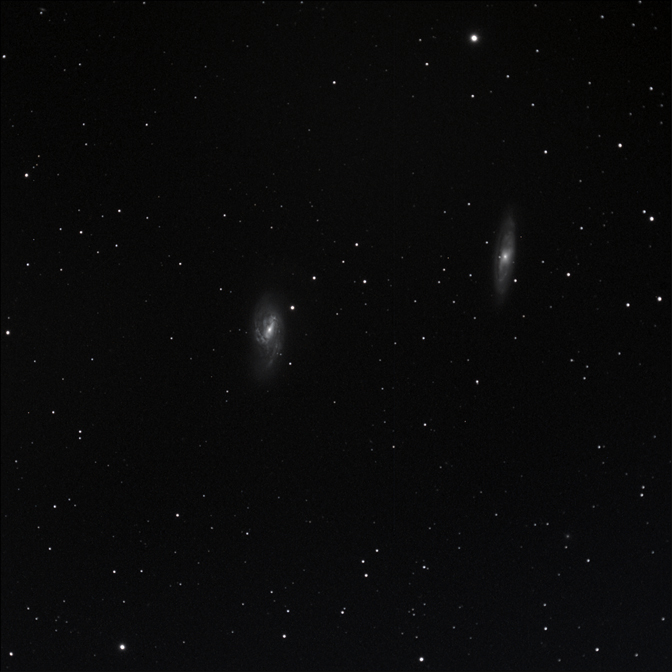
Can some of you folks that take pictures with CCD camera's chime in and tell me how you are taking your flats? I've always read that flat's aren't as important as darks so I've spent two years ignoring this step. However I decided to take a flat using the dusk sky as my "illuminated surface" and set my ST-4000XCM camera to 1/1000 sec. exposure. After making a master from 10 exposures I processed my lights with CCD Stack. My lights were calibrated with the flats, darks, and bias. The results were a beautiful picture that's required little processing. I have the older Kodak KAI-4020CM chip so the chip has column defects and some uneven illumination that's mostly been eliminated because of the proper calibrations. So my question is will I get better results with a homemade light box or keep on doing what I'm doing? I'm very happy with my results but I just can't understand why people would go through the trouble of making light boxes when flats can be taken with a dimly lit sky? What am I missing? Thanks for any help.

Martin

Attached Image:

Martin Willes's attachment for post 50802

"In the beginner's mind there are many possibilities, but in the expert's there are few." Shunryu Suzuki[COLOR="Blue"][/COLOR]
Posted 04/24/2010 06:13PM | Edited 04/24/2010 06:15PM #1
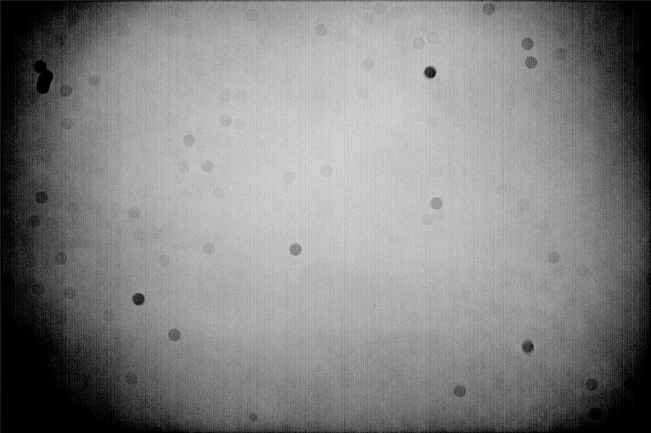
Flats CAN be ultra-critical. Depends on vignetting, dust artifacts on your eqpt etc. The purpose of a flat (correct me if I am wrong) is to make all pixels on your sensor have equal sensitivity. You should see my flats (attached)... my sensor looks like hell !! Calibrating with flats makes my results look a lot better.

When I had an ultra clean little ST237 sensor, it barely had any defects or vignetting. I never flat fielded. This flat is for my APS-C size sensor.

Attached Image:

mclemens's attachment for post 136753
Posted 04/24/2010 06:52PM #2
Martin,

Flats require just a few minutes at the end of your session and it is really unfortunate to spend all night imaging and to then skimp the final ten minutes by skipping the flats.

Flats not only correct for the differential sensitivity between pixels on your CCD but they also allow you to remove the effects of dew stains and dust motes.

Since most of us stretch the heck out of our images, these dust motes and dew stains suddenly surface their ugly head if you do not calibrate using flats.

Not matter how tired I may be at the end of an all-nighter, I will take a complete set of bias and flat frames (fifteen of each). The darks are prepared on a monthly basis around full moon (great preoccupation to be productive) and are immediately available to me for use.

Just to give you an idea, my master bias is usually around 100 ADU for each pixel (ST-10XME). Subtract the master bias from my master dark and I am left with an average pixel value of approximately 6-10 ADU. However, this does not stop me from pursuing the acquisition of master darks since I would like to look after each possible uninvited ADU.

Anyway, calibration is VITAL and I would suggest you do not skimp on any portion of this critical step!

Anthony.
Posted 04/25/2010 07:17PM #3
Hi Martin,

I've done both (twilight flats and light box flats). I used light box flats almost exclusively until I started pulling automated all-nighters. At that point, I went almost exclusively to twilight flats. First, the automation software calculated the exposure times for me as the sky brightness changed. Secondly, my flats were consistently of higher quality when I went with sky flats.

Occasionally, my light box would create artifacts in the flats that actually made the image worse. Fortunately, this does not happen all the time. But sky flats have been more consistent for me.

I now relegate my light box to mobile imaging excursions when I know I will not pull all-nighters.

But as the others have said, flats come highly recommended!

HTH,
Eric
Posted 04/26/2010 02:49AM #4
The link is to a set up for taking flats in the middle of the night. (This is either the second or third iteration, and there is now a smaller T-shirt hoop that is even a better fit.) And it works almost as good as dusk. There is a T-shirt on an embroidery hoop over the front of the scope, and a (hopefully) uniformly illuminated board it is looking at. These are not too bad, but the dusk sky has given generally better results. And I do like the T-shirt at dusk too. It may only be because of practice.

I should take a picture and post it of a light box "failure." Very ambitious, but not enough battery power...

http://www.fortlewis.edu/observatory/image_detail.asp?ID=118

Charlie

Fort Lewis Observatory: (37.238, -108.052) ~2360m (7744 ft.) elevation.
Darkness - typically 6.5+
Scope - Meade 16" LX200; f6.3 focal reducer
Focus - JMI Smart focus
Camera - SBIG ST-10XE; (~.5"/pixel)
Guiding - AO-8 and/or Meade 5"/DSI/PHD
http://www.fortlewis.edu/observatory
