Hi all,
I've been in re-tooling mode lately. I recently sold my ST-10XME and picked up a STL-11KM1. I haven't yet been able to procure the appropriate field flattener, but I was able to get one clear night lately to give it a try without. The conditions were far from optimal (moon, average seeing and poor transparency). I was most interested in checking out the performance of the new chip in the context of my imaging train. I'm still using the SBIG 2" nosepiece and a 2" Optec TCF-S, so vignetting was quite obvious. Some elongation was noted in the corners highlighting the need for the flattener, however it was not nearly as objectionable as I thought it might be. I have cropped the posted image mostly for framing issues. However, if someone is interested, I could post the uncropped data.
I was also interested in evaluating S/N given the lower QE of the STL chip (compensated in part due to the larger pixels). The chip appears to perform quite nicely, the anti-blooming feature is nice in that it allows longer subs. Although slight blooming can be seen in some of the brightest stars in my images, it is not objectionable.
Anyway, comments, criticisms and suggestions are always appreciated.
cheers,
Jeff
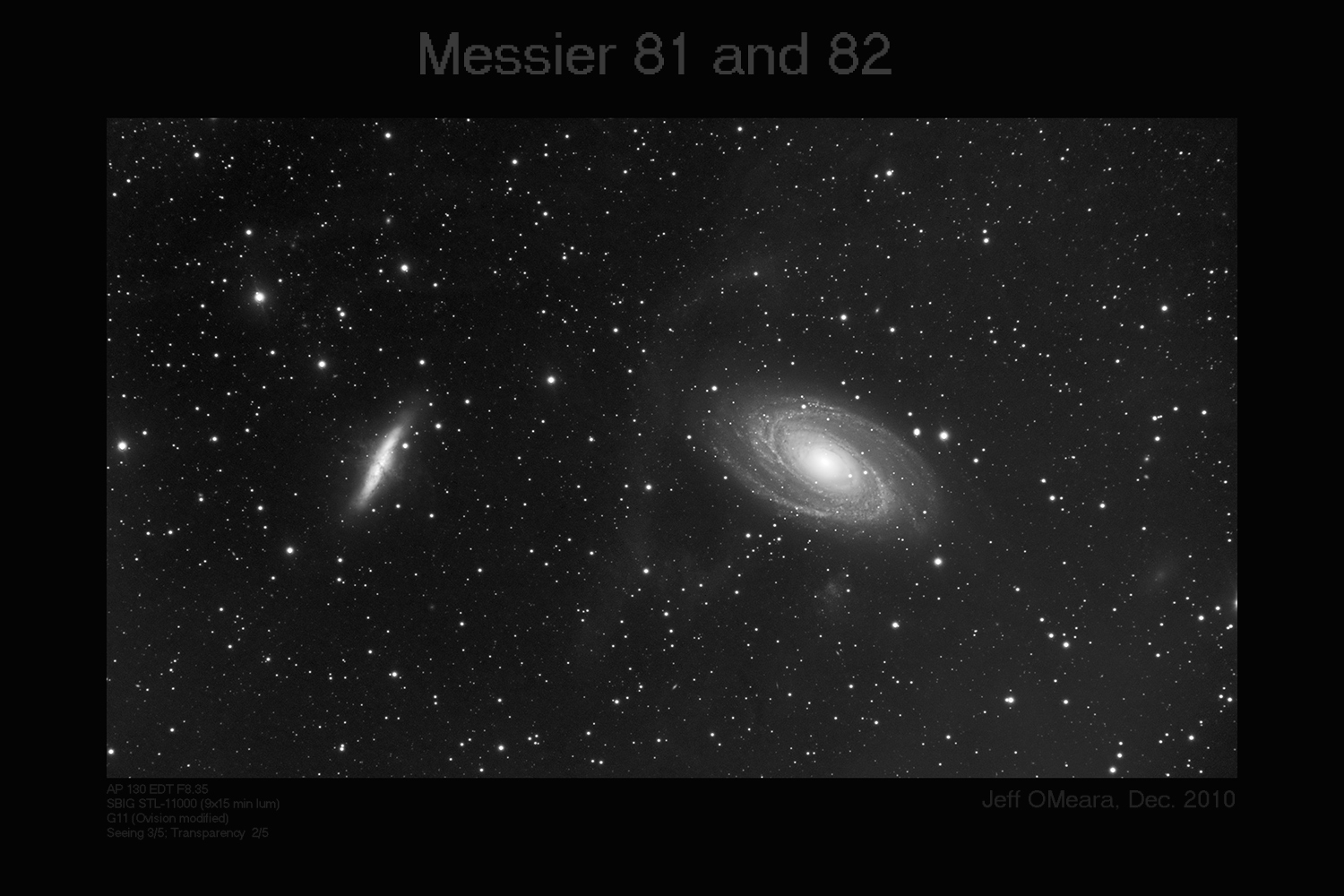
I've been in re-tooling mode lately. I recently sold my ST-10XME and picked up a STL-11KM1. I haven't yet been able to procure the appropriate field flattener, but I was able to get one clear night lately to give it a try without. The conditions were far from optimal (moon, average seeing and poor transparency). I was most interested in checking out the performance of the new chip in the context of my imaging train. I'm still using the SBIG 2" nosepiece and a 2" Optec TCF-S, so vignetting was quite obvious. Some elongation was noted in the corners highlighting the need for the flattener, however it was not nearly as objectionable as I thought it might be. I have cropped the posted image mostly for framing issues. However, if someone is interested, I could post the uncropped data.
I was also interested in evaluating S/N given the lower QE of the STL chip (compensated in part due to the larger pixels). The chip appears to perform quite nicely, the anti-blooming feature is nice in that it allows longer subs. Although slight blooming can be seen in some of the brightest stars in my images, it is not objectionable.
Anyway, comments, criticisms and suggestions are always appreciated.
cheers,
Jeff
Attached Image:
 As you said: moon, transparency etc - it was a case.


