
[SIZE="Large"]"You realize that there are some people out there think the guy who really needs to get a life is the astroimager out there spending ten thousand dollars on equipment to take the ten millionth picture of M42" [/SIZE]
A. McConahay 3/10/10
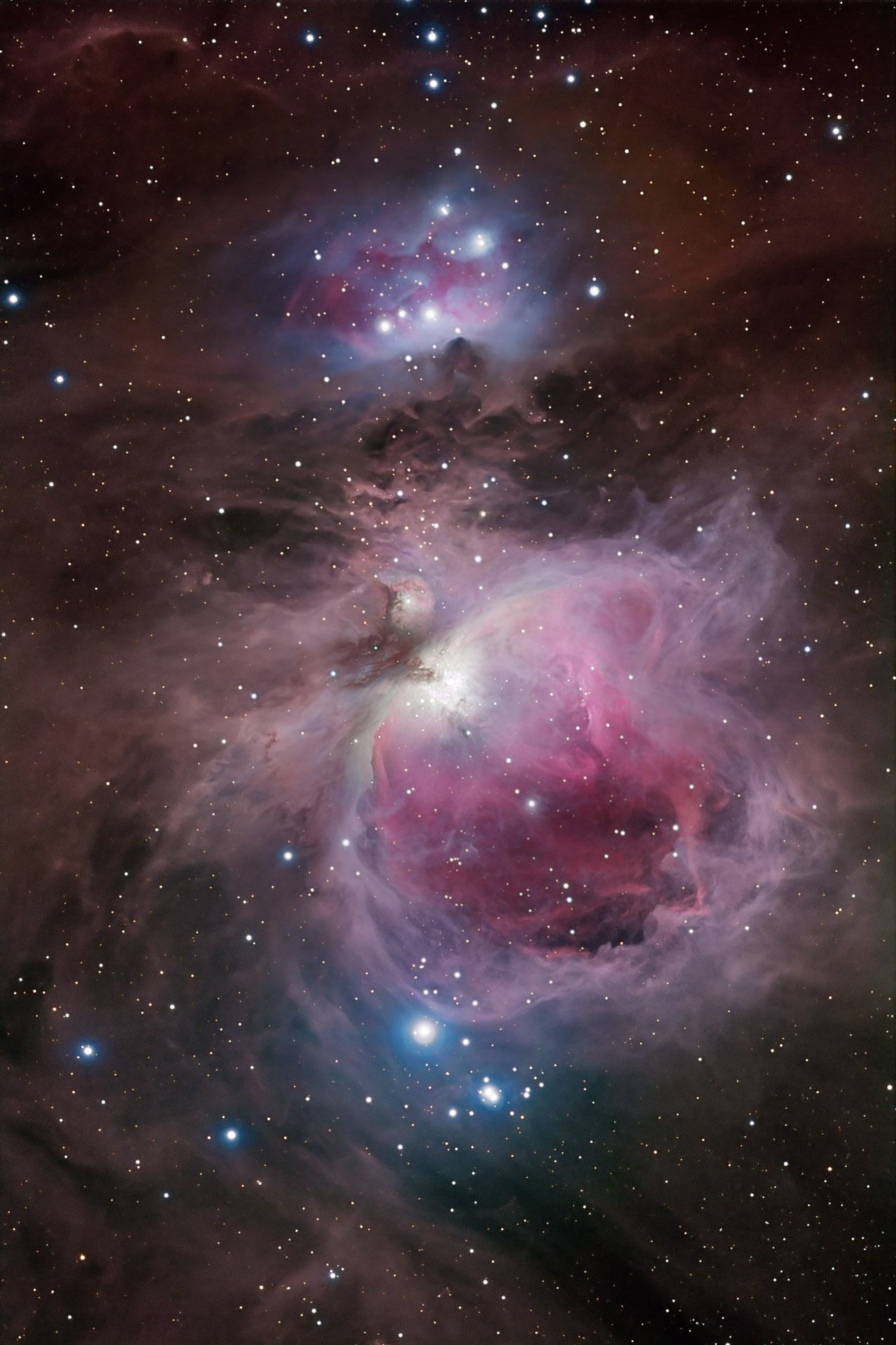
I gotta agree with Alex's tongue in cheek wisdom, but I still can't resist posting my M42. I'm always posting these "late" in the season, because Denver sits just to the East of me and I can't image until an object is transiting or setting to the West.
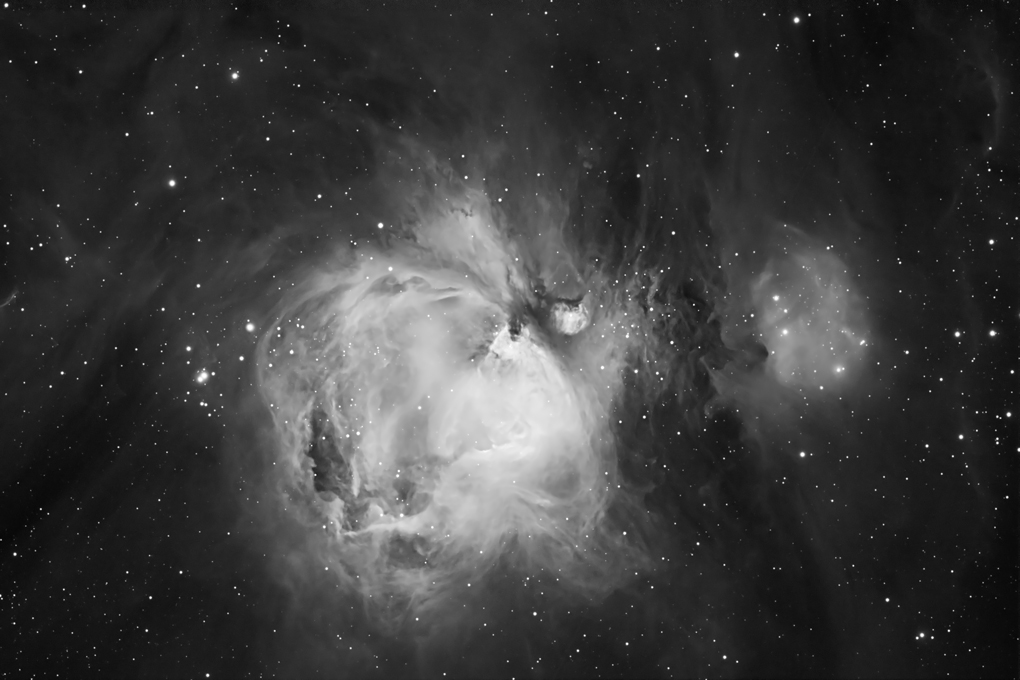
This rendition includes 10 sub-frames each of Ha, OII, R, G and B at 15 minutes and 10 sub-frames for each filter at 2 minutes. I also took 20 L frames at each time interval and used maybe 17 of them/per time interval. It all totaled up to about 130 sub-frames and slightly over 19 hours of imaging time. Fortunately I have CCD Commander dialed in, so I was able to image all night over the course of a few January to early March days.
I just upgraded my old laptop, and that made a ton of difference as far as being able to process all of this data.
The processing is basically an LRGB with Ha supplementing the Red and L channels and OIII supplementing the Blue, Green and L channels too. As you guys know, I had to process the nebula core and interior separately to avoid washing out the brighter parts. This was a real project, with a ton of processing choices.
But I like the results, hopefully you do too. Thanks for any comments.
A full sized jpeg is located here:
http://home.comcast.net/~jameslbrown/pwpimages/Final%203.jpg
TEC APO 140 with flattener, FLI Microline 11002M, FLI wheel and focuser, Baader filters, Astro-Physics Mach 1, Maxim DL, Photoshop CS2, CCD Commander, Focus Max.
Jim
A. McConahay 3/10/10
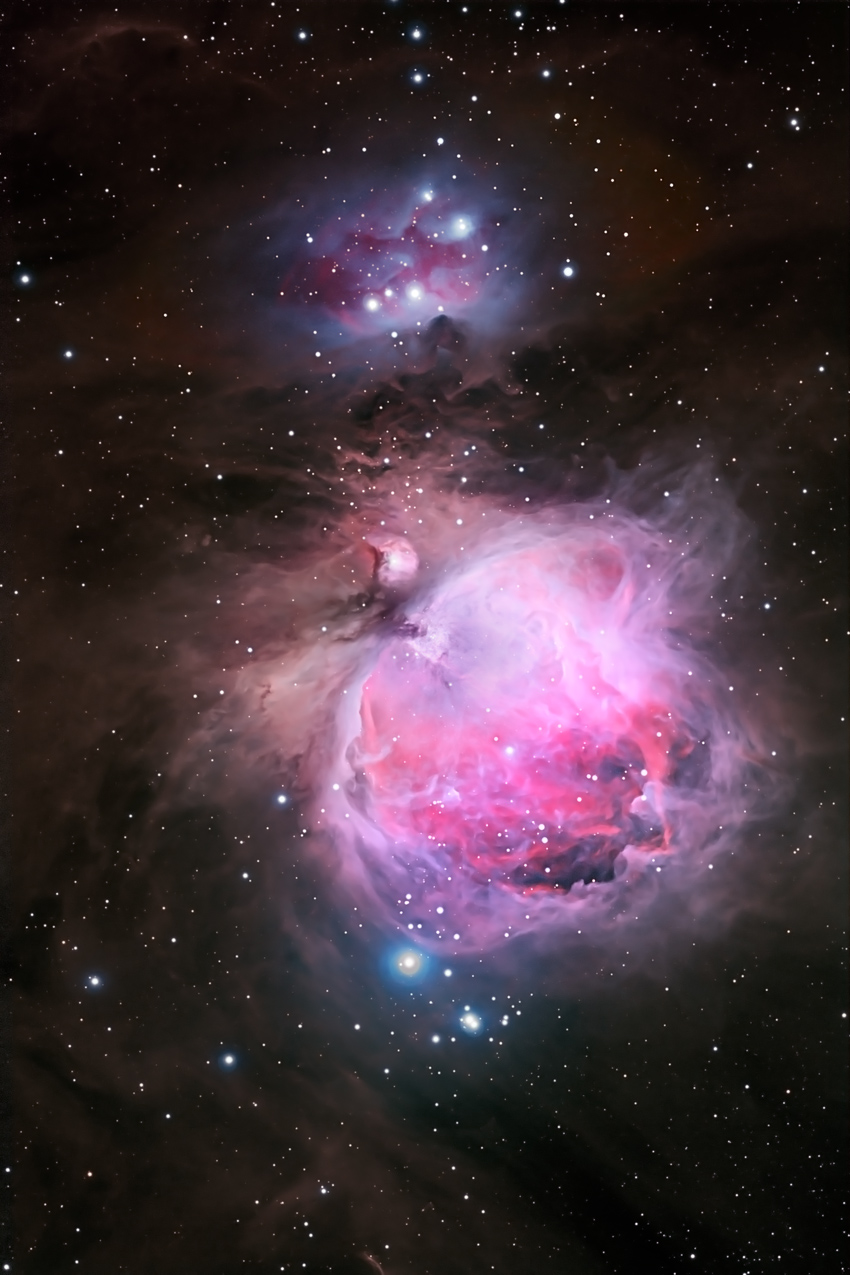
I gotta agree with Alex's tongue in cheek wisdom, but I still can't resist posting my M42. I'm always posting these "late" in the season, because Denver sits just to the East of me and I can't image until an object is transiting or setting to the West.
This rendition includes 10 sub-frames each of Ha, OII, R, G and B at 15 minutes and 10 sub-frames for each filter at 2 minutes. I also took 20 L frames at each time interval and used maybe 17 of them/per time interval. It all totaled up to about 130 sub-frames and slightly over 19 hours of imaging time. Fortunately I have CCD Commander dialed in, so I was able to image all night over the course of a few January to early March days.
I just upgraded my old laptop, and that made a ton of difference as far as being able to process all of this data.
The processing is basically an LRGB with Ha supplementing the Red and L channels and OIII supplementing the Blue, Green and L channels too. As you guys know, I had to process the nebula core and interior separately to avoid washing out the brighter parts. This was a real project, with a ton of processing choices.
But I like the results, hopefully you do too. Thanks for any comments.
A full sized jpeg is located here:
http://home.comcast.net/~jameslbrown/pwpimages/Final%203.jpg
TEC APO 140 with flattener, FLI Microline 11002M, FLI wheel and focuser, Baader filters, Astro-Physics Mach 1, Maxim DL, Photoshop CS2, CCD Commander, Focus Max.
Jim
Attached Image: