

Hi all,
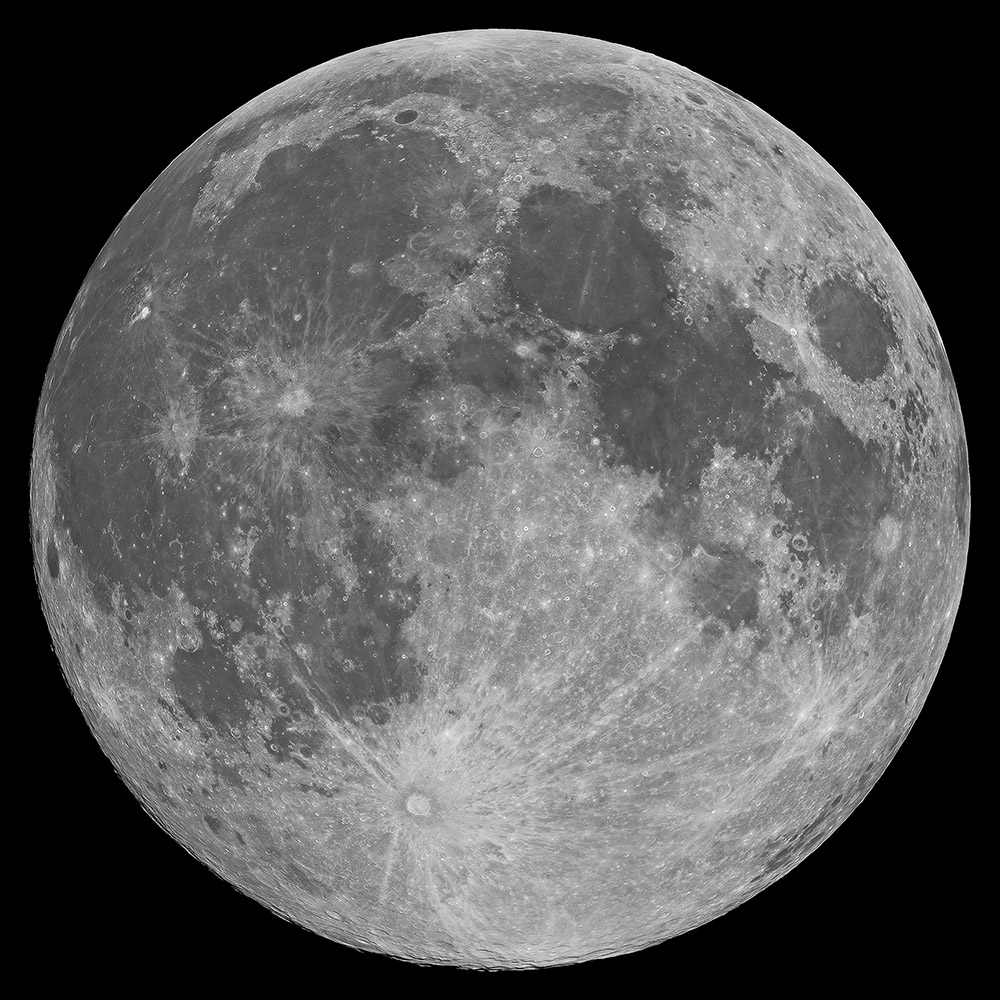
Perhaps surprisingly I've never tried a mosaic of the full Moon
before, so here is my first attempt taken on 1st February 21:00 -
21:30UT ( actually around 8.5hrs before full Moon at 5.45UT the next
day, 99.9% illumination).
I couldn't resist doing several versions including some playing around
in Photoshop -
http://www.pbase.com/slammel/image/74353500/original
http://www.pbase.com/slammel/image/74340634/original large (x2)
http://www.pbase.com/slammel/image/74346454/original small
http://www.pbase.com/slammel/image/74343986/original negative
http://www.pbase.com/slammel/image/74313906/original 'ice'
http://www.pbase.com/slammel/image/74313941/original 'obsidian'
I'm not sure I could repeat the vanishing maria trick in the last 2
but it was a balancing of solarized and inverted layers which worked
to cancel out this part of the image. Not that it serves any real
purpose but its something a bit different! :-)
I would have liked to have got higher resolution but I think this is
probably the best I could expect without resorting to a barlow to
increase the focal length from the 1200mm used here. However that
would mean around 4 times the number of avis so maybe I'll just wait
until I have a camera with a larger ccd! I think I can also see some
effects from using a relatively small number of compressed data frames
in an almost static AVI (ie. very little movement due to low
magnification) which has resulted in some patterned noise. I'll
probably use raw data for low magnification images like this in future.
10in f4.8 Newtonian, DMK 21AF04, green filter, Registax v4, PSE 5,
1/700s (gain 300), 300/1500 frames, MAP: 3-5x128, 20 images
Regards,
Stefan
Perhaps surprisingly I've never tried a mosaic of the full Moon
before, so here is my first attempt taken on 1st February 21:00 -
21:30UT ( actually around 8.5hrs before full Moon at 5.45UT the next
day, 99.9% illumination).
I couldn't resist doing several versions including some playing around
in Photoshop -
http://www.pbase.com/slammel/image/74353500/original
http://www.pbase.com/slammel/image/74340634/original large (x2)
http://www.pbase.com/slammel/image/74346454/original small
http://www.pbase.com/slammel/image/74343986/original negative
http://www.pbase.com/slammel/image/74313906/original 'ice'
http://www.pbase.com/slammel/image/74313941/original 'obsidian'
I'm not sure I could repeat the vanishing maria trick in the last 2
but it was a balancing of solarized and inverted layers which worked
to cancel out this part of the image. Not that it serves any real
purpose but its something a bit different! :-)
I would have liked to have got higher resolution but I think this is
probably the best I could expect without resorting to a barlow to
increase the focal length from the 1200mm used here. However that
would mean around 4 times the number of avis so maybe I'll just wait
until I have a camera with a larger ccd! I think I can also see some
effects from using a relatively small number of compressed data frames
in an almost static AVI (ie. very little movement due to low
magnification) which has resulted in some patterned noise. I'll
probably use raw data for low magnification images like this in future.
10in f4.8 Newtonian, DMK 21AF04, green filter, Registax v4, PSE 5,
1/700s (gain 300), 300/1500 frames, MAP: 3-5x128, 20 images
Regards,
Stefan
Attached Image:
[COLOR="Navy"]
Stefan Lammel
[SIZE="Small"]
http://www.pbase.com/slammel/moon [/COLOR][/SIZE]

