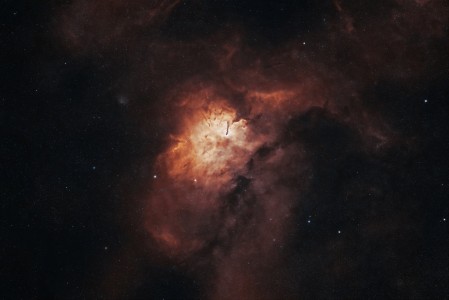
Image of the day

Captured by
Byron Davies

Sh2-86 (NGC-6820)

My Account

New to Astromart?

Register an account...

Need Help?

How often does SCT Mirror Flop

Started by Alex McConahay, 07/29/2004 10:22PM
Posted 07/29/2004 10:22PM Opening Post
I have a Celestron 9.25. It has no mirror lock down, and as far as I can tell no way to rig one.

I have thought of getting a secondary focuser, and I prefer guiding using a separate guide scope. However, it would seem that mirror flop would make problems for both these setups.

Just how bad is mirror flop? As long as I end my main mirror focusing in one direction (counterclockwise, right?), and don't cross the meridian while an exposure is running, will the mirror stay where it was set? I just don't have enough experience in this area.

Incidentally, I do a lot of film astrophotography, where the exposures are much longer. How does this affect your answer?

Alex

Posted 08/01/2004 05:33AM #1
I recommend that you use a self-guiding camera, such as an ST 7,8,9 or 10 which has a guiding chip next to the imaging chip. I tried using a guide scope ( Orion ED80 with ST-7) mounted on a C-14 (in a Homeyer cradle) and ST-8 without success. The C-14 and ST-8 could not guide the ED80 either. The ST-7 will guide the ED80 just fine as will the C-14 be guided with the ST-8. There is just too much flexure in the SCT's including mirror flop to do it any other way. This is just my experience. If anyone has different results, I would love to hear how they did it.
Andrew Weiner
Posted 08/01/2004 05:07PM #2
Hi Alex,

I do mostly unguided imaging and seldom exceed 6 minutes per frame so I am somewhat isolated from mirror flop issues. I previously had an LX-90 and now a C-11. However, it is apparent from what I’ve read in the various imaging groups that the extent of the problem varies greatly among scopes of even the same manufacturer and model.

On both my SCTs I could twirl the focus knob 20 turns (as with removing a diagonal) and not have the image move more than an arc minute or two. Others report large shifts between different eyepieces, requiring only minor focus knob rotations. This may offer a clue as to the extreme variability.

I’d suggest you image with what you’ve got and see how your individual scope works out. Once you acquire an image long enough to swamp out the readout noise, there is little gained from acquiring longer. Stacking lots of short exposures works quite well. So far all my imaging has been in that mode.

Clear skies,

Dennis Persyk
Igloo Observatory Home Page http://dpersyk.home.att.net
Hampshire, IL

New Images http://home.att.net/~dpersyk/new.htm