Image of the day

Captured by
Byron Davies

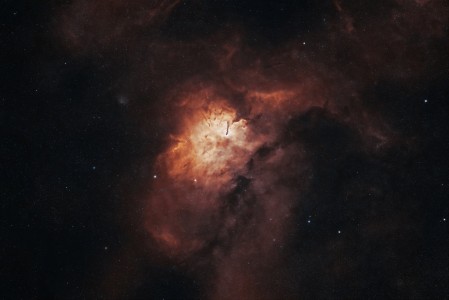
Sh2-86 (NGC-6820)

My Account

New to Astromart?

Register an account...

Need Help?

Is this a good planetary camera?

Started by gregbradley, 02/15/2009 09:31PM
Posted 02/15/2009 09:31PM | Edited 02/15/2009 09:36PM Opening Post
I have been looking at the specs of several cameras.

This would appear to have one of the highest but I may be overlooking something here.

My setup will be TEC180mm fluorite or Tak BRC250 using either with a Baader fluorite flatfield converter
giving say 5 or 6X =F35 or more. (Baader FFC will do up to 8X).

This is the camera. A Point Grey Research Grasshopper ICX274 chipped 1624 x 1224 (2mb)30 frames per second, with firewire 800mb/sec and 14 bit analogue to digital converter with 8,12,16 or 24 bit data output, 32mb buffer, binning and regions of interest ability. This means a smaller ROI would give a higher frame rate if needed but if not needed 30fps at 2mb could produce a lot of resolution. This is a mono camera although colour is an alternative.

Hard disk memory is cheap now, I bought a 1 terrabyte external hard disk for AUD$250 so memory is not really a concern.

http://www.ptgrey.com/products/grasshopper/Point_Grey_Grasshopper_datasheet.pdf

The chip is the same as the Lumenera 2-2 but the electronics would on paper appear to be considerably superior.

Am I evaluating this right?

Or would I be better off going for a KAI0340 chip with 200 frames per second capability and 640 x 480 or an ICX424 with 9.9um pixels with its resultant lower noise and higher sensitivity and also 74 frames per second but "only" 648 x 488?

The consideration being image scale, sensitivity and speed of fps.

Any suggestions about this?

Greg.

Posted 02/17/2009 09:41PM #1

I once thought to get that chip, but could not
find any decent planetary shots with it.
Perhaps the chip is fine, and no one had tried it
yet....

My feeling is that F35, 4.4 micron pixels, and
30 fps is going to make for a dim and
very noisey image. You should look around the web,
see what other people are shooting, and make
some calculations. I've been shooting
F22, 4.65 micron pixels, 20 fps on Mars
(10 fps on Saturn), with an 8 bit camera.
Scaling these numbers to 4.4 micron pixels
implies F20 and similar frame rates. The image
scale will be about 0.25 arcsec/pixel, and
about 100 pixel max diameter for Mars (a little more
for Saturn). Not sure why you need a 1600x1200
pixel camera if the image is only ~100 pixels.
Probably those larger chips are better suited to
lunar and solar. I'd suggest to get a smaller
chip.

I am not sure how that camera operates, but ROI
does not always equate to faster readout. Sometimes
the ROI is done after the image leaves the CCD --
that can save disk space, but still requires
reading out the entire chip, which is slow.
Make sure to confirm with the camera maker how they
handle ROI.

- John B.
Posted 02/27/2009 05:33AM | Edited 02/27/2009 05:34AM #2
Ptgrey makes great cameras. I would say the best planetary cam would be the PTGrey Dragonfly Express which Anthony Wesley uses. The only problem with the PtGrey cameras is software. Or lack of. You have to make your own. I have a friend that bought a Dragonfly and ended up using a DMK because he couldn't get it to run. He even hired a programer to make a software for him. However, if you use Linux, you can ask Anthony to share his software.

Regards,
Chris
Posted 03/02/2009 05:19AM #3
Greg Bradley said:

I have been looking at the specs of several cameras.

This would appear to have one of the highest but I may be overlooking something here.

My setup will be TEC180mm fluorite or Tak BRC250 using either with a Baader fluorite flatfield converter
giving say 5 or 6X =F35 or more. (Baader FFC will do up to 8X).

This is the camera. A Point Grey Research Grasshopper ICX274 chipped 1624 x 1224 (2mb)30 frames per second, with firewire 800mb/sec and 14 bit analogue to digital converter with 8,12,16 or 24 bit data output, 32mb buffer, binning and regions of interest ability. This means a smaller ROI would give a higher frame rate if needed but if not needed 30fps at 2mb could produce a lot of resolution. This is a mono camera although colour is an alternative.

Hard disk memory is cheap now, I bought a 1 terrabyte external hard disk for AUD$250 so memory is not really a concern.

http://www.ptgrey.com/products/grasshopper/Point_Grey_Grasshopper_datasheet.pdf

The chip is the same as the Lumenera 2-2 but the electronics would on paper appear to be considerably superior.

Am I evaluating this right?

Or would I be better off going for a KAI0340 chip with 200 frames per second capability and 640 x 480 or an ICX424 with 9.9um pixels with its resultant lower noise and higher sensitivity and also 74 frames per second but "only" 648 x 488?

The consideration being image scale, sensitivity and speed of fps.

Any suggestions about this?

Greg.

greg, I was about to get one of these, and then found the Grasshopper2 specs, that looks like a much nicer camera and so I'd recommend waiting and getting the Grasshopper2 instead if you like the look of these cameras.

Link:
http://www.ptgrey.com/products/grasshopper2/Grasshopper2_datasheet.pdf

There are 3 versions, I'm looking at the 1600x1200 version. 5.5u pixels (very similar to the DMK and others) but extremely fast data rates courtesy of the quad-port readouts on the ccd, and also the ccd specs look very good, very low noise.

There are issues with finding good software, but PGR are releasing a software dev kit that supports both Linux and Windows, so it should allow an cross-platform capture app to be written.

In the meantime you should be able to use any firewire video capture app under Windows. If you were using Linux then I'd suggest using Coriander.

regards, Anthony

http://www.acquerra.com.au/astro