
Hi All,
I've been tweaking my solar H-a techniques in preparation for the Venus transit, though
the weather here has not been obliging the collection of new test images. Here's a slightly
different twist on the first light image gathered earlier this month (a single image taken
with: AP Traveler, Coronado SolarMax 90, TeleVue 2X Powermate, SBG STL11000M, downsized
approx 50%)
The "hair" along the limbs had a muddier color in the previous version, so the LRGB basis
for that portion (proms/spicules/corona) was shifted to increase the Red weighting, hopefully
with a more natural looking transition (it's all theatrics, since the image is a colorized
monochrome, but you get the idea )
A little atmospheric skitteriness due to the longish exposure time. A linear polarizing
pair was used to knock down the signal enough so as to not saturate at the 0.01 second
minimal exposure time. Matt L. (SBIG) has kindly rewritten the drivers to allow for a 0.001
second min exposure now (WooHoo!), hopefully eliminating the need for additional signal reduction.
Yesterday's clear skies here would have allowed capturing another batch of test images,
but a prior commitment for an Astronomy Day for a show 'n tell (limited to visual observation).
The session was a real hoot though, and the attendees seemed suitably impressed (two long
filaments, a very prominent prominence, some plage, loads of hairy spicules and other visual goodies)
Cheers,
Paul
--- http://www.astro-nut.com ---
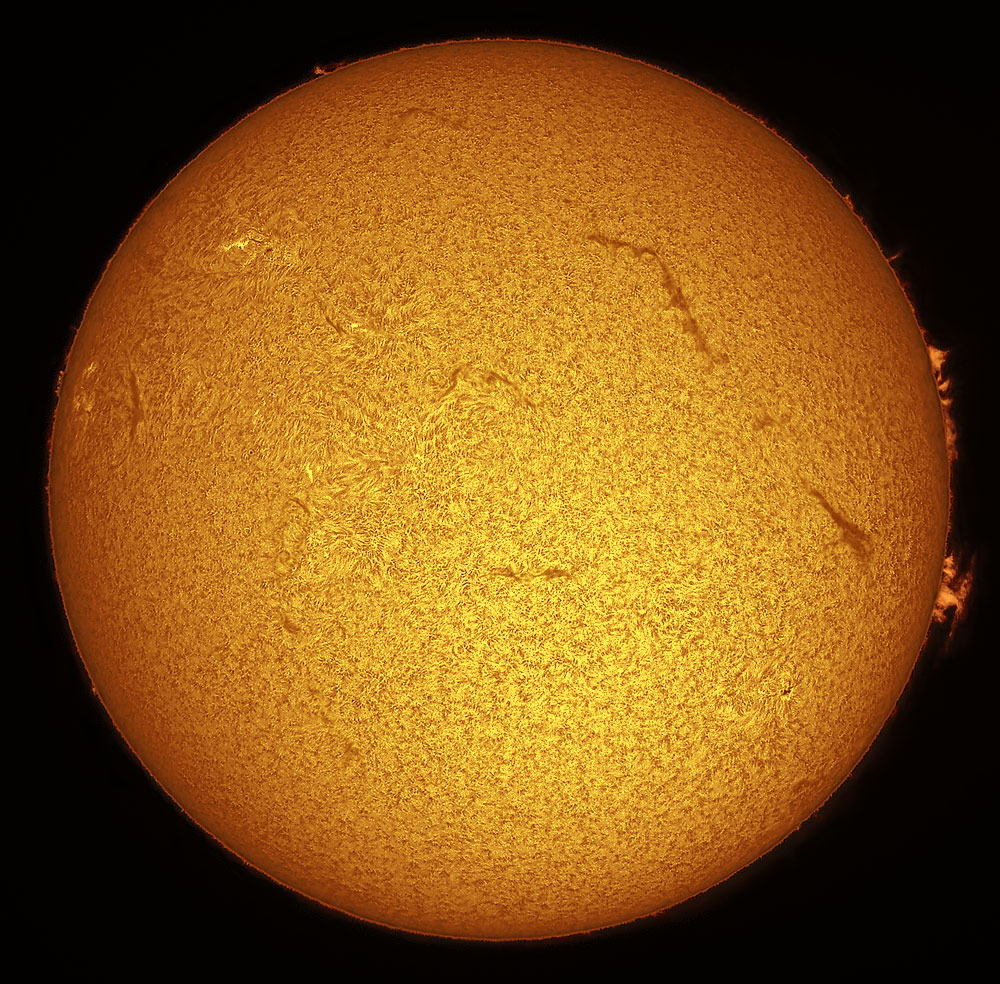
I've been tweaking my solar H-a techniques in preparation for the Venus transit, though
the weather here has not been obliging the collection of new test images. Here's a slightly
different twist on the first light image gathered earlier this month (a single image taken
with: AP Traveler, Coronado SolarMax 90, TeleVue 2X Powermate, SBG STL11000M, downsized
approx 50%)
The "hair" along the limbs had a muddier color in the previous version, so the LRGB basis
for that portion (proms/spicules/corona) was shifted to increase the Red weighting, hopefully
with a more natural looking transition (it's all theatrics, since the image is a colorized
monochrome, but you get the idea
)A little atmospheric skitteriness due to the longish exposure time. A linear polarizing
pair was used to knock down the signal enough so as to not saturate at the 0.01 second
minimal exposure time. Matt L. (SBIG) has kindly rewritten the drivers to allow for a 0.001
second min exposure now (WooHoo!), hopefully eliminating the need for additional signal reduction.
Yesterday's clear skies here would have allowed capturing another batch of test images,
but a prior commitment for an Astronomy Day for a show 'n tell (limited to visual observation).
The session was a real hoot though, and the attendees seemed suitably impressed (two long
filaments, a very prominent prominence, some plage, loads of hairy spicules and other visual goodies)
Cheers,
Paul
--- http://www.astro-nut.com ---
Attached Image:


