Image of the day

Captured by
Lawrence Parchman

Eastern Veil Nebula (NGC 6992) - Wide View

My Account

New to Astromart?

Register an account...

Need Help?

First stacked image

Started by hakescl, 12/31/2009 03:50AM
Posted 12/31/2009 03:50AM Opening Post
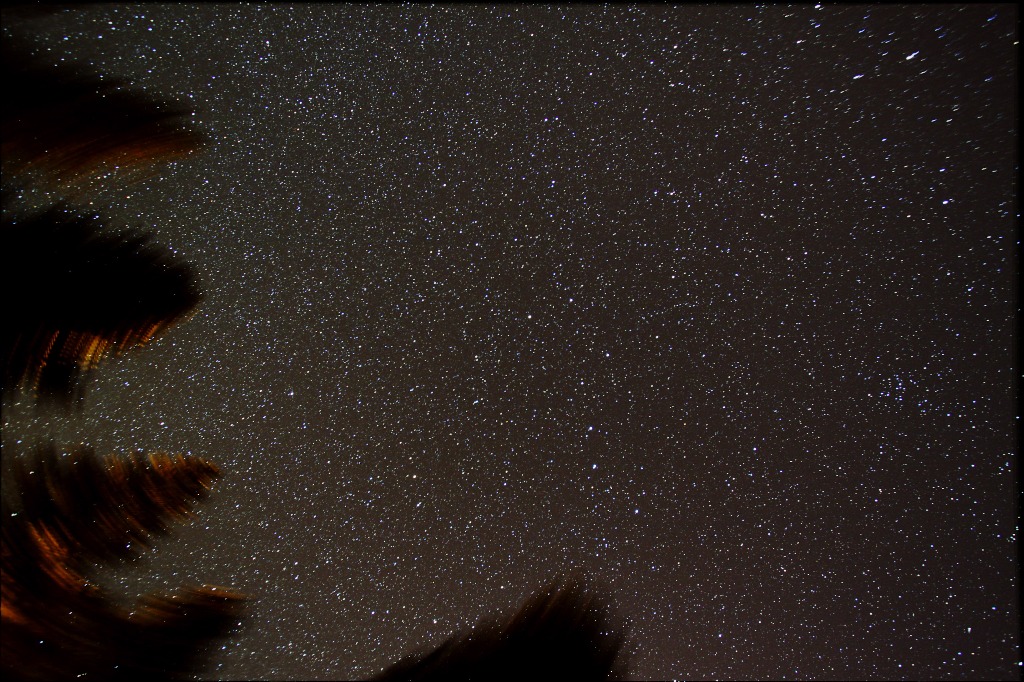
This is 8x4 minutes light with 10 darks. I just used all the defaults with DeepSkyStacker. There is something really funky going on in the upper right corner, as the individual sub-frames don't show the artifacts. This is at 10mm on my Canon 50D zoomed all the way out, but at f5.6. Next time I will try a mid-range focal length. That should clean up some of the chromatic "features". I easily detected a half-dozen galaxies, but only by comparing to charts - not enough resolution at this scale. I stretched and sharpened a tiny bit in photoshop. Any exposure and processing hints here would be most welcome. Thanks for looking.

Charlie

Attached Image:

hakescl's attachment for post 49580

Fort Lewis Observatory: (37.238, -108.052) ~2360m (7744 ft.) elevation.
Darkness - typically 6.5+
Scope - Meade 16" LX200; f6.3 focal reducer
Focus - JMI Smart focus
Camera - SBIG ST-10XE; (~.5"/pixel)
Guiding - AO-8 and/or Meade 5"/DSI/PHD
http://www.fortlewis.edu/observatory
Posted 12/31/2009 02:19PM #1
Hi Charles,
I really like your pic. Very nice indeed. Isn't DSS easy to use?! I love it.

I think if you go into photoshop and superimpose the first image and the eighth image you might find that the stars in the top right frame have shifted. I wonder if this is due to field rotation effects for being slightly off polar alignment? Using a 10mm FL lens it can be quite pronounced.

Thanks
Ivan
Posted 12/31/2009 05:09PM #2
The top right artifacts (radial smearing) look to me
like some optical issue in the lens. But you say this
does not appear in the raw frames? Maybe post one of
the raw frames?
Posted 01/01/2010 07:10PM #3
I assume you are using the Canon EF-S 10-22mm f/3.5-4.5 USM. I see distortion on the left side as well and this is common with wide angle lens. Zoom lenses are not as good as fixed for astronomy, but do produce good results. I usually have to stop down 1-3 stops with wide-angle lens to resolve the problem. The wider the angle the more you have to stop down. Using a 50mm f/1.2 I stop it down to f/2.8. 35mm f/2.0 to f/4, and 20mm f/2.8 to f4-5.6. 20d with 20-35mm f/2.8 needs to be stopped down to 5.6 (2 stops). You may have to stop the 10-22mm down even further since it has a variable f-ratio. There will also be distortion in stacking since every image will have different refractive values near the edges compare to the center of the image from the atmosphere. The stars near the horizon will be different from frame to frame between exposures. This distortion can be corrected in Photoshop to some degree. (See R. Scott Ireland’s Book)

Normally the distortion is not noticeable in normal photography, but we push the limits shooting stars (pin points). I have seen this distortion to a much lesser degree using a Cannon 300mm f/2.8 (one of the best lenses made) imaging stars.

Distortion closer to the horizon really surfaces when you try to do mosaics.

Sam

Samsastro.com

Sam

samsastro.com
