

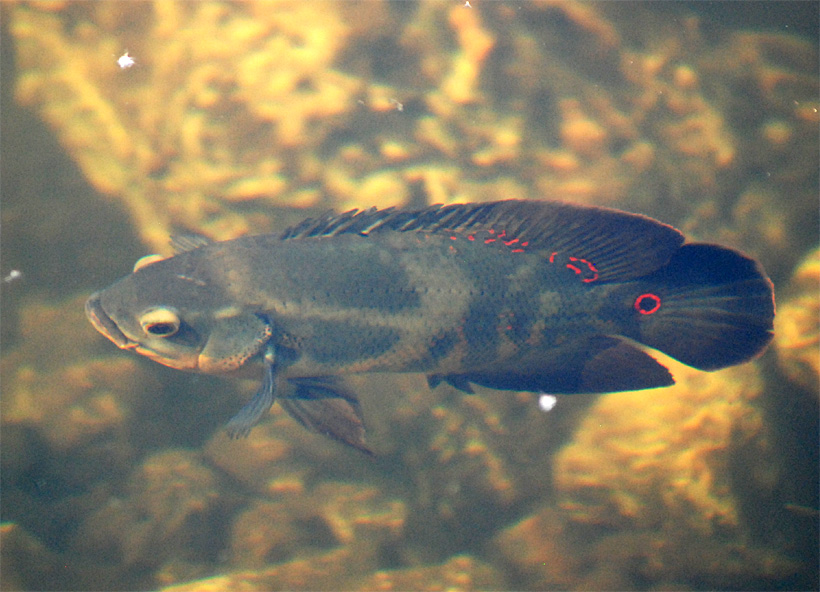
This is an Oscar, familiar to a lot of aquarium-keepers. It was not photographed in an aquarium, but instead at Everglades National Park, where it is a problem exotic. Yes the water was clear, I also increased sharpness and contrast to make the fish stand out a bit more.
Exotics are a big problem in south Florida. Naturalists describe the fish population in the park as "a community of exotics with a few native fish thrown in." They taken nesting spots from native fish, eat them, spread disease, and generally crowd them out. Other exotics easily seen there include the Mayan Cichlid and the Blue Tilapia. Besides exotic fish, the glades are plagued with Burmese Pythons, Amethystine Pythons, Anacondas, iguanas, and many problem plants. South Florida is a major importing area for exotic animals. The release of unwanted pets and hurricanes are responsible for most exotics problems. Visit a city park in south Florida, and you're likely to see parrots, iguanas, giant toads, Australian eucalyptus trees, and Brazilian pepper trees, all unwanted residents.
Exotics are a big problem in south Florida. Naturalists describe the fish population in the park as "a community of exotics with a few native fish thrown in." They taken nesting spots from native fish, eat them, spread disease, and generally crowd them out. Other exotics easily seen there include the Mayan Cichlid and the Blue Tilapia. Besides exotic fish, the glades are plagued with Burmese Pythons, Amethystine Pythons, Anacondas, iguanas, and many problem plants. South Florida is a major importing area for exotic animals. The release of unwanted pets and hurricanes are responsible for most exotics problems. Visit a city park in south Florida, and you're likely to see parrots, iguanas, giant toads, Australian eucalyptus trees, and Brazilian pepper trees, all unwanted residents.
Attached Image:
http://www.johnnagnew.com
http://herps2art.wordpress.com
